
Inicio > Matemáticas y ciencia > Biologia, ciencias de la vida > Ciencias de la vida: cuestiones generales > Ecología, la biosfera > Les rotifères comme bioindicateurs de la pollution de l’eau dans le delta du Nil
Les rotifères comme bioindicateurs de la pollution de l’eau dans le delta du Nil

Les rotifères comme bioindicateurs de la pollution de l’eau dans le delta du Nil

Hussein A. El-Naggar

94,87 €
IVA incluido
Disponible
Editorial:
KS OmniScriptum Publishing
Año de edición:
2025
Materia
Ecología, la biosfera
ISBN:
9786209422485
94,87 €
IVA incluido
Disponible

Selecciona una librería:

  • Librería Samer Atenea
  • Librería Aciertas (Toledo)
  • Kálamo Books
  • Librería Perelló (Valencia)
  • Librería Elías (Asturias)
  • Donde los libros
  • Librería Kolima (Madrid)
  • Librería Proteo (Málaga)

Le delta du Nil est la région la plus vitale d’Égypte, représentant environ 63 % des terres fertiles du pays. Les terres agricoles du delta du Nil sont disséquées par un réseau complexe de canaux d’irrigation et de drains qui collectent l’excès d’eau d’irrigation et les eaux usées pour les rejeter dans les lacs du nord du delta ou directement dans la mer Méditerranée. Les études écologiques des communautés zooplanctoniques sont très importantes car celles-ci sont considérées comme des producteurs secondaires dans la chaîne alimentaire. Les rotifères sont des animaux aquatiques microscopiques qui constituent le composant le plus important des communautés zooplanctoniques vivant dans les eaux douces et saumâtres. Certaines espèces de rotifères sont utilisées comme bioindicateurs de pollution. L’objectif de ce travail est de mettre en lumière certaines variables environnementales et certains aspects biologiques qui ont une incidence sur la diversité, l’abondance et la répartition des rotifères dans les habitats aquatiques du delta du Nil. Il s’agit également de déterminer le niveau de pollution des habitats aquatiques du delta à l’aide des rotifères comme bioindicateurs.
Artículos relacionados

  • Water from a Transdisciplinary Perspective
    Ana Isabel Pereira Cardoso / Teresinha M. Gonçalves
    Life in cities has distanced human beings from nature and made it difficult to understand the ecology of life dependent on the environment. Urban water collection and distribution processes contribute significantly to the fragmentation of knowledge and the vital recognition of the water cycle. Without the effective participation of the subject in environmental actions, it is no...
    Disponible

    43,82 €

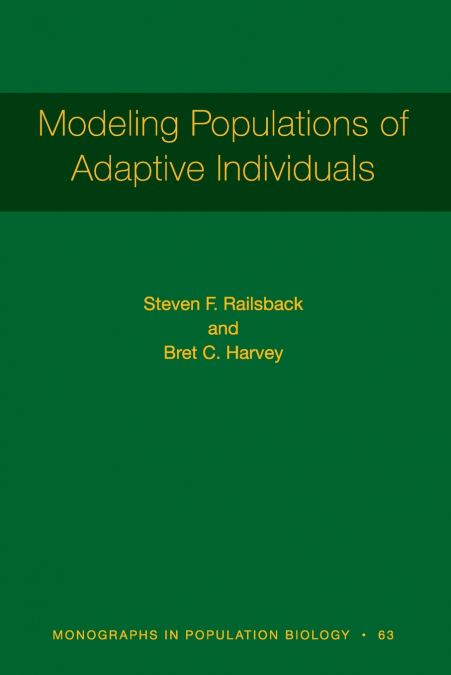
  • Modeling Populations of Adaptive Individuals
    Bret C. Harvey / Steven F. Railsback
    Ecologists now recognize that the dynamics of populations, communities, and ecosystems are strongly affected by adaptive individual behaviors. Yet until now, we have lacked effective and flexible methods for modeling such dynamics. Traditional ecological models become impractical with the inclusion of behavior, and the optimization approaches of behavioral ecology cannot be use...
    Disponible

    65,53 €

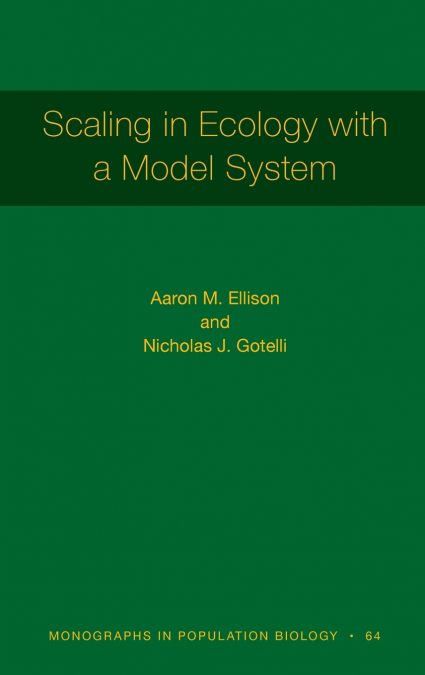
  • Scaling in Ecology with a Model System
    Aaron Ellison / Aaron M. Ellison / Nicholas J. Gotelli
    A groundbreaking approach to scale and scaling in ecological theory and practiceScale is one of the most important concepts in ecology, yet researchers often find it difficult to find ecological systems that lend themselves to its study. Scaling in Ecology with a Model System synthesizes nearly three decades of research on the ecology of Sarracenia purpurea-the northern pitcher...
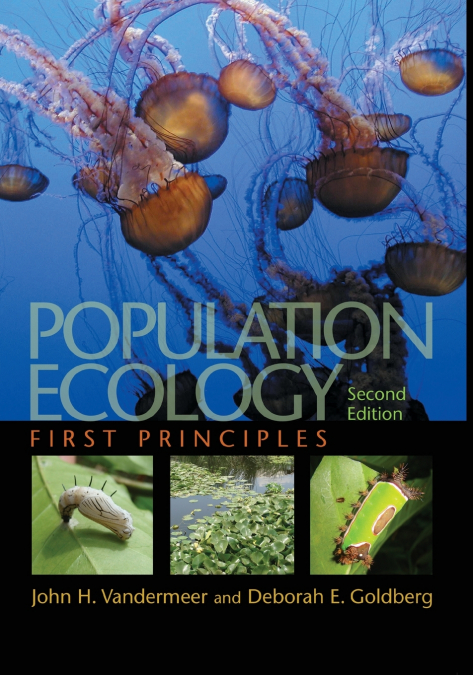
  • Population Ecology
    Deborah E. Goldberg / John H. Vandermeer
    The essential introduction to population ecology-now expanded and fully updatedEcology is capturing the popular imagination like never before, with issues such as climate change, species extinctions, and habitat destruction becoming ever more prominent. At the same time, the science of ecology has advanced dramatically, growing in mathematical and theoretical sophistication. He...
    Disponible

    124,92 €

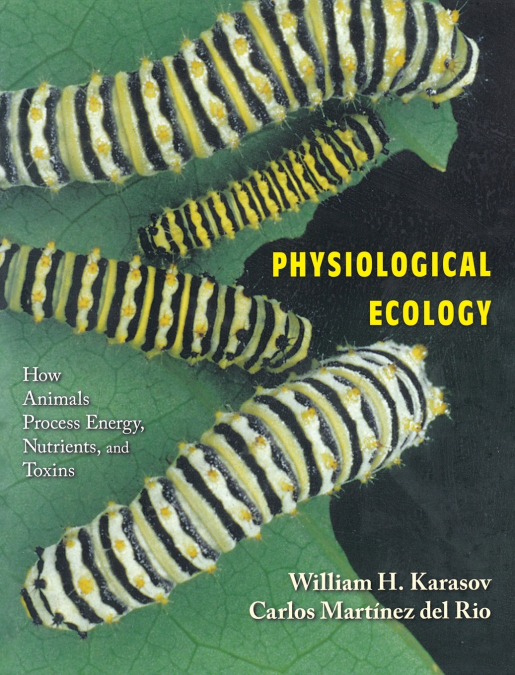
  • Physiological Ecology
    Carlos Martínez del Rio / William H. Karasov
    Unlocking the puzzle of how animals behave and how they interact with their environments is impossible without understanding the physiological processes that determine their use of food resources. But long overdue is a user-friendly introduction to the subject that systematically bridges the gap between physiology and ecology. Ecologists--for whom such knowledge can help clarif...
  • Critical Transitions in Nature and Society
    Marten Scheffer
    How do we explain the remarkably abrupt changes that sometimes occur in nature and society--and can we predict why and when they happen? This book offers a comprehensive introduction to critical transitions in complex systems--the radical changes that happen at tipping points when thresholds are passed. Marten Scheffer accessibly describes the dynamical systems theory behind cr...
    Disponible

    89,46 €

Otros libros del autor

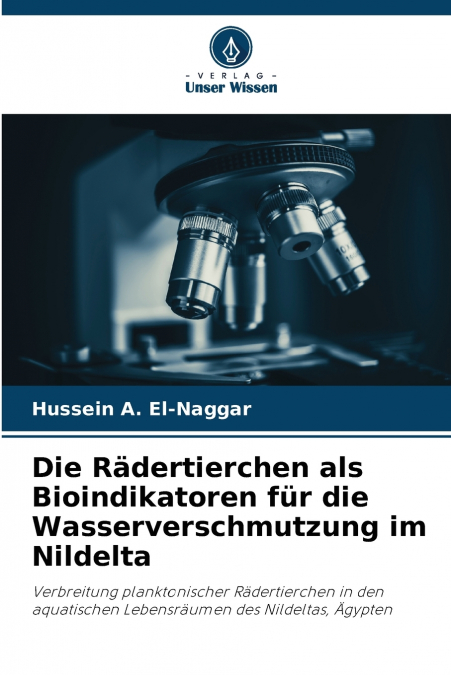
  • Die Rädertierchen als Bioindikatoren für die Wasserverschmutzung im Nildelta
    Hussein A. El-Naggar
    Das Nildelta ist das wichtigste Gebiet Ägyptens und umfasst etwa 63 % der fruchtbaren Fläche des Landes. Das Ackerland des Nildeltas wird von einem komplizierten Netz aus Bewässerungskanälen und Abflusskanälen durchzogen, die überschüssiges Bewässerungswasser und Abwasser sammeln und in die nördlichen Deltaseen oder direkt ins Mittelmeer ableiten. Ökologische Studien zu Zooplan...
    Disponible

    94,85 €

  • I rotiferi come bioindicatori dell’inquinamento idrico nel delta del Nilo
    Hussein A. El-Naggar
    Il delta del Nilo è l’area più vitale dell’Egitto e comprende circa il 63% dei terreni fertili del Paese. I terreni agricoli del delta del Nilo sono attraversati da una complessa rete di canali di irrigazione e di drenaggio che raccolgono l’acqua di irrigazione in eccesso e le acque reflue per scaricarle nei laghi del delta settentrionale o direttamente nel Mar Mediterraneo. Gl...
    Disponible

    94,87 €

  • Rotifery jako bioindykatory zanieczyszczenia wody w delcie Nilu
    Hussein A. El-Naggar
    Delta Nilu jest najważniejszym obszarem Egiptu, obejmującym około 63% żyznych gruntów tego kraju. Tereny rolnicze delty Nilu są poprzecinane skomplikowaną siecią kanałów irygacyjnych i drenażowych, które zbierają nadmiar wody irygacyjnej i ścieki, aby następnie odprowadzać je do północnych jezior delty lub bezpośrednio do Morza Śródziemnego. Badania ekologiczne społeczności zoo...
    Disponible

    94,87 €

  • Os rotíferos como bioindicadores da poluição da água no delta do Nilo
    Hussein A. El-Naggar
    O delta do Nilo é a área mais vital do Egito, compreendendo cerca de 63% das terras férteis do país. As terras agrícolas do delta do Nilo são divididas por uma complexa rede de canais de irrigação e drenos que recolhem o excesso de água de irrigação e esgoto para o libertar nos lagos do norte do delta ou diretamente no mar Mediterrâneo. Os estudos ecológicos das comunidades de ...
    Disponible

    94,87 €