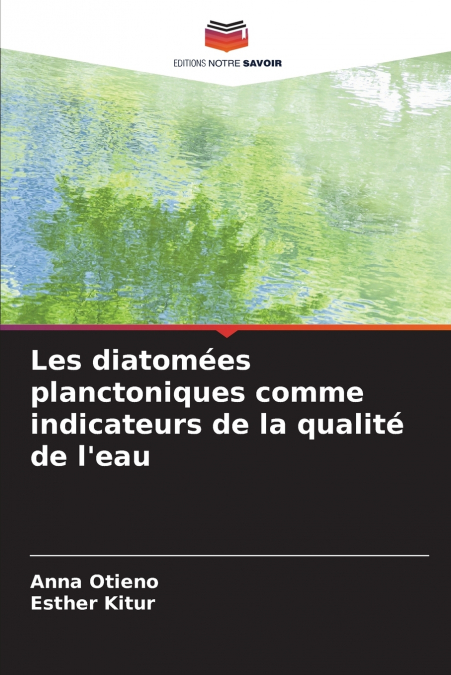

Les diatomées planctoniques comme indicateurs de la qualité de l’eau

Les diatomées planctoniques comme indicateurs de la qualité de l’eau

Anna Otieno / Esther Kitur

72,05 €
IVA incluido
Disponible
Editorial:
KS OmniScriptum Publishing
Año de edición:
2024
Materia
Ecología, la biosfera
ISBN:
9786208342159
72,05 €
IVA incluido
Disponible

Selecciona una librería:

  • Librería Samer Atenea
  • Librería Aciertas (Toledo)
  • Kálamo Books
  • Librería Perelló (Valencia)
  • Librería Elías (Asturias)
  • Donde los libros
  • Librería Kolima (Madrid)
  • Librería Proteo (Málaga)

Le phytoplancton est une plante microscopique flottante qui constitue l’élément de base de la chaîne alimentaire aquatique. Les diatomées font partie du phytoplancton. Les diatomées sont présentes dans presque tous les environnements aquatiques et sont abondantes dans la plupart d’entre eux. Elles sont sensibles aux changements de qualité de l’eau et de nombreux taxons ont des optima et des tolérances bien développés. Grâce à leurs cycles cellulaires courts, elles sont capables de coloniser rapidement de nouveaux habitats, entraînant des changements dans leur communauté, ce qui représente une réponse rapide aux changements environnementaux. Le temps de réponse des diatomées est un intermédiaire utile entre l’échantillonnage physico-chimique immédiat et peu fréquent, où des changements rapides peuvent entraîner des fluctuations écologiques importantes. Les diatomées sont limitées dans leurs déplacements entre les habitats et se portent donc bien dans l’environnement où elles se trouvent ou ne s’y portent pas bien. Les diatomées sont de plus en plus utilisées comme indicateurs biologiques car elles réagissent fortement aux changements environnementaux et intègrent les réactions à une série de polluants dans les masses d’eau sur différentes échelles de temps et peuvent être utilisées pour comparer les changements relatifs de la qualité de l’eau d’un site à l’autre.
Artículos relacionados

  • Water from a Transdisciplinary Perspective
    Ana Isabel Pereira Cardoso / Teresinha M. Gonçalves
    Life in cities has distanced human beings from nature and made it difficult to understand the ecology of life dependent on the environment. Urban water collection and distribution processes contribute significantly to the fragmentation of knowledge and the vital recognition of the water cycle. Without the effective participation of the subject in environmental actions, it is no...
    Disponible

    43,82 €

  • Modeling Populations of Adaptive Individuals
    Bret C. Harvey / Steven F. Railsback
    Ecologists now recognize that the dynamics of populations, communities, and ecosystems are strongly affected by adaptive individual behaviors. Yet until now, we have lacked effective and flexible methods for modeling such dynamics. Traditional ecological models become impractical with the inclusion of behavior, and the optimization approaches of behavioral ecology cannot be use...
    Disponible

    65,53 €

  • Scaling in Ecology with a Model System
    Aaron Ellison / Aaron M. Ellison / Nicholas J. Gotelli
    A groundbreaking approach to scale and scaling in ecological theory and practiceScale is one of the most important concepts in ecology, yet researchers often find it difficult to find ecological systems that lend themselves to its study. Scaling in Ecology with a Model System synthesizes nearly three decades of research on the ecology of Sarracenia purpurea-the northern pitcher...
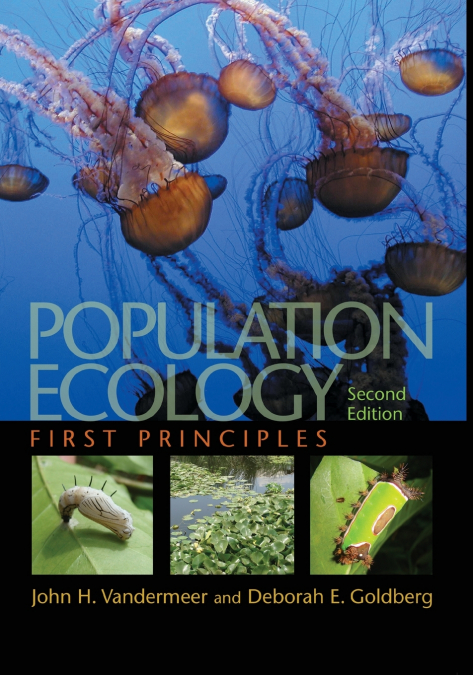
  • Population Ecology
    Deborah E. Goldberg / John H. Vandermeer
    The essential introduction to population ecology-now expanded and fully updatedEcology is capturing the popular imagination like never before, with issues such as climate change, species extinctions, and habitat destruction becoming ever more prominent. At the same time, the science of ecology has advanced dramatically, growing in mathematical and theoretical sophistication. He...
    Disponible

    124,92 €

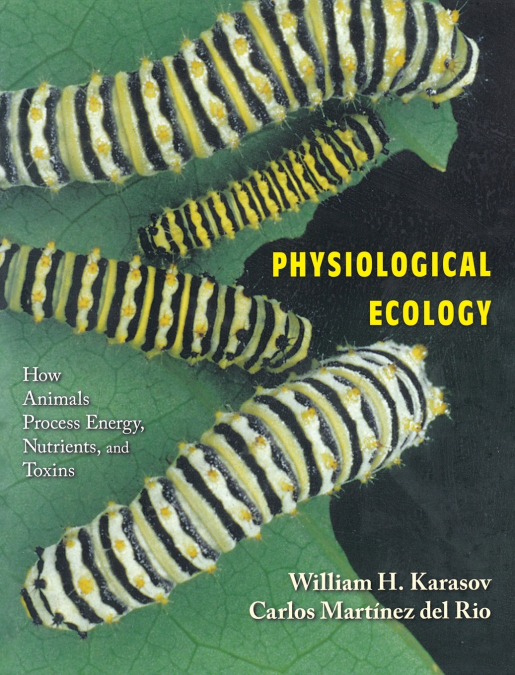
  • Physiological Ecology
    Carlos Martínez del Rio / William H. Karasov
    Unlocking the puzzle of how animals behave and how they interact with their environments is impossible without understanding the physiological processes that determine their use of food resources. But long overdue is a user-friendly introduction to the subject that systematically bridges the gap between physiology and ecology. Ecologists--for whom such knowledge can help clarif...
  • Critical Transitions in Nature and Society
    Marten Scheffer
    How do we explain the remarkably abrupt changes that sometimes occur in nature and society--and can we predict why and when they happen? This book offers a comprehensive introduction to critical transitions in complex systems--the radical changes that happen at tipping points when thresholds are passed. Marten Scheffer accessibly describes the dynamical systems theory behind cr...
    Disponible

    89,46 €

Otros libros del autor

  • Diatomáceas planctónicas como indicadores da qualidade da água
    Anna Otieno / Esther Kitur
    O fitoplâncton é uma planta microscópica que flutua livremente e que constitui o componente básico da cadeia alimentar aquática. As diatomáceas são membros do fitoplâncton. As diatomáceas ocorrem em quase todos os ambientes aquáticos e são abundantes na maioria deles. São sensíveis a alterações na qualidade da água e muitos taxa têm óptimos e tolerância bem desenvolvidos. Devid...
    Disponible

    72,11 €

  • Le diatomee planctoniche come indicatori della qualità dell’acqua
    Anna Otieno / Esther Kitur
    Il fitoplancton è una pianta microscopica che galleggia liberamente e costituisce la componente fondamentale della catena alimentare acquatica. Le diatomee fanno parte del fitoplancton. Le diatomee sono presenti in quasi tutti gli ambienti acquatici e sono abbondanti nella maggior parte di essi. Sono sensibili alle variazioni della qualità dell’acqua e molti taxa hanno un optim...
    Disponible

    72,05 €

  • Planktonische Kieselalgen als Indikatoren für die Wasserqualität
    Anna Otieno / Esther Kitur
    Phytoplankton sind frei schwimmende mikroskopisch kleine Pflanzen, die den Grundbestandteil der aquatischen Nahrungskette bilden. Kieselalgen gehören zum Phytoplankton. Kieselalgen kommen in fast allen aquatischen Umgebungen vor und sind in den meisten davon reichlich vorhanden. Sie reagieren empfindlich auf Veränderungen der Wasserqualität und viele Taxa haben gut entwickelte ...
    Disponible

    72,11 €