
Harsh Environment and Plant Resilience

Harsh Environment and Plant Resilience

Azamal Husen

221,87 €
IVA incluido
Consulta disponibilidad
Editorial:
Springer Nature B.V.
Año de edición:
2021
Materia
Ecología, la biosfera
ISBN:
9783030659110

Selecciona una librería:

  • Librería Samer Atenea
  • Librería Aciertas (Toledo)
  • Kálamo Books
  • Librería Perelló (Valencia)
  • Librería Elías (Asturias)
  • Donde los libros
  • Librería Kolima (Madrid)
  • Librería Proteo (Málaga)

In the recent past, threats from climate change and unforeseeable environmental extremes to plant growth and productivity have consistently increased. The climate change-driven effects, especially from unpredictable environmental fluctuations, can result in an increased prevalence of abiotic and biotic stresses in plants. These stresses have slowed down the global yields of crop plants. On the other hand, food security for the rapidly growing human population in a sustainable ecosystem is a major concern of the present-day world. Thus, understanding the core developmental, physiological and molecular aspects that regulate plant growth and productivity in a challenging environment is a pivotal issue to be tackled by the scientific community dealing with sustainable agricultural and horticultural practices. Plants are influenced by the adverse environmental conditions at various levels, their different and diverse responses play a significant role in determining their growth, production and the overall geographical distribution. The chapters in this book focus on the biological mechanisms and fundamental principles that determine how different plant species grow, perform and interact with a challenging environment. This book covers a broad range of topics in plant science, including gene function, molecules, physiology, cell biology and plant ecology, to understand the functioning of plants under harsh environmental conditions. The book elucidates the physiological and molecular mechanisms in different plant species, ecophysiological interactions of plants, interplay between plant roots, arbuscular mycorrhizal fungi and plant growth-promoting rhizobacteria, biosensors for monitoring stress, production of secondary metabolites, stress alleviation processes, and more.


Artículos relacionados

  • Water from a Transdisciplinary Perspective
    Ana Isabel Pereira Cardoso / Teresinha M. Gonçalves
    Life in cities has distanced human beings from nature and made it difficult to understand the ecology of life dependent on the environment. Urban water collection and distribution processes contribute significantly to the fragmentation of knowledge and the vital recognition of the water cycle. Without the effective participation of the subject in environmental actions, it is no...
    Disponible

    43,82 €

  • Modeling Populations of Adaptive Individuals
    Bret C. Harvey / Steven F. Railsback
    Ecologists now recognize that the dynamics of populations, communities, and ecosystems are strongly affected by adaptive individual behaviors. Yet until now, we have lacked effective and flexible methods for modeling such dynamics. Traditional ecological models become impractical with the inclusion of behavior, and the optimization approaches of behavioral ecology cannot be use...
    Disponible

    65,53 €

  • Scaling in Ecology with a Model System
    Aaron Ellison / Aaron M. Ellison / Nicholas J. Gotelli
    A groundbreaking approach to scale and scaling in ecological theory and practiceScale is one of the most important concepts in ecology, yet researchers often find it difficult to find ecological systems that lend themselves to its study. Scaling in Ecology with a Model System synthesizes nearly three decades of research on the ecology of Sarracenia purpurea-the northern pitcher...
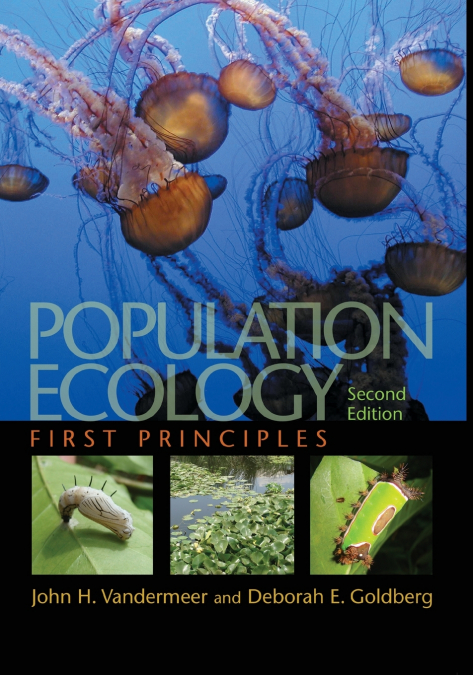
  • Population Ecology
    Deborah E. Goldberg / John H. Vandermeer
    The essential introduction to population ecology-now expanded and fully updatedEcology is capturing the popular imagination like never before, with issues such as climate change, species extinctions, and habitat destruction becoming ever more prominent. At the same time, the science of ecology has advanced dramatically, growing in mathematical and theoretical sophistication. He...
    Disponible

    124,92 €

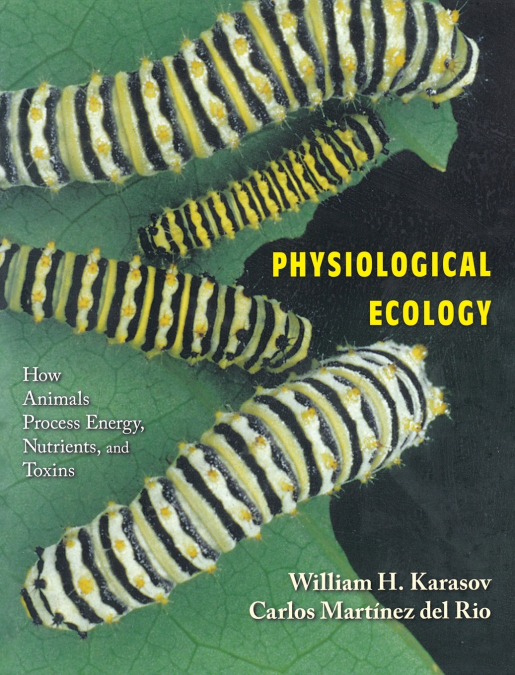
  • Physiological Ecology
    Carlos Martínez del Rio / William H. Karasov
    Unlocking the puzzle of how animals behave and how they interact with their environments is impossible without understanding the physiological processes that determine their use of food resources. But long overdue is a user-friendly introduction to the subject that systematically bridges the gap between physiology and ecology. Ecologists--for whom such knowledge can help clarif...
  • Critical Transitions in Nature and Society
    Marten Scheffer
    How do we explain the remarkably abrupt changes that sometimes occur in nature and society--and can we predict why and when they happen? This book offers a comprehensive introduction to critical transitions in complex systems--the radical changes that happen at tipping points when thresholds are passed. Marten Scheffer accessibly describes the dynamical systems theory behind cr...
    Disponible

    89,46 €

Otros libros del autor

  • Enhanced Crop Production Setup Under Various Micro and Nano Contaminants
    Azamal Husen
    This book explores the uptake, toxicity, and tolerance of various contaminants in crop plants and discusses genetic and molecular methods, as well as biological tools, to improve plant growth under contamination stress. The book also covers defense mechanisms in plants using phytohormones and nanomaterials, along with safety concerns related to micro and nano-contaminants. Cont...
  • Nanobiotechnology for Abiotic Stress Adaptation and Mitigation in Agricultural Crops
    Azamal Husen
    Nanobiotechnology has emerged as an innovative and rapidly advancing field that combines the progress of nanotechnology with biological sciences, especially cellular and molecular biology. Several metal and metal-oxide nanoparticles (NPs) have shown great potential in boosting the performance of agricultural crops under challenging conditions. NPs enhance plant resistance to st...
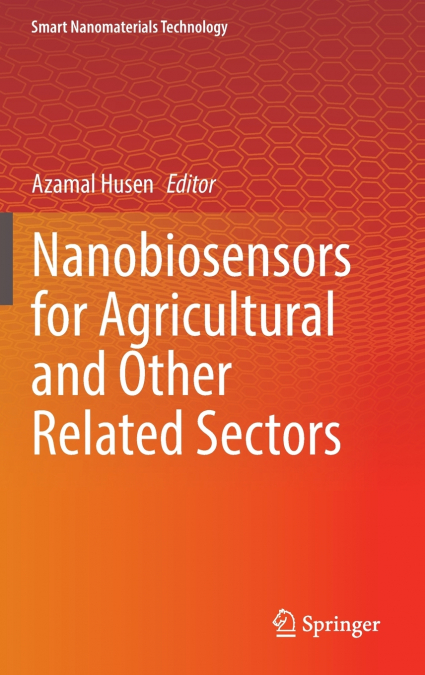
  • Nanobiosensors for Agricultural and Other Related Sectors
    Azamal Husen
    This book explores the transformative role of nanotechnology in modern farming. With a focus on nanosensors and nanobiosensors, this book highlights their growing applications in agriculture to monitor critical environmental and agricultural factors. Nanosensors, utilizing advanced materials like carbon nanotubes and quantum dots, offer solutions for detecting pollutants, measu...
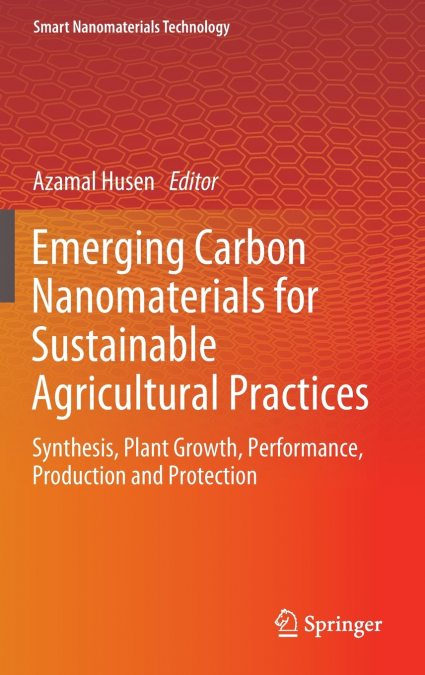
  • Emerging Carbon Nanomaterials for Sustainable Agricultural Practices
    Azamal Husen
    The potential use of carbon-based nanomaterials in overall plant systems has not yet received much research, and the results that have been reported are typically descriptive and inconsistent with little knowledge of the underlying mechanisms of action. Changes in gene expression and enhanced ROS production are among the physiological processes that may be impacted by interacti...
  • Plant Response to Silver Nanoparticles
    Azamal Husen
    This book looks at the plant response to silver nanoparticles (Ag-NPs), which showed both beneficial and harmful effects in a plant system. These responses of Ag-NPs are primarily dependent on the concentration, plant species or cultivars, exposure time, shape, and size of NPs. In general, lower concentrations of Ag-NPs increase seed germination, rate of photosynthesis, and ove...
  • Agricultural Crop Improvement
    Azamal Husen
    Agricultural Crop Improvement: Plant and Soil Relationships addresses key issues of crop plants yield and production, with molecular and physiological interventions to evolve future strategies that will overcome these challenges faced by the agricultural sector. ...