Inicio > Matemáticas y ciencia > Biologia, ciencias de la vida > Ciencias de la vida: cuestiones generales > Ecología, la biosfera > Habitudes alimentaires et sélection des proies du léopard dans le MHNP, Rajasthan, Inde
Habitudes alimentaires et sélection des proies du léopard dans le MHNP, Rajasthan, Inde

Habitudes alimentaires et sélection des proies du léopard dans le MHNP, Rajasthan, Inde

Ganesh Lal / Hari Mohan Meena / Pramod Kumar Jangid

52,29 €
IVA incluido
Disponible
Editorial:
KS OmniScriptum Publishing
Año de edición:
2025
Materia
Ecología, la biosfera
ISBN:
9783330848733
52,29 €
IVA incluido
Disponible

Selecciona una librería:

  • Librería Samer Atenea
  • Librería Aciertas (Toledo)
  • Kálamo Books
  • Librería Perelló (Valencia)
  • Librería Elías (Asturias)
  • Donde los libros
  • Librería Kolima (Madrid)
  • Librería Proteo (Málaga)

La disponibilité des proies est un facteur important pour déterminer les habitudes alimentaires d’un carnivore. Dans la zone d’étude, le parc national de Mukandara Hills, la densité d’ongulés sauvages était très faible. Les excréments des léopards ont été collectés chaque fois qu’ils ont été rencontrés dans la zone d’étude. Les excréments sont couramment utilisés pour déterminer les habitudes alimentaires, car il s’agit d’une technique non destructive (Bailey, 1993 et Mukherjee et al., 1994). Le léopard étant le seul grand félin présent dans la zone d’étude, en l’absence de tigre et de lion, il a été facile d’identifier ses excréments parmi ceux d’autres petits prédateurs sans aucune confusion. Les espèces de proies ont été identifiées sur la base de la présence de fragments d’os, de dents, d’ongles, de plumes, d’écailles, de griffes et d’autres parties dures. L’analyse morphométrique des excréments montre la disponibilité du régime alimentaire du léopard dans ce parc national. Les proies identifiées sont le langur commun, le chacal, le nilgai, le renard, le cochon sauvage et le chien domestique. La fréquence du pourcentage d’occurrence des espèces de proies. Parmi ces espèces de proies, le plus grand nombre de poils identifiés est celui du Langur commun (76,92 %), ce qui signifie que le principal régime alimentaire du léopard est le Langur commun.

Artículos relacionados

  • Water from a Transdisciplinary Perspective
    Ana Isabel Pereira Cardoso / Teresinha M. Gonçalves
    Life in cities has distanced human beings from nature and made it difficult to understand the ecology of life dependent on the environment. Urban water collection and distribution processes contribute significantly to the fragmentation of knowledge and the vital recognition of the water cycle. Without the effective participation of the subject in environmental actions, it is no...
    Disponible

    43,82 €

  • Modeling Populations of Adaptive Individuals
    Bret C. Harvey / Steven F. Railsback
    Ecologists now recognize that the dynamics of populations, communities, and ecosystems are strongly affected by adaptive individual behaviors. Yet until now, we have lacked effective and flexible methods for modeling such dynamics. Traditional ecological models become impractical with the inclusion of behavior, and the optimization approaches of behavioral ecology cannot be use...
    Disponible

    65,53 €

  • Scaling in Ecology with a Model System
    Aaron Ellison / Aaron M. Ellison / Nicholas J. Gotelli
    A groundbreaking approach to scale and scaling in ecological theory and practiceScale is one of the most important concepts in ecology, yet researchers often find it difficult to find ecological systems that lend themselves to its study. Scaling in Ecology with a Model System synthesizes nearly three decades of research on the ecology of Sarracenia purpurea-the northern pitcher...
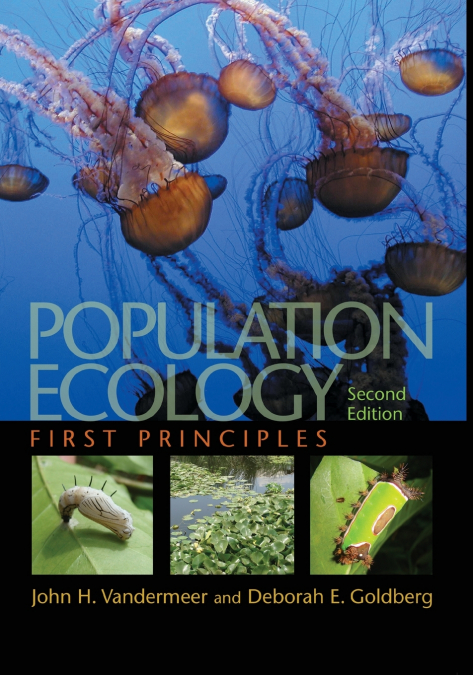
  • Population Ecology
    Deborah E. Goldberg / John H. Vandermeer
    The essential introduction to population ecology-now expanded and fully updatedEcology is capturing the popular imagination like never before, with issues such as climate change, species extinctions, and habitat destruction becoming ever more prominent. At the same time, the science of ecology has advanced dramatically, growing in mathematical and theoretical sophistication. He...
    Disponible

    124,92 €

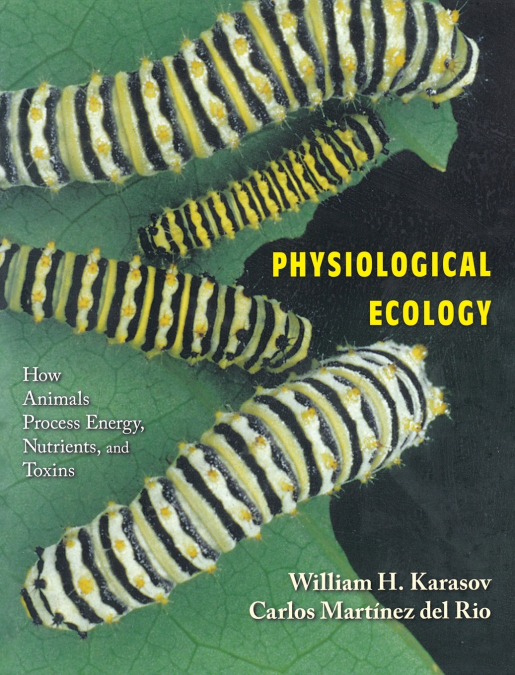
  • Physiological Ecology
    Carlos Martínez del Rio / William H. Karasov
    Unlocking the puzzle of how animals behave and how they interact with their environments is impossible without understanding the physiological processes that determine their use of food resources. But long overdue is a user-friendly introduction to the subject that systematically bridges the gap between physiology and ecology. Ecologists--for whom such knowledge can help clarif...
  • Critical Transitions in Nature and Society
    Marten Scheffer
    How do we explain the remarkably abrupt changes that sometimes occur in nature and society--and can we predict why and when they happen? This book offers a comprehensive introduction to critical transitions in complex systems--the radical changes that happen at tipping points when thresholds are passed. Marten Scheffer accessibly describes the dynamical systems theory behind cr...
    Disponible

    89,46 €

Otros libros del autor

  • Hábitos alimentares e seleção de presas do leopardo no MHNP, Rajastão, Índia
    Ganesh Lal / Hari Mohan Meena / Pramod Kumar Jangid
    A disponibilidade de presas é um fator importante para determinar o hábito alimentar de um carnívoro. Na área de estudo, o Parque Nacional de Mukandara Hills, havia uma densidade muito baixa de ungulados selvagens. As fezes de leopardo foram recolhidas sempre que encontradas na área de estudo. As fezes são normalmente utilizadas para determinar o hábito alimentar, uma vez que s...
    Disponible

    52,29 €

  • Abitudini alimentari e selezione delle prede del leopardo nella MHNP, Rajasthan, India
    Ganesh Lal / Hari Mohan Meena / Pramod Kumar Jangid
    La disponibilità di prede è un fattore importante per determinare le abitudini alimentari di un carnivoro. Nell’area di studio, il Parco Nazionale delle Colline di Mukandara, la densità di ungulati selvatici era molto bassa. Gli escrementi di leopardo sono stati raccolti ogni volta che sono stati incontrati nell’area di studio. Gli escrementi sono comunemente utilizzati per det...
    Disponible

    52,29 €

  • Nahrungsgewohnheiten und Beutewahl des Leoparden im MHNP, Rajasthan, Indien
    Ganesh Lal / Hari Mohan Meena / Pramod Kumar Jangid
    Die Verfügbarkeit von Beutetieren ist ein wichtiger Faktor für die Ernährungsgewohnheiten eines Fleischfressers. Im Untersuchungsgebiet, dem Mukandara Hills National Park, gab es nur eine sehr geringe Dichte an wilden Huftieren. Überall im Untersuchungsgebiet wurden Leoparden-Kotproben gesammelt. Kotproben werden häufig zur Bestimmung der Ernährungsgewohnheiten verwendet, da es...
    Disponible

    52,29 €

  • Zwyczaje żywieniowe i wybór ofiar lamparta w MHNP, Radżastan, Indie
    Ganesh Lal / Hari Mohan Meena / Pramod Kumar Jangid
    Dostępność zdobyczy jest ważnym czynnikiem determinującym nawyk żywieniowy drapieżnika. Na badanym obszarze, w Parku Narodowym Mukandara Hills, występowało bardzo niskie zagęszczenie dzikich zwierząt kopytnych. Odchody lampartów były zbierane za każdym razem, gdy napotkano je na badanym obszarze. Zbieranie odchodów jest powszechnie stosowane w celu określenia nawyków żywieniowy...
    Disponible

    52,29 €

  • Distribution et statut actuel du léopard dans le MHNP, Rajasthan, Inde
    Ganesh Lal / Hari Mohan Meena / Pramod Kumar Jangid
    Dans le sous-continent indien, le léopard est le grand carnivore le plus répandu. De tous les chats sauvages, le léopard est l’espèce la plus commune et la plus largement distribuée (Nowell et Jackson, 1996), que l’on trouve dans presque tous les types d’habitats (Kitchener, 1991). En raison de l’augmentation de la population humaine, de la perte d’habitats et du braconnage, la...
    Disponible

    43,69 €

  • Distribuição e situação atual do leopardo no MHNP, Rajastão, Índia
    Ganesh Lal / Hari Mohan Meena / Pramod Kumar Jangid
    No subcontinente indiano, o leopardo é o carnívoro de grande porte mais amplamente distribuído. De todos os felinos selvagens, o leopardo é a espécie mais comum e mais amplamente distribuída (Nowell e Jackson, 1996), encontrando-se em quase todos os tipos de habitat (Kitchener, 1991). Devido ao aumento da população humana, à perda de habitats e à caça furtiva, a população de le...
    Disponible

    43,69 €