Gemüseveredelung in Chili

Gemüseveredelung in Chili

Lahanu Gabhale / Mayur Bhoite / Shoukat Sayyad

106,60 €
IVA incluido
Disponible
Editorial:
KS OmniScriptum Publishing
Año de edición:
2026
Materia
Botánica y ciencias de las plantas
ISBN:
9786209572043
106,60 €
IVA incluido
Disponible

Selecciona una librería:

  • Librería Samer Atenea
  • Librería Aciertas (Toledo)
  • Kálamo Books
  • Librería Perelló (Valencia)
  • Librería Elías (Asturias)
  • Donde los libros
  • Librería Kolima (Madrid)
  • Librería Proteo (Málaga)

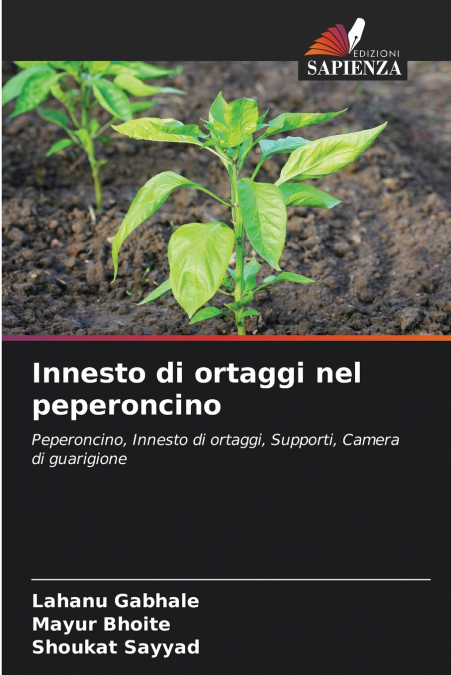
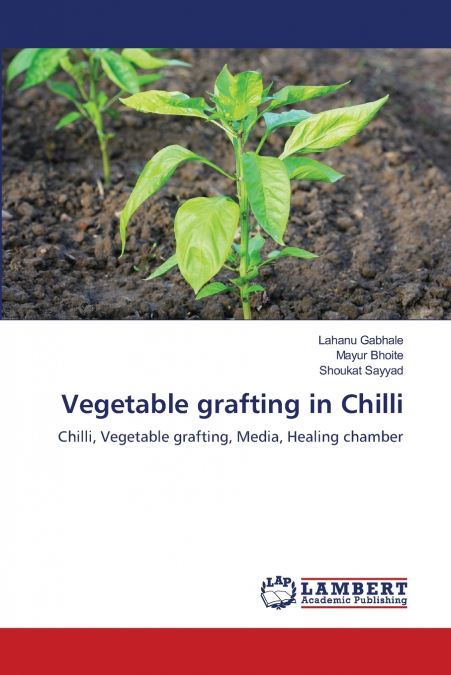
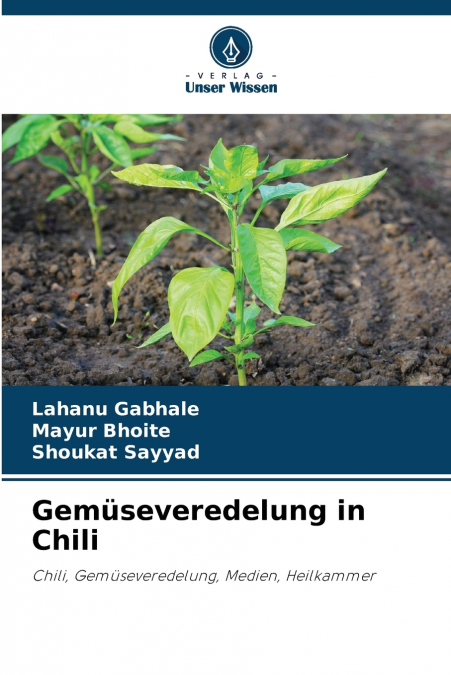
Chili (Capsicum annuum L.) ist eine der wichtigsten kommerziellen Gemüsekulturen in Indien sowie eine wichtige Gewürz- und Würzpflanze in der ganzen Welt. Chili kann in tropischen und subtropischen Regionen mit warmem und feuchtem Klima und Temperaturen zwischen 20 und 25 ºC angebaut werden. Der Chilianbau unterliegt verschiedenen einschränkenden Faktoren, wie z. B. abiotischen Faktoren, d. h. Wasserstress, starken Regenfällen, Pilzbefall aufgrund von schwachem Wurzelwachstum, Salzkonzentration, Kälteeinwirkung und hohen Temperaturen, sowie biotischen Faktoren, d. h. durch den Boden übertragene Krankheiten, Viren, saugende Schädlinge und Nematoden usw. Die Hauptziele der Gemüseveredelung sind die Beseitigung von bodenbürtigen Schädlingen und von Problemen mit dem Säure- und Salzgehalt des Bodens; weitere Ziele sind die Steigerung der Produktivität. Die Pfropfung dient dazu, die Einheitlichkeit, Wuchsstärke und Widerstandsfähigkeit gegenüber biotischen und abiotischen Stressfaktoren bei vegetativ vermehrten Pflanzen (d. h. Obst- und Zierbäumen und -sträuchern) zu erhöhen. Aufgrund der hohen Sterblichkeit der Sämlinge nach der Veredelung ist die Veredelungstechnik in Indien noch nicht sehr weit entwickelt. Für ihre kommerzielle Anwendung in Indien müssen die Pfropftechniken und die Heilungsbedingungen standardisiert werden. Die Temperatur muss im optimalen Bereich (25°C bis 28°C) gehalten werden und die Luftfeuchtigkeit muss hoch sein (>95%).

Artículos relacionados

  • The Green Architecture
    Ali Mirshafieyan / Ghazal Yeganeh / Maryam Zamani Motlagh
    Protecting green energy as well as non-renewable energy, as well as their sustainable use, many advances in the technology of extracting oil products and other reserves under the ground have caused many improvements. In this regard, proposing the design of buildings in which the consumption of fossil fuels reaches its lowest level is considered one of the important solutions in...
    Disponible

    82,54 €

  • Responsible Use and Management of Agrochemicals
    Juan Carlos Nava
    Uso y manejo responsable de agroquímicos is a work product of the author’s experiences (undergraduate and graduate professor, with research and extension projects), aimed at producers, companies, professionals, students, advisors, researchers, among others.Due to its structure and content, it is expected to be a valuable aid to all people directly or indirectly involved in the ...
    Disponible

    49,45 €

  • Hope in the Soil
    Ellen G White
    Before edible classrooms began 'sprouting' in elementary schools, before buzzwords like 'sustainable agriculture', 'organic,' or 'veganic' came into existence, an exceptional woman named Ellen G. White penned numerous letters and articles on the importance of farming, an outdoor life, and manual labor. Though often remembered for other things, Mrs. White was actively engaged in...
    Disponible

    18,38 €

  • The Green Revolution
    Binitha Sophine Emmanuel
    The Green Revolution, a transformative era in the annals of agriculture, emerged as a game-changing force during the mid-20th century, fundamentally reshaping the methodology of food production and steering the trajectory of global food security. Characterized by a sequence of technological breakthroughs, the Green Revolution aimed to substantially augment agricultural producti...
    Disponible

    53,23 €

  • Utilization of Stingless Bees, Tetragonula laeviceps (Smith)
    Dr. J. J. Pastagia / Dr. V. C. Gadhiya
    The present investigations on utilization of stingless bees, T. laeviceps Smith in net house condition carried out with the broad aspects like flowers visited by stingless bees, T. laeviceps Smith, toxicity of insecticides to T. laeviceps Smith workers, floral biology of musk melon, foraging behavior of stingless bees, T. laeviceps Smith in net house condition, effect of pollin...
    Disponible

    84,80 €

  • La révolution verte
    Binitha Sophine Emmanuel
    La révolution verte, une ère transformatrice dans les annales de l’agriculture, est apparue comme une force qui a changé la donne au milieu du 20e siècle, remodelant fondamentalement la méthodologie de la production alimentaire et orientant la trajectoire de la sécurité alimentaire mondiale. Caractérisée par une série de percées technologiques, la révolution verte visait à augm...
    Disponible

    53,29 €

Otros libros del autor

  • Szczepienie warzyw w Chilli
    Lahanu Gabhale / Mayur Bhoite / Shoukat Sayyad
    Chili (Capsicum annuum L.) jest jedną z ważnych komercyjnych upraw warzyw w Indiach, a także ważną przyprawą i przyprawą na całym świecie. Chili może być uprawiane w regionach tropikalnych i subtropikalnych o ciepłym i wilgotnym klimacie z temperaturą między 20 a 25ºC. W uprawie chili występują różne czynniki ograniczające, takie jak stres abiotyczny, tj. stres wodny, obfite op...
    Disponible

    106,61 €

  • Greffage de légumes dans le piment
    Lahanu Gabhale / Mayur Bhoite / Shoukat Sayyad
    юLe piment (Capsicum annuum L.) est l’une des principales cultures maraîchères commerciales en Inde, ainsi qu’une importante culture d’épices et de condiments dans le monde entier. Le piment peut être cultivé dans les régions tropicales et subtropicales au climat chaud et humide, avec une température comprise entre 20 et 25 ºC. La culture du piment est soumise à divers facteurs...
    Disponible

    106,61 €

  • Innesto di ortaggi nel peperoncino
    Lahanu Gabhale / Mayur Bhoite / Shoukat Sayyad
    Il peperoncino (Capsicum annuum L.) è una delle più importanti colture orticole commerciali dell’India, nonché un’importante coltura di spezie e condimenti in tutto il mondo. Il peperoncino può essere coltivato nelle regioni tropicali e subtropicali con un clima caldo e umido e una temperatura compresa tra 20 e 25 ºC. La coltivazione del peperoncino è soggetta a diversi fattori...
    Disponible

    106,61 €

  • Vegetable grafting in Chilli
    Lahanu Gabhale / Mayur Bhoite / Shoukat Sayyad
    Chilli (Capsicum annuum L.) is one of the important commercial vegetable crop in India as well as important spice and condiment crop all over the world. Chilli can be grown in tropical and subtropical regions with warm and humid climate with temperature between 20- 25 ºC. Chilli cultivation has various limiting factors such as abiotic i.e. water stress, heavy rainfall, lodging ...
    Disponible

    119,59 €