Antônio Azeredo Coutinho Neto / Gilmar R. Zaffari
 Librería Samer Atenea
 Kálamo Books
 Librería Elías (Asturias)
 Librería Kolima (Madrid)
 Librería Proteo (Málaga)
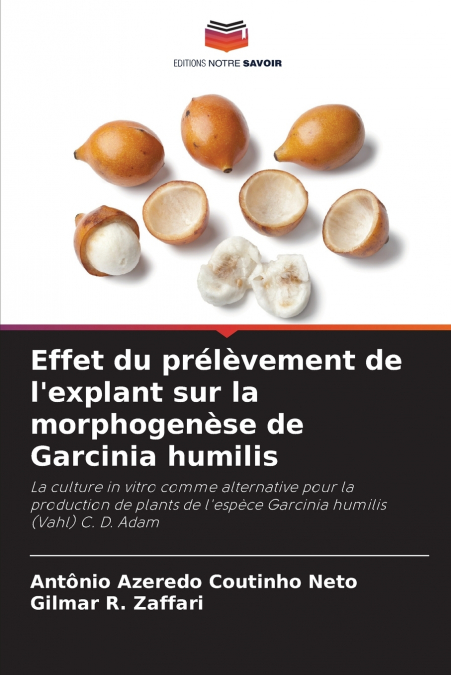
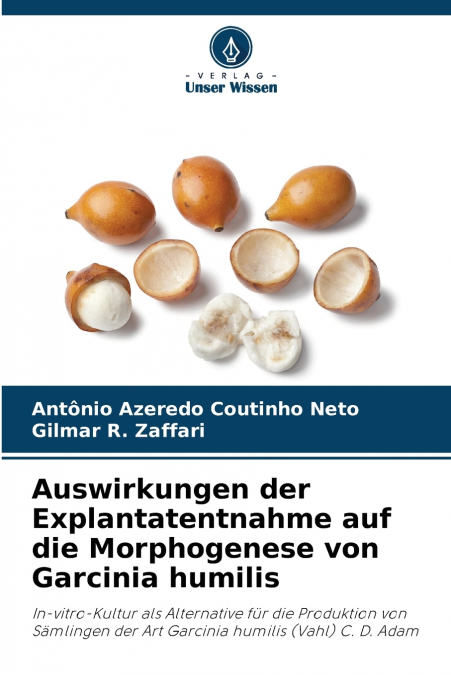
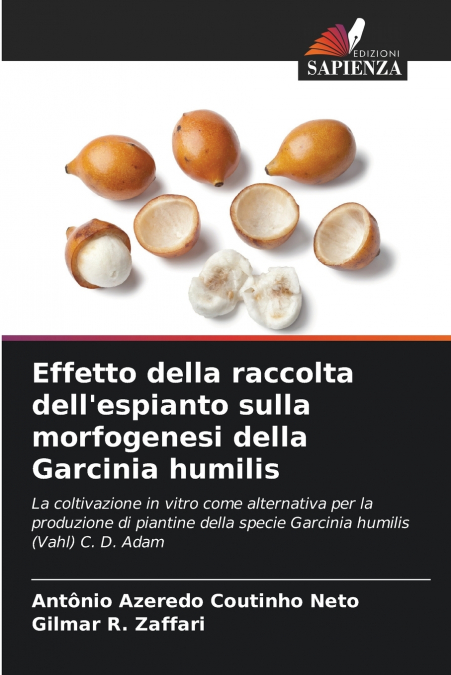
Brazilian fruit growing has grown significantly in recent years, with increased consumption of fresh and processed fruits, especially native fruit species. Among the species of the Atlantic Forest and Amazon Rainforest with great potential, Garcinia humilis (Vahl) C. D. Adam stands out, which is difficult to propagate in vivo, making it difficult for producers to produce seedlings of high genetic and phytosanitary quality. In this sense, in vitro cultivation of the species can contribute to large-scale vegetative propagation, provided that a detailed protocol is defined. However, several endogenous conditions of the plant influence the in vitro propagation protocol, as do the environmental conditions to which the plant is exposed, for example, the different seasons (autumn, winter, spring, and summer). This issue contains information on the metabolic condition of explants of the species G. humilis throughout the different seasons of the year, experiments to establish contamination-free cultures, and direct and indirect organogenesis.