
Inicio > Matemáticas y ciencia > Biologia, ciencias de la vida > Botánica y ciencias de las plantas > Doenças importantes, problemas de mercado e de produção das principais culturas de frutos
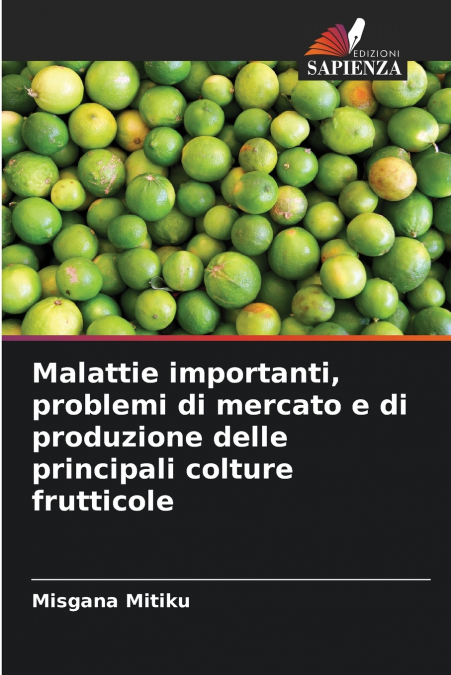
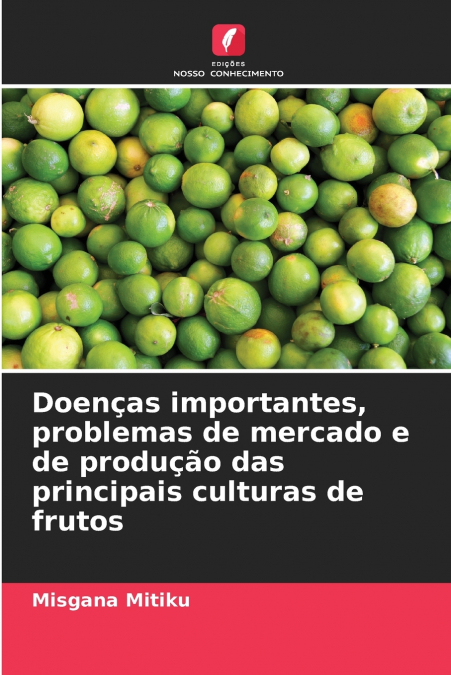
Doenças importantes, problemas de mercado e de produção das principais culturas de frutos

Doenças importantes, problemas de mercado e de produção das principais culturas de frutos

Misgana Mitiku

43,69 €
IVA incluido
Disponible
Editorial:
KS OmniScriptum Publishing
Año de edición:
2024
Materia
Botánica y ciencias de las plantas
ISBN:
9786203221299
43,69 €
IVA incluido
Disponible

Selecciona una librería:

  • Librería Samer Atenea
  • Librería Aciertas (Toledo)
  • Kálamo Books
  • Librería Perelló (Valencia)
  • Librería Elías (Asturias)
  • Donde los libros
  • Librería Kolima (Madrid)
  • Librería Proteo (Málaga)

A agricultura é a principal atividade da economia etíope, contribuindo com 50% do produto interno bruto (PIB). Cerca de 85% da população está envolvida na agricultura; cerca de 75% da indústria da Etiópia está envolvida na transformação de produtos agrícolas (Yohannes, 1991). Da área total do país, estima-se que 69% seja adequada para fins agrícolas. As culturas hortícolas são ricas em vitaminas, hidratos de carbono e outros nutrientes que contribuem para uma parte importante da mistura diária dos pratos etíopes. Algumas deficiências nutricionais, como as vitaminas A e C e o ferro, podem ser corrigidas através da utilização de legumes e frutos selecionados, bem como de culturas de raízes. A adoção de variedades de frutos de elevado rendimento e resistentes a doenças foi considerada uma medida de alívio adequada, na medida em que melhorou os meios de subsistência dos agricultores locais. O relatório do inquérito realizado a nível regional em 2014 também confirmou que o rendimento obtido com as cultivares locais é demasiado baixo.

Artículos relacionados

  • The Green Architecture
    Ali Mirshafieyan / Ghazal Yeganeh / Maryam Zamani Motlagh
    Protecting green energy as well as non-renewable energy, as well as their sustainable use, many advances in the technology of extracting oil products and other reserves under the ground have caused many improvements. In this regard, proposing the design of buildings in which the consumption of fossil fuels reaches its lowest level is considered one of the important solutions in...
    Disponible

    82,54 €

  • Responsible Use and Management of Agrochemicals
    Juan Carlos Nava
    Uso y manejo responsable de agroquímicos is a work product of the author’s experiences (undergraduate and graduate professor, with research and extension projects), aimed at producers, companies, professionals, students, advisors, researchers, among others.Due to its structure and content, it is expected to be a valuable aid to all people directly or indirectly involved in the ...
    Disponible

    49,45 €

  • Hope in the Soil
    Ellen G White
    Before edible classrooms began 'sprouting' in elementary schools, before buzzwords like 'sustainable agriculture', 'organic,' or 'veganic' came into existence, an exceptional woman named Ellen G. White penned numerous letters and articles on the importance of farming, an outdoor life, and manual labor. Though often remembered for other things, Mrs. White was actively engaged in...
    Disponible

    18,38 €

  • The Green Revolution
    Binitha Sophine Emmanuel
    The Green Revolution, a transformative era in the annals of agriculture, emerged as a game-changing force during the mid-20th century, fundamentally reshaping the methodology of food production and steering the trajectory of global food security. Characterized by a sequence of technological breakthroughs, the Green Revolution aimed to substantially augment agricultural producti...
    Disponible

    53,23 €

  • Utilization of Stingless Bees, Tetragonula laeviceps (Smith)
    Dr. J. J. Pastagia / Dr. V. C. Gadhiya
    The present investigations on utilization of stingless bees, T. laeviceps Smith in net house condition carried out with the broad aspects like flowers visited by stingless bees, T. laeviceps Smith, toxicity of insecticides to T. laeviceps Smith workers, floral biology of musk melon, foraging behavior of stingless bees, T. laeviceps Smith in net house condition, effect of pollin...
    Disponible

    84,80 €

  • La révolution verte
    Binitha Sophine Emmanuel
    La révolution verte, une ère transformatrice dans les annales de l’agriculture, est apparue comme une force qui a changé la donne au milieu du 20e siècle, remodelant fondamentalement la méthodologie de la production alimentaire et orientant la trajectoire de la sécurité alimentaire mondiale. Caractérisée par une série de percées technologiques, la révolution verte visait à augm...
    Disponible

    53,29 €

Otros libros del autor

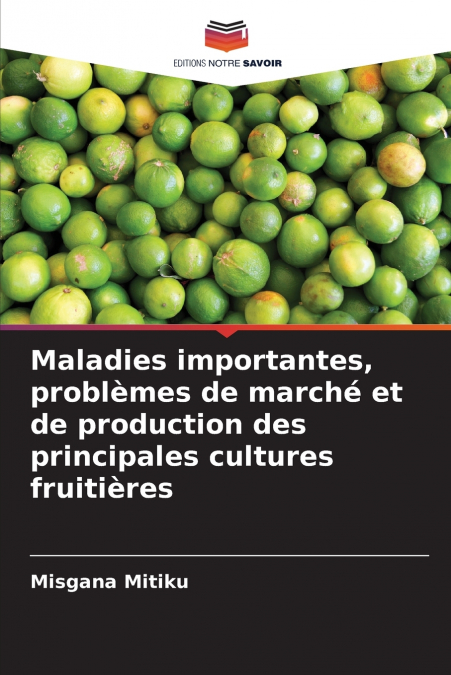
  • Maladies importantes, problèmes de marché et de production des principales cultures fruitières
    Misgana Mitiku
    L’agriculture est le principal secteur de l’économie éthiopienne, contribuant pour 50 % au produit intérieur brut (PIB). Environ 85% de la population est engagée dans l’agriculture ; environ 75% de l’industrie éthiopienne est engagée dans la transformation des produits agricoles (Yohannes, 1991). On estime que 69 % de la superficie totale du pays est propice à l’agriculture. Le...
    Disponible

    43,69 €

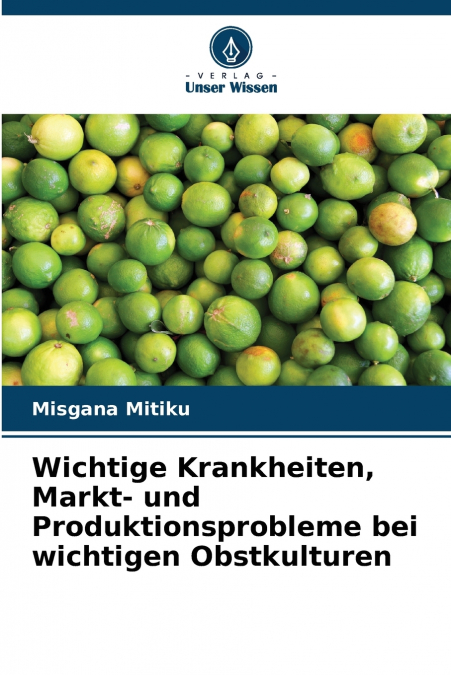
  • Wichtige Krankheiten, Markt- und Produktionsprobleme bei wichtigen Obstkulturen
    Misgana Mitiku
    Die Landwirtschaft ist der Hauptpfeiler der äthiopischen Wirtschaft und trägt 50 % zum Bruttoinlandsprodukt (BIP) bei. Etwa 85 % der Bevölkerung sind in der Landwirtschaft tätig; etwa 75 % der äthiopischen Industrie sind in der Verarbeitung von Agrarprodukten tätig (Yohannes, 1991). Von der Gesamtfläche des Landes sind schätzungsweise 69 % für landwirtschaftliche Zwecke geeigne...
    Disponible

    43,69 €

  • Malattie importanti, problemi di mercato e di produzione delle principali colture frutticole
    Misgana Mitiku
    L’agricoltura è la principale fonte di sostentamento dell’economia etiope e contribuisce per il 50% al prodotto interno lordo (PIL). Circa l’85% della popolazione è impegnata nell’agricoltura; circa il 75% dell’industria etiope è impegnata nella lavorazione dei prodotti agricoli (Yohannes, 1991). Si stima che il 69% della superficie totale del Paese sia adatto a scopi agricoli....
    Disponible

    43,69 €