Dépistage et gestion du puceron du carthame

Dépistage et gestion du puceron du carthame

P.S. Neharkar / S. B Wagh / Yogesh Matre

74,04 €
IVA incluido
Disponible
Editorial:
KS OmniScriptum Publishing
Año de edición:
2024
Materia
Botánica y ciencias de las plantas
ISBN:
9786208286774
74,04 €
IVA incluido
Disponible

Selecciona una librería:

  • Librería Samer Atenea
  • Librería Aciertas (Toledo)
  • Kálamo Books
  • Librería Perelló (Valencia)
  • Librería Elías (Asturias)
  • Donde los libros
  • Librería Kolima (Madrid)
  • Librería Proteo (Málaga)

Le criblage de 14 génotypes a été effectué parmi les accessions criblées, une accession a enregistré une population de pucerons de 71,33 pucerons/5 cm de rameau avec un AII de 0,80. Ce génotype SSF-17-04 a été classé comme hautement résistant au puceron du carthame. Dix accessions du germoplasme ont enregistré une population de pucerons de 91,01-116,11 pucerons/5 cm sur la longueur de la pousse apicale et un AII allant de 1,46 à 1,73.Le rendement en graines du carthame a varié dans toutes les parcelles de traitement. Les traitements avec deux pulvérisations foliaires de spinetoram 11,70 SC et deux pulvérisations foliaires de cyantraniliprole 10,26 OD étaient les traitements les plus prometteurs qui ont été trouvés à égalité l’un avec l’autre, respectivement. Les traitements suivants, par ordre d’efficacité, étaient le traitement des semences au thiaméthoxame 30 FS et une pulvérisation foliaire de spinétorame 11,70 SC et le traitement des semences au thiaméthoxame 30 FS et une pulvérisation foliaire de cyantraniliprole 10,26 OD. La visite de divers pollinisateurs à différentes heures de la journée sur le carthame (abeilles/m2/2hrs). L’intensité de toutes les espèces d’abeilles mellifères augmente progressivement et atteint son apogée entre 10h00 et 12h00, puis diminue lentement.
Artículos relacionados

  • The Green Architecture
    Ali Mirshafieyan / Ghazal Yeganeh / Maryam Zamani Motlagh
    Protecting green energy as well as non-renewable energy, as well as their sustainable use, many advances in the technology of extracting oil products and other reserves under the ground have caused many improvements. In this regard, proposing the design of buildings in which the consumption of fossil fuels reaches its lowest level is considered one of the important solutions in...
    Disponible

    82,54 €

  • Responsible Use and Management of Agrochemicals
    Juan Carlos Nava
    Uso y manejo responsable de agroquímicos is a work product of the author’s experiences (undergraduate and graduate professor, with research and extension projects), aimed at producers, companies, professionals, students, advisors, researchers, among others.Due to its structure and content, it is expected to be a valuable aid to all people directly or indirectly involved in the ...
    Disponible

    49,45 €

  • Hope in the Soil
    Ellen G White
    Before edible classrooms began 'sprouting' in elementary schools, before buzzwords like 'sustainable agriculture', 'organic,' or 'veganic' came into existence, an exceptional woman named Ellen G. White penned numerous letters and articles on the importance of farming, an outdoor life, and manual labor. Though often remembered for other things, Mrs. White was actively engaged in...
    Disponible

    18,38 €

  • The Green Revolution
    Binitha Sophine Emmanuel
    The Green Revolution, a transformative era in the annals of agriculture, emerged as a game-changing force during the mid-20th century, fundamentally reshaping the methodology of food production and steering the trajectory of global food security. Characterized by a sequence of technological breakthroughs, the Green Revolution aimed to substantially augment agricultural producti...
    Disponible

    53,23 €

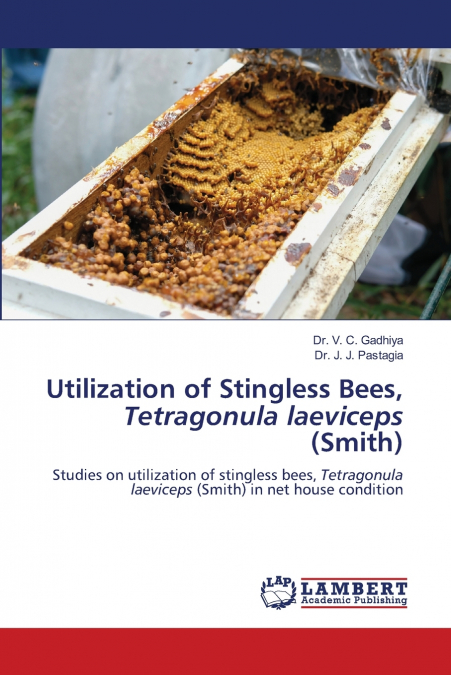
  • Utilization of Stingless Bees, Tetragonula laeviceps (Smith)
    Dr. J. J. Pastagia / Dr. V. C. Gadhiya
    The present investigations on utilization of stingless bees, T. laeviceps Smith in net house condition carried out with the broad aspects like flowers visited by stingless bees, T. laeviceps Smith, toxicity of insecticides to T. laeviceps Smith workers, floral biology of musk melon, foraging behavior of stingless bees, T. laeviceps Smith in net house condition, effect of pollin...
    Disponible

    84,80 €

  • La révolution verte
    Binitha Sophine Emmanuel
    La révolution verte, une ère transformatrice dans les annales de l’agriculture, est apparue comme une force qui a changé la donne au milieu du 20e siècle, remodelant fondamentalement la méthodologie de la production alimentaire et orientant la trajectoire de la sécurité alimentaire mondiale. Caractérisée par une série de percées technologiques, la révolution verte visait à augm...
    Disponible

    53,29 €

Otros libros del autor

  • Screening e gestione dell’afide del cartamo
    P.S. Neharkar / S. B Wagh / Yogesh Matre
    Lo screening di 14 genotipi è stato effettuato su un’unica accessione che ha registrato una popolazione di afidi di 71,33 afidi/5 cm di ramoscello con AII 0,80. Questo genotipo SSF-17-04 è stato classificato come altamente resistente all’afide del cartamo. Dieci accessioni del germoplasma hanno registrato una popolazione di afidi di 91,01-116,11 afidi/5 cm sulla lunghezza del g...
    Disponible

    74,04 €

  • Screening und Bekämpfung der Saflor-Laublaus
    P.S. Neharkar / S. B Wagh / Yogesh Matre
    Von den 14 untersuchten Genotypen wurde bei einem Genotyp eine Blattlauspopulation von 71,33 Blattläusen/5 cm Zweig mit AII 0,80 festgestellt. Dieser Genotyp SSF-17-04 wurde als hoch resistent gegen die Färberdistelblattlaus eingestuft. Zehn Keimplasma-Akzessionen wiesen eine Blattlauspopulation von 91,01-116,11 Blattläusen/5 cm an der apikalen Trieblänge und einen AII-Wert von...
    Disponible

    74,04 €

  • Badania przesiewowe i zarządzanie mszycą szafranową
    P.S. Neharkar / S. B Wagh / Yogesh Matre
    Przeprowadzono badania przesiewowe 14 genotypów, z których jeden odnotował populację mszyc na poziomie 71,33 mszyc/5 cm gałązki z AII 0,80. Genotyp SSF-17-04 został sklasyfikowany jako wysoce odporny na mszycę szafranową. Dziesięć odmian zarodkowych odnotowało populację mszyc na poziomie 91,01-116,11 mszyc/5 cm na długości wierzchołkowej pędu i AII w zakresie od 1,46 do 1,73. P...
    Disponible

    74,04 €

  • Despistagem e gestão do afídeo do cártamo
    P.S. Neharkar / S. B Wagh / Yogesh Matre
    Foi efectuado o rastreio de 14 genótipos dos acessos rastreados, tendo um deles registado uma população de pulgões de 71,33 pulgões/5 cm de galho com AII 0,80. Este genótipo SSF-17-04 foi classificado como altamente resistente ao pulgão do cártamo. Dez acessos de germoplasma registaram uma população de pulgões de 91,01-116,11 pulgões/5 cm no comprimento do rebento apical e AII ...
    Disponible

    74,04 €

  • Screening and management of Safflower aphid
    P.S. Neharkar / S. B Wagh / Yogesh Matre
    Screening of 14 genotypes were carried out of accessions screened one accession recorded aphid population of 71.33 aphids/5 cm twig with AII 0.80. These genotype SSF-17-04 were graded as highly resistance to safflower aphid. Ten germplasm accessions recorded aphid population of 91.01-116.11 aphids/5 cm on the apical shoot length and AII ranging from 1.46 to 1.73.The seed yield ...
    Disponible

    75,51 €