
Inicio > Matemáticas y ciencia > Biologia, ciencias de la vida > Computergestützte Ansätze für die Krebsgenomik
Computergestützte Ansätze für die Krebsgenomik

Computergestützte Ansätze für die Krebsgenomik

Vasilisa A. Rudneva

82,98 €
IVA incluido
Disponible
Editorial:
KS OmniScriptum Publishing
Año de edición:
2025
Materia
Biologia, ciencias de la vida
ISBN:
9786200761514
82,98 €
IVA incluido
Disponible

Selecciona una librería:

  • Librería Samer Atenea
  • Librería Aciertas (Toledo)
  • Kálamo Books
  • Librería Perelló (Valencia)
  • Librería Elías (Asturias)
  • Donde los libros
  • Librería Kolima (Madrid)
  • Librería Proteo (Málaga)

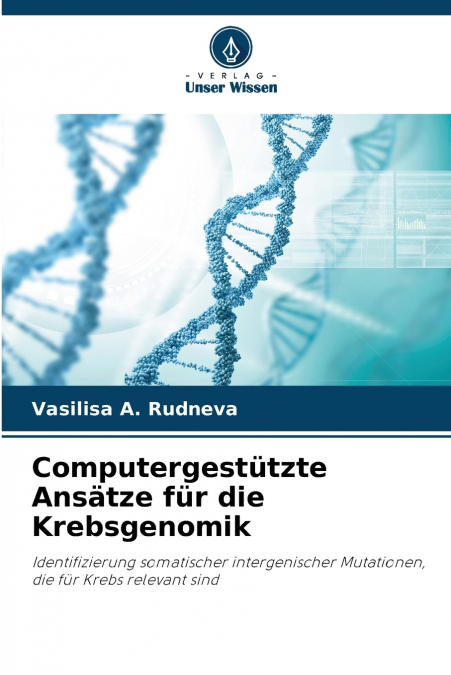
Krebs ist eine komplexe genomische Erkrankung, die durch die Anhäufung somatischer Mutationen im Laufe des Lebens eines Patienten gekennzeichnet ist. Die Identifizierung somatischer Treibermutationen, die zur Tumorentstehung beitragen, ist ein wichtiges Ziel der Krebsgenomik. Dank der jüngsten Fortschritte in der Sequenzierungstechnologie ist es nun möglich, somatische Mutationen bei verschiedenen Krebsarten auf der Ebene des gesamten Genoms zu untersuchen. Während sich die meisten Studien zur Krebsgenomik bisher auf die Identifizierung von Treibermutationen in Exons konzentrierten, wurden mehrere Beispiele für Treiberereignisse in den nicht-proteinkodierenden Bereichen des Genoms identifiziert, darunter die wiederkehrenden TERT-Promotor-Mutationen. Diese Erkenntnisse haben die Suche nach ähnlichen Beispielen für wiederkehrende nicht-kodierende Mutationen mithilfe der computergestützten Krebsgenomik vorangetrieben. In diesem Buch stelle ich mehrere computergestützte Ansätze zur Identifizierung somatischer Treibermutationen vor, die für Krebs relevant sind, wobei ein besonderer Schwerpunkt auf intergenen Regionen des Genoms liegt.

Artículos relacionados

  • Viral Replication Complexes
    Viruses are obligate intracellular parasites that need to co-opt a living cell’s machinery for replication. At the heart of the viral replication machinery are the nucleic acid polymerases, which are responsible for efficiently copying the viral genome. This process must often be coordinated with other viral processes, including protein translation and viral packaging. The poly...
  • Advances in Flavivirus Research
    The flaviviruses are composed almost entirely of arthropod-borne viruses, a subset of which are responsible for millions of cases of human disease each year. Among these viruses are dengue virus—a scourge throughout the tropical regions of Asia and the Americas; yellow fever virus—the “original” hemorrhagic fever virus; and the recently emerged Zika virus. While the flaviviruse...
    Disponible

    51,85 €

  • Brain Asymmetry of Structure and/or Function
    Lesley J. Rogers / Lesley JRogers
    This edited book brings together research reports on the asymmetry of brain function in various species, including humans, dogs, birds, lizards and bees. As shown in a wide range of species, and, as we now know, not solely in humans, the left and right sides of the brain process information in different ways and control different responses or patterns of behaviour. Since this d...
    Disponible

    51,71 €

  • Fungal Pigments
    With the impact of globalization in research trends, the search for healthier life styles, the increasing public demand for natural, organic, and ‘clean labelled’ products, as well as the growing global market for natural colorants in economically fast-growing countries all over the world, filamentous fungi started to be investigated as readily available sources of chemically d...
    Disponible

    43,80 €

  • The Epithelialto- Mesenchymal Transition ( EMT ) in Cancer
    Joëlle Roche
    The epithelial-to-mesenchymal transition (EMT) is a highly dynamic process with multiple transitional states, by which epithelial cells can convert into a mesenchymal phenotype. This process involves loss of cellular adhesion and cellular polarity, and an improvement in migratory and invasive properties. It occurs during normal embryonic development, tissue regeneration, organ ...
    Disponible

    67,86 €

  • The Biology and Treatment of Myeloid Leukaemias
    There has been an observed decrease in the global mortality from cancer, mostly atributable to improved, particularly early, detection and prevention. For many carcinomas and leukaemias in adults, once the disease has reached a certain stage there are no therapies that are able to erradicate the cancer cells and cure patients. There has been progress in the treatment of acute m...
    Disponible

    51,85 €

Otros libros del autor

  • Abordagens computacionais para a genómica do cancro
    Vasilisa A. Rudneva
    O cancro é uma doença genómica complexa caracterizada pela acumulação de mutações somáticas ao longo da vida de um paciente. A identificação de mutações somáticas impulsionadoras que contribuem para a tumorigénese é um dos principais objetivos da genómica do cancro. Com os recentes avanços nas tecnologias de sequenciamento, tornou-se possível estudar mutações somáticas em escal...
    Disponible

    82,98 €

  • Metody obliczeniowe w genomice nowotworów
    Vasilisa A. Rudneva
    Rak jest złożoną chorobą genomową charakteryzującą się nagromadzeniem mutacji somatycznych w ciągu całego życia pacjenta. Identyfikacja somatycznych mutacji sterujących, które przyczyniają się do powstawania nowotworów, jest głównym celem genomiki nowotworów. Dzięki najnowszym osiągnięciom w dziedzinie technologii sekwencjonowania możliwe stało się badanie mutacji somatycznych ...
    Disponible

    82,91 €

  • Approcci computazionali per la genomica del cancro
    Vasilisa A. Rudneva
    Il cancro è una malattia genomica complessa caratterizzata dall’accumulo di mutazioni somatiche nel corso della vita di un paziente. L’identificazione delle mutazioni somatiche driver che contribuiscono alla tumorigenesi è uno degli obiettivi principali della genomica del cancro. Grazie ai recenti progressi nelle tecnologie di sequenziamento, è diventato possibile studiare le m...
    Disponible

    82,98 €

  • Approches computationnelles pour la génomique du cancer
    Vasilisa A. Rudneva
    Le cancer est une maladie génomique complexe caractérisée par l’accumulation de mutations somatiques au cours de la vie d’un patient. L’identification des mutations somatiques motrices qui contribuent à la tumorigenèse est un objectif majeur de la génomique du cancer. Grâce aux progrès récents des technologies de séquençage, il est désormais possible d’étudier les mutations som...
    Disponible

    82,98 €