 Librería Samer Atenea
 Kálamo Books
 Librería Elías (Asturias)
 Librería Kolima (Madrid)
 Librería Proteo (Málaga)
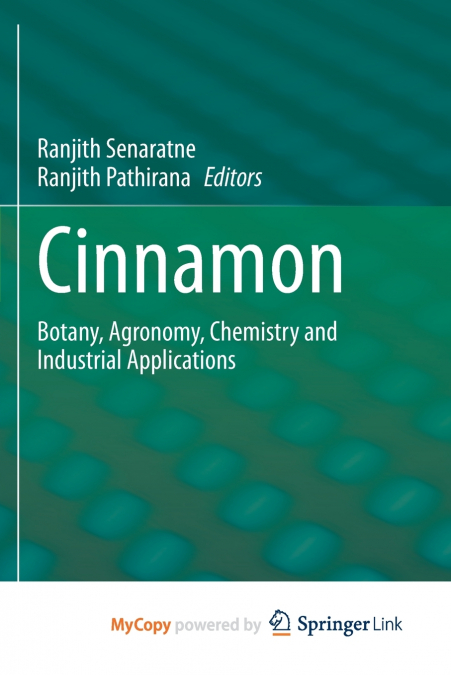
Cinnamon is the common name for the spice obtained from the dried inner bark of several species of the genus Cinnamomum in the Lauraceae family. In world trade, Cinnamomum cassia (L.) J. Presl Cinnamomum burmannii dominate, but it is of a different quality to ’true’ or ’Ceylon’ cinnamon produced from Cinnamomum zeylanicum Blume (C. verum J. Presl), with the latter much easier to process, giving a more delicate, sweeter flavor with nuances of clove, but more importantly with only traces (often below detection thresholds) of coumarin, compared with 5-7 g/kg in other species. Cinnamon has been a popular and expensive spice in many civilizations, including ancient Egypt, Rome and in 14th and 15th century Europe, where it was used primarily to preserve meat for its antibacterial properties, fine aroma and flavor. Ancient Egyptians used cinnamon in mummification process due to its antibacterial properties and fragrance. The quest for cinnamon brought many explorers to Ceylon, whose ancient history is intertwined with the cinnamon trade. Ancient Egyptians and Romans used cinnamon as a valued spice and as an incense.In recent years, much research has been conducted in crop improvement, processing and value addition in cinnamon. In addition to direct use as a condiment/spice, cinnamon has found a multitude of uses in the food and beverage, traditional medicine, pharmacology, nutraceutical and cosmetics industries. Ceylon cinnamon is unique in that oils distilled from the bark (major constituents are cinnamaldehyde and oleoresins), leaf (eugenol is the major constituent used in dentistry, perfumes, flavorings and as an antioxidant) and roots (camphor) have different industrial uses. Cinnamaldehyde is now a proven natural bactericide widely used in food and beverage industry, effective against Salmonella spp. and Escherichia coli. Thus, it has become an important natural component of organic fruit and vegetable juices to enhance microbial safety of these nutritious beverages.Because of its manifold uses, cinnamon is an important crop. There have been many recent publications on its ethnobotany, genetics, crop improvement, agronomy, processing, biotechnology, chemistry, food and medicinal uses, and industrial applications. However, one book condensing all these findings is lacking. Our publication, with chapters devoted to all these aspects of cinnamon written by experts in these fields, condenses current knowledge into a single source and contribute to the advancement and dissemination of knowledge and technology. Contributors to the book constitute internationally renowned senior scientists and academics with hands-on experience as well as movers and shakers of industry, thereby striking a right balance between theory and practice. Therefore it is a valuable source for students, teachers, scientists, planners policy makers, practicing agriculturists and industrialists, and a prizedacquisition to any library in higher education institutions, R & D institutions and public and private sector institutions in agriculture and allied fields.