Inicio > Matemáticas y ciencia > Biologia, ciencias de la vida > Botánica y ciencias de las plantas > Ätiologie und Behandlung der Fruchtfäule von Brinjal (Solanum Melongena L.)
Ätiologie und Behandlung der Fruchtfäule von Brinjal (Solanum Melongena L.)

Ätiologie und Behandlung der Fruchtfäule von Brinjal (Solanum Melongena L.)

I. B. Biradhar / R. K. Mesta / Sanjeev Jakatimath

69,88 €
IVA incluido
Disponible
Editorial:
KS OmniScriptum Publishing
Año de edición:
2024
Materia
Botánica y ciencias de las plantas
ISBN:
9786207769186
69,88 €
IVA incluido
Disponible

Selecciona una librería:

  • Librería Samer Atenea
  • Librería Aciertas (Toledo)
  • Kálamo Books
  • Librería Perelló (Valencia)
  • Librería Elías (Asturias)
  • Donde los libros
  • Librería Kolima (Madrid)
  • Librería Proteo (Málaga)

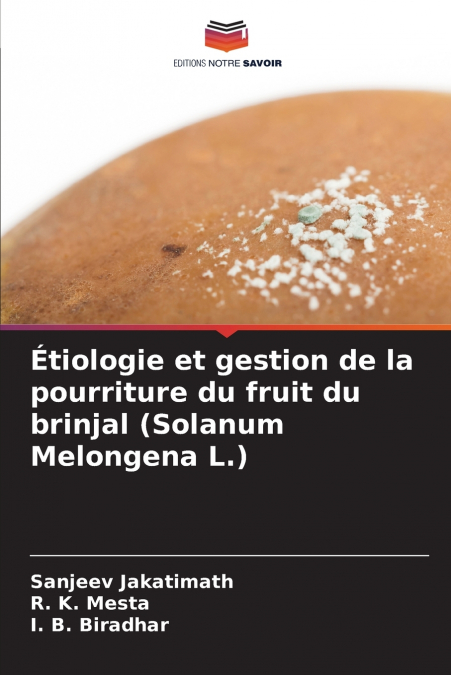
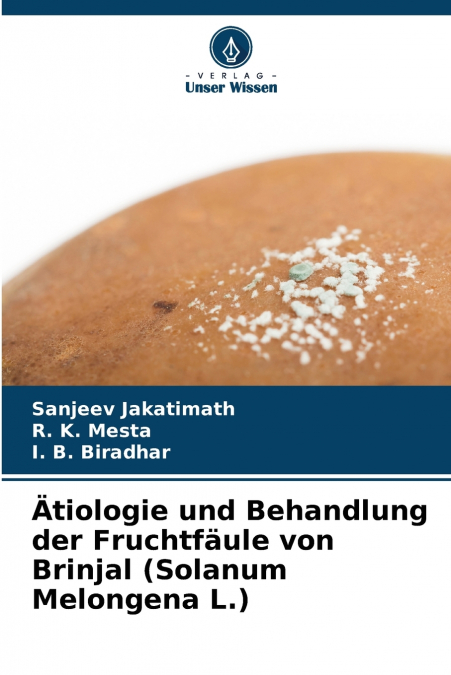
Die durch Alternaria alternata, Colletotrichum melongenae und Phomopsis vexans verursachte Fruchtfäule der Brinjal ist eine der wichtigsten Krankheiten der Brinjal in Nord-Karnataka. Die vorliegenden Untersuchungen zur Fruchtfäule der Brinjal wurden in der Abteilung für Pflanzenpathologie des COH in Bagalkot in den Jahren 2013-14 bis 2014-15 durchgeführt. Brinjal (Solanum melongena L.) ist nach Tomate und Kartoffel eine der wichtigsten Solanaceen-Gemüsepflanzen Indiens. Die Fruchtfäule der Brinjal, die durch Alternaria alternata (Fr.) Keissler, Colletotrichum melongenae und Phomopsis vexans verursacht wird, ist eine wichtige Krankheit, die in der näheren Umgebung des Bezirks Bagalkot zu ernsten Problemen bei dieser Kultur führt. Von Alternaria-Fruchtfäule befallene Früchte von Brinjal zeigten typische Symptome wie kleine, kreisrunde, schwarzbraune und nekrotische Flecken, die sich später dunkelbraun bis schwarzbraun verfärbten. Der Erreger wurde als Alternaria alternata identifiziert. Bei mit Colletotrichum melongenae infizierten Früchten wurden kleine kreisförmige Flecken festgestellt, die sich zu großen elliptischen Flecken auf den Früchten und Blättern verdichteten. Später wurden die Krankheitserreger als Colletotrichum melogenae bzw. Phomopsis vexans identifiziert.

Artículos relacionados

  • The Green Architecture
    Ali Mirshafieyan / Ghazal Yeganeh / Maryam Zamani Motlagh
    Protecting green energy as well as non-renewable energy, as well as their sustainable use, many advances in the technology of extracting oil products and other reserves under the ground have caused many improvements. In this regard, proposing the design of buildings in which the consumption of fossil fuels reaches its lowest level is considered one of the important solutions in...
    Disponible

    82,54 €

  • Responsible Use and Management of Agrochemicals
    Juan Carlos Nava
    Uso y manejo responsable de agroquímicos is a work product of the author’s experiences (undergraduate and graduate professor, with research and extension projects), aimed at producers, companies, professionals, students, advisors, researchers, among others.Due to its structure and content, it is expected to be a valuable aid to all people directly or indirectly involved in the ...
    Disponible

    49,45 €

  • Hope in the Soil
    Ellen G White
    Before edible classrooms began 'sprouting' in elementary schools, before buzzwords like 'sustainable agriculture', 'organic,' or 'veganic' came into existence, an exceptional woman named Ellen G. White penned numerous letters and articles on the importance of farming, an outdoor life, and manual labor. Though often remembered for other things, Mrs. White was actively engaged in...
    Disponible

    18,38 €

  • The Green Revolution
    Binitha Sophine Emmanuel
    The Green Revolution, a transformative era in the annals of agriculture, emerged as a game-changing force during the mid-20th century, fundamentally reshaping the methodology of food production and steering the trajectory of global food security. Characterized by a sequence of technological breakthroughs, the Green Revolution aimed to substantially augment agricultural producti...
    Disponible

    53,23 €

  • Utilization of Stingless Bees, Tetragonula laeviceps (Smith)
    Dr. J. J. Pastagia / Dr. V. C. Gadhiya
    The present investigations on utilization of stingless bees, T. laeviceps Smith in net house condition carried out with the broad aspects like flowers visited by stingless bees, T. laeviceps Smith, toxicity of insecticides to T. laeviceps Smith workers, floral biology of musk melon, foraging behavior of stingless bees, T. laeviceps Smith in net house condition, effect of pollin...
    Disponible

    84,80 €

  • La révolution verte
    Binitha Sophine Emmanuel
    La révolution verte, une ère transformatrice dans les annales de l’agriculture, est apparue comme une force qui a changé la donne au milieu du 20e siècle, remodelant fondamentalement la méthodologie de la production alimentaire et orientant la trajectoire de la sécurité alimentaire mondiale. Caractérisée par une série de percées technologiques, la révolution verte visait à augm...
    Disponible

    53,29 €

Otros libros del autor

  • Etiologia e gestão da podridão dos frutos da Brinjal (Solanum Melongena L.)
    I. B. Biradhar / R. K. Mesta / Sanjeev Jakatimath
    O apodrecimento dos frutos da brinjal causado por Alternaria alternata , Colletotrichum melongenae e Phomopsis vexans é uma das doenças importantes da brinjal no norte de Karnataka. Os presentes estudos sobre a podridão dos frutos da brinjal foram realizados no Departamento de Patologia Vegetal, COH, Bagalkot, durante os anos de 2013-14 a 2014-15. A couve-brinco (Solanum melong...
    Disponible

    69,90 €

  • Eziologia e gestione del marciume della frutta di Brinjal (Solanum Melongena L.)
    I. B. Biradhar / R. K. Mesta / Sanjeev Jakatimath
    Il marciume della frutta del brinjal, causato da Alternaria alternata, Colletotrichum melongenae e Phomopsis vexans, è una delle principali malattie del brinjal nel nord del Karnataka. I presenti studi sul marciume della frutta del brinjal sono stati condotti presso il Dipartimento di Patologia Vegetale, COH, Bagalkot durante gli anni 2013-14 e 2014-15. Il brinjal (Solanum melo...
    Disponible

    69,90 €

  • Étiologie et gestion de la pourriture du fruit du brinjal (Solanum Melongena L.)
    I. B. Biradhar / R. K. Mesta / Sanjeev Jakatimath
    La pourriture des fruits du brinjal causée par Alternaria alternata, Colletotrichum melongenae et Phomopsis vexans est l’une des maladies importantes du brinjal dans le nord du Karnataka. Les présentes études sur la pourriture des fruits du brinjal ont été menées au Département de pathologie végétale, COH, Bagalkot au cours des années 2013-14 à 2014-15. Le brinjal (Solanum melo...
    Disponible

    69,88 €