Analysis of Vertebrate Population

Analysis of Vertebrate Population

Graeme Caughley

68,15 €
IVA incluido
Disponible
Editorial:
The Blackburn Press
Año de edición:
2004
Materia
Ecología, la biosfera
ISBN:
9781930665217
68,15 €
IVA incluido
Disponible

Selecciona una librería:

  • Librería Samer Atenea
  • Librería Aciertas (Toledo)
  • Kálamo Books
  • Librería Perelló (Valencia)
  • Librería Elías (Asturias)
  • Donde los libros
  • Librería Kolima (Madrid)
  • Librería Proteo (Málaga)

This book was first published in 1977 and is widely recognized as a classic in the field. It is the 'bible' for wildlife managers everywhere.It is an introduction to the methods and analysis of vertebrate populations for ecologists and wildlife managers as well as students of these subjects. A wide range of examples drawn from mammals and birds in different parts of the world is used to illustrate these methods. The book shows how population analysis can be applied to practical problems of wildlife management such as reducing a population, stimulating it to increase or taking from it a sustained yield.In order to make this complex subject as simple as possible, the methods for analysis described in this book are those which use elementary algebra and statistics rather than complex mathematics.Graeme Caughley studied the interactions between large mammalian herbivores and the environments they occupy. The pattern of population growth that can be predicted theoretically from such a relationship is both complex and variable. The animals will either erupt, crash, and then converge to a more stable density, or the population may oscillate indefinitely, the densities of plants and animals being locked into a stable limit cycle. He argued that the dynamics of mammalian herbivore populations are comprehensible only in terms of an interactive relationship between the herbivores and vegetation. He further argued that efficient management of such systems requires an understanding of the underlying mechanisms whereby the animals react to the plants and in turn the plants react dynamically to the effects of grazing.He was best known for his contributions to the understanding of herbivore-vegetation dynamics in the New Zealand high country, the Himalayas, southern Africa and the semi-arid rangelands of Australia. His research was distinguished by rigorous design, execution and analysis, so that the conclusions had generality beyond the particular species studied. Since he chose topics that combined theoretical interest and practical application, he also influenced important management policies - deer populations in New Zealand, kangaroos in Australia and the conservation of large mammals in Africa and North America. He had a major influence on thinking and practice in the field of vertebrate ecology and wildlife management throughout the world.
Artículos relacionados

  • Water from a Transdisciplinary Perspective
    Ana Isabel Pereira Cardoso / Teresinha M. Gonçalves
    Life in cities has distanced human beings from nature and made it difficult to understand the ecology of life dependent on the environment. Urban water collection and distribution processes contribute significantly to the fragmentation of knowledge and the vital recognition of the water cycle. Without the effective participation of the subject in environmental actions, it is no...
    Disponible

    43,82 €

  • Modeling Populations of Adaptive Individuals
    Bret C. Harvey / Steven F. Railsback
    Ecologists now recognize that the dynamics of populations, communities, and ecosystems are strongly affected by adaptive individual behaviors. Yet until now, we have lacked effective and flexible methods for modeling such dynamics. Traditional ecological models become impractical with the inclusion of behavior, and the optimization approaches of behavioral ecology cannot be use...
    Disponible

    65,53 €

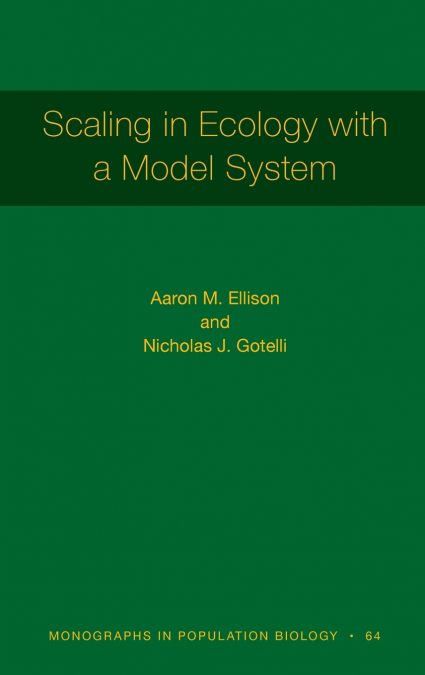
  • Scaling in Ecology with a Model System
    Aaron Ellison / Aaron M. Ellison / Nicholas J. Gotelli
    A groundbreaking approach to scale and scaling in ecological theory and practiceScale is one of the most important concepts in ecology, yet researchers often find it difficult to find ecological systems that lend themselves to its study. Scaling in Ecology with a Model System synthesizes nearly three decades of research on the ecology of Sarracenia purpurea-the northern pitcher...
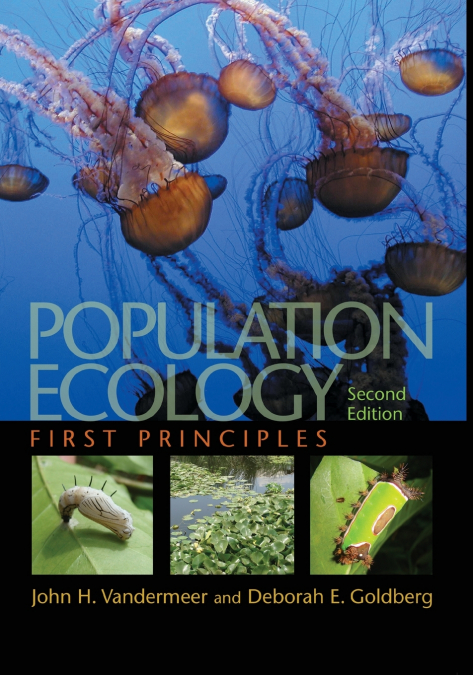
  • Population Ecology
    Deborah E. Goldberg / John H. Vandermeer
    The essential introduction to population ecology-now expanded and fully updatedEcology is capturing the popular imagination like never before, with issues such as climate change, species extinctions, and habitat destruction becoming ever more prominent. At the same time, the science of ecology has advanced dramatically, growing in mathematical and theoretical sophistication. He...
    Disponible

    124,92 €

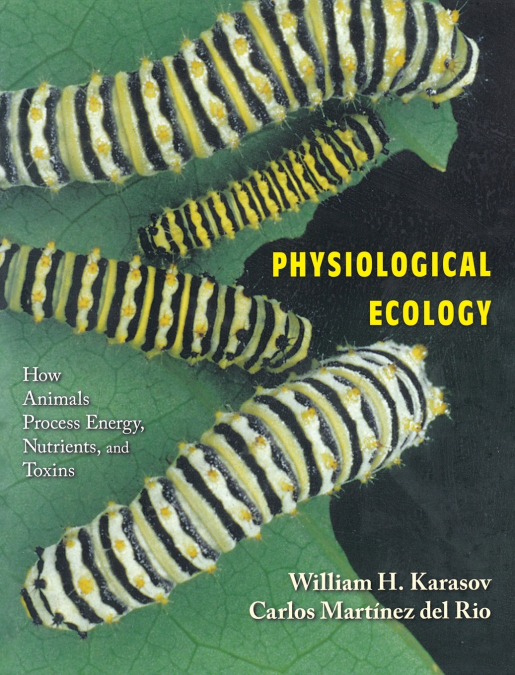
  • Physiological Ecology
    Carlos Martínez del Rio / William H. Karasov
    Unlocking the puzzle of how animals behave and how they interact with their environments is impossible without understanding the physiological processes that determine their use of food resources. But long overdue is a user-friendly introduction to the subject that systematically bridges the gap between physiology and ecology. Ecologists--for whom such knowledge can help clarif...
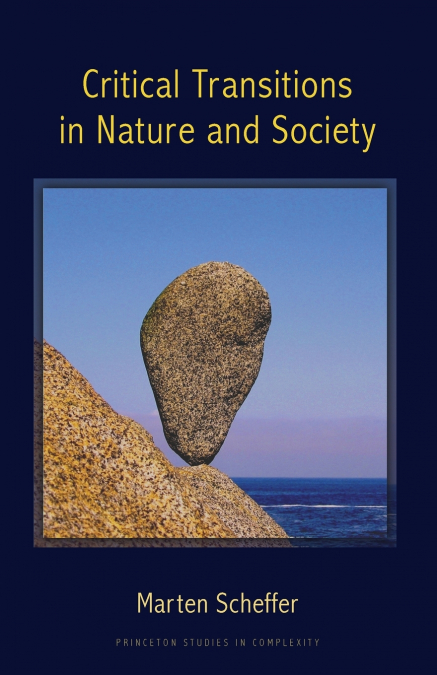
  • Critical Transitions in Nature and Society
    Marten Scheffer
    How do we explain the remarkably abrupt changes that sometimes occur in nature and society--and can we predict why and when they happen? This book offers a comprehensive introduction to critical transitions in complex systems--the radical changes that happen at tipping points when thresholds are passed. Marten Scheffer accessibly describes the dynamical systems theory behind cr...
    Disponible

    89,46 €