Inicio > Matemáticas y ciencia > Biologia, ciencias de la vida > Botánica y ciencias de las plantas > Zwischenfruchtanbau von einjährigen Blumen bei Jasminum sambac L
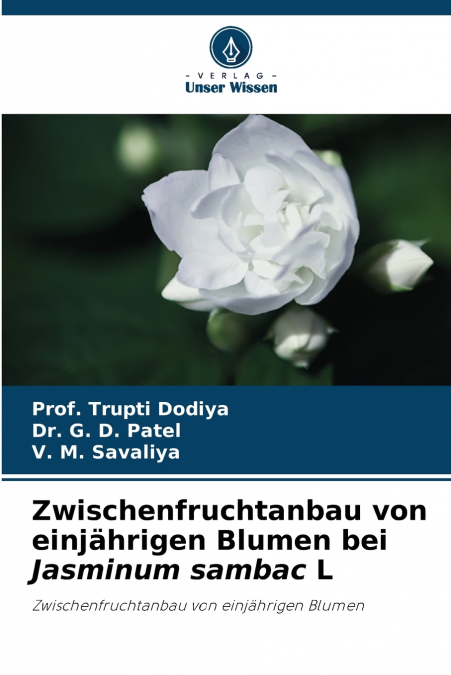
Zwischenfruchtanbau von einjährigen Blumen bei Jasminum sambac L

Zwischenfruchtanbau von einjährigen Blumen bei Jasminum sambac L

Dr. G. D. Patel / Prof. Trupti Dodiya / V. M. Savaliya

85,95 €
IVA incluido
Disponible
Editorial:
KS OmniScriptum Publishing
Año de edición:
2024
Materia
Botánica y ciencias de las plantas
ISBN:
9786207924509
85,95 €
IVA incluido
Disponible

Selecciona una librería:

  • Librería Samer Atenea
  • Librería Aciertas (Toledo)
  • Kálamo Books
  • Librería Perelló (Valencia)
  • Librería Elías (Asturias)
  • Donde los libros
  • Librería Kolima (Madrid)
  • Librería Proteo (Málaga)

Jasmin ist eine der ältesten und wichtigsten blühenden Zierpflanzen, die wegen ihrer duftenden Blüten weit verbreitet ist. Er gehört zur Familie der Oleaceae. In Indien wird Jasmin in den Bundesstaaten Tamil Nadu, Karnataka, Kerala, Gujarat, Andhra Pradesh und Maharashtra in großem Umfang angebaut. Unter Zwischenfruchtanbau versteht man den gleichzeitigen Anbau von zwei oder mehr Pflanzen auf demselben Feld. Wenn zwei oder mehr Kulturen mit unterschiedlichen Wurzelsystemen, unterschiedlichem Wasser- und Nährstoffbedarf und unterschiedlicher Bodenbeschaffenheit zusammen angebaut werden, werden Wasser, Nährstoffe und Sonnenlicht effizienter genutzt. Daher können die kombinierten Erträge von Kulturen, die als Zwischenfrüchte angebaut werden, höher sein als die Erträge der gleichen Kultur, die als Reinbestand (allein) angebaut wird. Diese Vorteile können besonders wichtig sein, weil sie nicht durch teure Betriebsmittel, sondern durch den einfachen Anbau von Pflanzen zusammen erreicht werden. Er bietet eine Versicherung gegen Totalausfälle der Ernte.

Artículos relacionados

  • The Green Architecture
    Ali Mirshafieyan / Ghazal Yeganeh / Maryam Zamani Motlagh
    Protecting green energy as well as non-renewable energy, as well as their sustainable use, many advances in the technology of extracting oil products and other reserves under the ground have caused many improvements. In this regard, proposing the design of buildings in which the consumption of fossil fuels reaches its lowest level is considered one of the important solutions in...
    Disponible

    82,54 €

  • Responsible Use and Management of Agrochemicals
    Juan Carlos Nava
    Uso y manejo responsable de agroquímicos is a work product of the author’s experiences (undergraduate and graduate professor, with research and extension projects), aimed at producers, companies, professionals, students, advisors, researchers, among others.Due to its structure and content, it is expected to be a valuable aid to all people directly or indirectly involved in the ...
    Disponible

    49,45 €

  • Hope in the Soil
    Ellen G White
    Before edible classrooms began 'sprouting' in elementary schools, before buzzwords like 'sustainable agriculture', 'organic,' or 'veganic' came into existence, an exceptional woman named Ellen G. White penned numerous letters and articles on the importance of farming, an outdoor life, and manual labor. Though often remembered for other things, Mrs. White was actively engaged in...
    Disponible

    18,38 €

  • The Green Revolution
    Binitha Sophine Emmanuel
    The Green Revolution, a transformative era in the annals of agriculture, emerged as a game-changing force during the mid-20th century, fundamentally reshaping the methodology of food production and steering the trajectory of global food security. Characterized by a sequence of technological breakthroughs, the Green Revolution aimed to substantially augment agricultural producti...
    Disponible

    53,23 €

  • Utilization of Stingless Bees, Tetragonula laeviceps (Smith)
    Dr. J. J. Pastagia / Dr. V. C. Gadhiya
    The present investigations on utilization of stingless bees, T. laeviceps Smith in net house condition carried out with the broad aspects like flowers visited by stingless bees, T. laeviceps Smith, toxicity of insecticides to T. laeviceps Smith workers, floral biology of musk melon, foraging behavior of stingless bees, T. laeviceps Smith in net house condition, effect of pollin...
    Disponible

    84,80 €

  • La révolution verte
    Binitha Sophine Emmanuel
    La révolution verte, une ère transformatrice dans les annales de l’agriculture, est apparue comme une force qui a changé la donne au milieu du 20e siècle, remodelant fondamentalement la méthodologie de la production alimentaire et orientant la trajectoire de la sécurité alimentaire mondiale. Caractérisée par une série de percées technologiques, la révolution verte visait à augm...
    Disponible

    53,29 €

Otros libros del autor

  • Culture intercalaire de fleurs annuelles chez Jasminum sambac L
    Dr. G. D. Patel / Prof. Trupti Dodiya / V. M. Savaliya
    Le jasmin est l’une des plus anciennes et des plus importantes plantes à fleurs ornementales, largement cultivée pour ses fleurs parfumées. Il appartient à la famille des oléacées. En Inde, le jasmin est cultivé à l’échelle commerciale dans les États du Tamil Nadu, du Karnataka, du Kerala, du Gujarat, de l’Andhra Pradesh et du Maharashtra. La culture intercalaire est la culture...
    Disponible

    85,95 €

  • Intercropping di fiori annuali in Jasminum sambac L
    Dr. G. D. Patel / Prof. Trupti Dodiya / V. M. Savaliya
    Il gelsomino è una delle più antiche e importanti piante ornamentali da fiore, ampiamente coltivata per i suoi fiori profumati. Appartiene alla famiglia delle Oleaceae. In India, la coltivazione su scala commerciale del gelsomino è diffusa negli Stati di Tamil Nadu, Karnataka, Kerala, Gujarat, Andhra Pradesh e Maharashtra. L’intercultura è la coltivazione di due o più colture c...
    Disponible

    85,88 €

  • Cultura intercalar de flores anuais em Jasminum sambac L
    Dr. G. D. Patel / Prof. Trupti Dodiya / V. M. Savaliya
    O jasmim é uma das mais antigas e importantes plantas ornamentais com flor, amplamente cultivada pelas suas flores perfumadas. Pertence à família Oleaceae. Na Índia, o cultivo à escala comercial do jasmim é efectuado nos Estados de Tamil Nadu, Karnataka, Kerala, Gujarat, Andhra Pradesh e Maharashtra. A cultura intercalar consiste no cultivo simultâneo de duas ou mais culturas n...
    Disponible

    85,95 €