 Librería Samer Atenea
 Kálamo Books
 Librería Elías (Asturias)
 Librería Kolima (Madrid)
 Librería Proteo (Málaga)
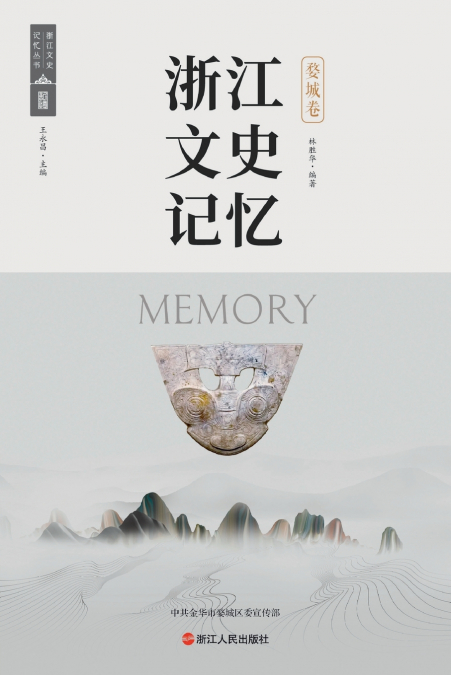
This book is part of the Zhejiang Cultural and Historical Memory series, the Wucheng volume. It systematically traces the complete cultural lineage of Wucheng from the period before the Xia, Shang, and Zhou dynasties to the present, highlighting the core characteristics of being the 'Origin of Wuzhou School of Learning, Land of Literary Documents, and Little Zou-Lu.' Taking the ten-thousand-year civilization of the Jinqu Basin as its starting point, the book weaves together the ancient state of Gumie from the pre-Qin period, the seat of Taimu County in the Qin and Han dynasties, the establishment of Wuzhou Prefecture in the Sui and Tang dynasties, the peak of the Wuzhou School of Learning in the Song and Yuan dynasties, the administrative evolution of the Eight Wuzhou Counties in the Ming and Qing dynasties, and the course of contemporary development.The book highlights the unique cultural symbols of Wucheng: First, the peak of the Wuzhou School of Learning-Lü Zuqian of the Southern Song Dynasty founded the Jinhua School, which, together with Chen Liang and Tang Zhongyou, laid the academic foundation of eastern Zhejiang. Second, distinctive craft culture-Wuzhou kiln celadon, Jinhua ham, Jinhua wine, and Wuzhou embroidery are traditional crafts that have been passed down for a thousand years. Third, rich and diverse folk customs and opera-Wuzhou Opera (Wuju), as one of the major opera genres of Zhejiang, along with folk arts such as Daoqing storytelling and Taige (a type of folk pageantry), are actively preserved and transmitted. Fourth, the spirit of distinguished scholars and the tradition of reclusion-Shen Yue’s Bayong Tower initiated the rules of poetic rhythm, while literary figures and refined scholars such as Guan Xiu and Zhang Zhihe found solace in the landscape. Fifth, relics of ancient architecture and water conservancy-the Prince Shi’s Mansion of the Taiping Heavenly Kingdom and the Thirty-Six Weirs on Baisha Creek (a World Heritage Irrigation Structure) bear witness to history.Based on rigorous historical materials while embracing an accessible narrative, the book integrates ten-thousand-year civilization, the thought of the Wuzhou School of Learning, the skills of various crafts, and the red legacy. It fully presents the central position of Wucheng within the cultural landscape of central Zhejiang, serving as an authoritative and popular primer for understanding Wucheng and preserving the cultural heritage of Wuzhou.本书为《浙江文史记忆》丛书婺城卷,系统梳理婺城自夏商周三代以前至当代的完整文脉,凸显'婺学之源、文献之邦、小邹鲁'的核心特质。全书以金衢盆地万年文明为起点,串联先秦姑蔑古国、秦汉太末县治、隋唐婺州建置、宋元婺学鼎盛、明清八婺沿革及当代发展历程。书中重点铺展婺城独特人文标识:一是婺学思想高峰,南宋吕祖谦开创金华学派,与陈亮、唐仲友等交相辉映,奠定浙东学术根基;二是别具一格的技艺文化,婺州窑青瓷、金华火腿、金华酒、婺绣等传统工艺传承千年;三是丰富多彩的民俗与戏曲,婺剧作为浙江主要戏曲剧种之一,道情、抬阁等民间艺术活态传承;四是名士风骨与隐逸传统,沈约八咏楼开诗律之宗,贯休、张志和等文人雅士寄情山水;五是古建与水利遗珍,太平天国侍王府、白沙溪三十六堰(世界灌溉工程遗产)等见证历史。文本以严谨史料为基,兼顾通俗叙事,将万年文明、婺学思想、百工技艺、红色传承熔于一炉,全面展现婺城在浙中文化版图中的核心地位,是读懂婺城、传承婺州文脉的权威普及读本。