 Librería Samer Atenea
 Kálamo Books
 Librería Elías (Asturias)
 Librería Kolima (Madrid)
 Librería Proteo (Málaga)
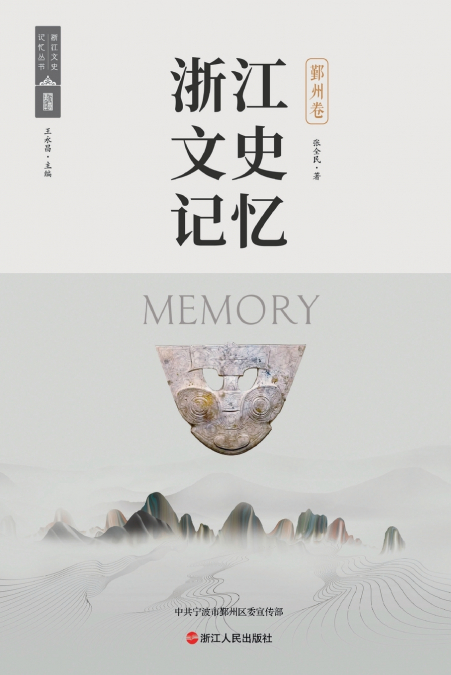
This book is part of the Zhejiang Cultural and Historical Memory series, the Yinzhou volume. Compiled by the Zhejiang Provincial Institute of Culture and History, authored by Dr. Zhang Quanmin, and published by Zhejiang People’s Publishing House in December 2022, the book consists of ten chapters. Adopting a grand historical perspective, it traces the civilizational lineage of Yinzhou from the pre-Qin period to the present, systematically sorting out the region’s cultural veins as the ancient land of Jinshan, the root of Mingzhou, and the pivot of the Eastern Zhejiang School.The core cultural threads of the book focus on three major imprints: First, the foundation of administrative geography-from the relocation of the Gouzhang County seat during the Eastern Jin Dynasty and the establishment of Mingzhou Prefecture in the Kaiyuan era of the Tang Dynasty, to the geographical pattern integrating the foothills of the Siming Mountains and the confluence of the Three Rivers-outlining the historical fabric of Yinzhou as the political and cultural origin of Ningbo. Second, the millennium-long Confucian tradition and the flourishing of the imperial examination system-Wang Anshi’s governance of Yinzhou during the Northern Song Dynasty, where he initiated water conservancy projects and established the county school, laid the groundwork for the local ethos of 'cultivating both farming and study.' With as many as 730 imperial scholars (jinshi) in the Song Dynasty, Yinzhou witnessed the legend of Zoumadang as the 'Number One Village of Imperial Scholars in China' and nurtured cultural giants such as Wang Yinglin, author of the Three Character Classic of the Southern Song Dynasty. Third, cultural luminaries and enduring legacies-including Fan Qin, founder of the Tianyi Pavilion library during the Ming Dynasty; Shen Guangwen, the pioneer of Taiwanese literature; and calligraphy master Sha Menghai, among a constellation of renowned figures. The book also anchors the Eastern Zhejiang School, the Ningbo merchant group, and coastal defense historical sites, highlighting Yinzhou’s unique position within Jiangnan civilization.With rigorous historical materials as its backbone and accessible narrative as its wings, the book integrates political and economic foundations, academic spirit, and humanistic heritage. It serves as an authoritative and popular primer for understanding Yinzhou and preserving the cultural heritage of eastern Zhejiang.本书为《浙江文史记忆》丛书鄞州分卷,由浙江省文史研究馆编纂、张全民博士著,浙江人民出版社 2022 年 12 月出版,全书共 10 章,以大历史观从先秦贯通至当代,系统梳理鄞州堇山故地、明州根脉、浙东学枢的文明脉络。书中核心文脉聚焦三大印记:一是建置与地理根基,从东晋句章城迁治、唐开元明州立州,到四明山麓与三江口交融的地理格局,勾勒鄞州作为宁波政治文化源头的历史肌理;二是千年儒风与科举盛景,北宋王安石治鄞兴水利、创县学,奠定 '耕读传家' 底色,宋代进士多达 730 人,造就走马塘 '中国进士第一村' 的传奇,更孕育南宋《三字经》作者王应麟等文脉巨匠;三是文化巨擘与传世遗产,涵盖明代天一阁创始人范钦、台湾文献始祖沈光文,以及书法泰斗沙孟海等名家群像,同时锚定浙东学派、宁波商帮与海防史迹,彰显鄞州在江南文明中的独特坐标。全书以严谨史料为骨、通俗叙事为翼,熔铸政经底蕴、学术风骨、人文遗产于一体,是读懂鄞州、传承浙东文脉的权威普及读本。