 Librería Samer Atenea
 Kálamo Books
 Librería Elías (Asturias)
 Librería Kolima (Madrid)
 Librería Proteo (Málaga)
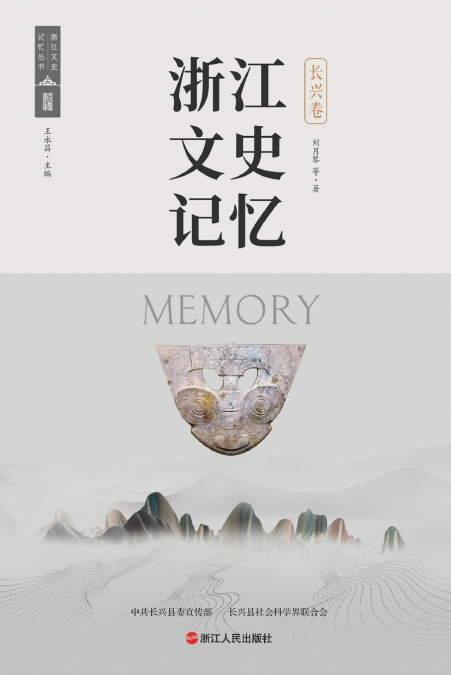
This book is part of the Zhejiang Cultural and Historical Memory series, the Changxing volume, published by Zhejiang People’s Publishing House. Taking time as its axis, it systematically traces the civilizational lineage of Changxing over more than six thousand years. The book begins with the construction of the 'Great Wall' fortification during the Spring and Autumn period and the official establishment of the county in the third year of the Taikang reign of the Western Jin Dynasty (282 CE), weaving together the geographical context of the junction connecting Zhejiang, Jiangsu, and Anhui provinces. It covers five major stages: prehistoric culture, the foundation laid during the Six Dynasties, the prosperity of the Tang and Song dynasties, development in the Ming and Qing periods, and the rebirth of the contemporary era.The book highlights the unique cultural symbols of Changxing: the hometown of Emperor Wu of the Chen dynasty during the Southern Dynasties and the royal imprint of the 'Land of the Emperor and Realm of Buddhism'; the tea culture, centered on the Tea Sage Lu Yu who authored The Classic of Tea in the Guzhu Mountains and the Grand Tribute Tea Academy of the Tang dynasty, which witnessed the thousand-year history of the Zijun tea tribute; the literary legacies of Zang Maoxun, who compiled Selections of Yuan Drama, and the concurrent governance of Changxing by Gui Youguang and Wu Cheng’en; the red memory of the 'Jiangnan Small Yan’an' preserved at the former site of the New Fourth Army’s Jiangsu-Zhejiang Military Region Command; and the paleo-ecological landmarks such as the 'Golden Spike' geological site and the Chinese alligator natural heritage.Based on rigorous historical materials while embracing an accessible narrative, the book integrates imperial culture, tea-centered heritage, red genes, and natural legacy into a cohesive whole. It comprehensively presents Changxing’s unique position within Jiangnan culture, combining scholarly depth with readability, and serves as an authoritative and popular primer for understanding the history of Changxing and preserving its local cultural heritage.本书为《浙江文史记忆》丛书长兴分卷,由浙江人民出版社出版,以时间为轴系统梳理长兴六千余年文明脉络。全书以春秋 '长城' 筑城、西晋太康三年(282)设县为源头,串联浙苏皖三省通衢的地缘脉络,覆盖史前文化、六朝奠基、唐宋繁盛、明清发展与当代新生五大阶段长兴县人民政府。书中重点铺展长兴独特人文标识:南朝陈武帝故里与 '帝乡佛国' 的皇家印记;茶圣陆羽在顾渚山著《茶经》、大唐贡茶院见证紫笋茶千年贡史的茶文化核心;臧懋循编《元曲选》、归有光与吴承恩同治长兴的文学佳话长兴县人民政府;新四军苏浙军区司令部旧址铸就的 '江南小延安' 红色记忆,以及 '金钉子' 地质遗迹、扬子鳄自然遗产等古生态名片长兴县人民政府。文本以严谨史料为基,兼顾通俗叙事,将帝王文化、茶韵文脉、红色基因与自然遗产熔于一炉,全面展现长兴在江南文化中的独特地位,兼具学术性与可读性,是了解长兴历史、传承地方文脉的权威普及读本。