What We Are

What We Are

Lonnie Aarssen

41,34 €
IVA incluido
Disponible
Editorial:
Springer Nature B.V.
Año de edición:
2023
Materia
Evolución
ISBN:
9783031058813
41,34 €
IVA incluido
Disponible

Selecciona una librería:

  • Librería Samer Atenea
  • Librería Aciertas (Toledo)
  • Kálamo Books
  • Librería Perelló (Valencia)
  • Librería Elías (Asturias)
  • Donde los libros
  • Librería Kolima (Madrid)
  • Librería Proteo (Málaga)

Other animals are driven to spend essentially their whole lives just trying to get fed, stay alive, and get laid.  That’s about it.  The same was true for our proto-human ancestors. And modern humans of course also require a Survival Drive and a Sex Drive in order to leave descendants.  But today we spend most of our lives mainly just trying to convince ourselves that our existence is not absurd. In What We Are, Queen’s University biologist, Lonnie Aarssen, traces how our biocultural evolution has shaped Homo sapiens into the only creature that refuses to be what it is - the only creature preoccupied with a deeply ingrained, and absurd sentiment:  I have a distinct ’mental life’-an ’inner self’-that exists separately and apart from ’material life’, and so, unlike the latter, need not come to an end.  This delusion conceivably gave our distant ancestors some wishful thinking for finding some measure of relief from the terrifying, uniquely human knowledge of the eventual loss of corporeal survival.  But this came with an impulsive, nagging doubt - an obsessive underlying uncertainty: ’self-impermanence anxiety’.  Biocultural evolution, however, was not finished.  It also gave us two additional, uniquely human, primal drives, both serving to help quell the burden of this anxiety.  Legacy Drive generates delusional cultural domains for ’extension’ of self; and Leisure Drive generates pleasurable cultural domains for distraction - ’escape’ - from self.  Legacy Drive and Leisure Drive,  Aarssen argues, represent two of the most profound consequences of human cognitive and cultural evolution.  What We Are advances propositions regarding how a visceral susceptibility to self-impermanence anxiety has - paradoxically - played a pivotal role in rewarding the reproductive success of our ancestors, and has thus been a driving force in shaping  fundamental motivations and cultural norms of modern humans.  More than any other milestone in the evolution of human minds, self-impermanence anxiety, and its mitigating Drives for Legacy and Leisure, account for not just the advance of civilization over the past many thousands of years, but also now, its impending collapse.  Effective management of this crisis, Aarssen insists, will require a deeper and more broadly public understanding of its Darwinian evolutionary roots - as laid out in What We Are.
Artículos relacionados

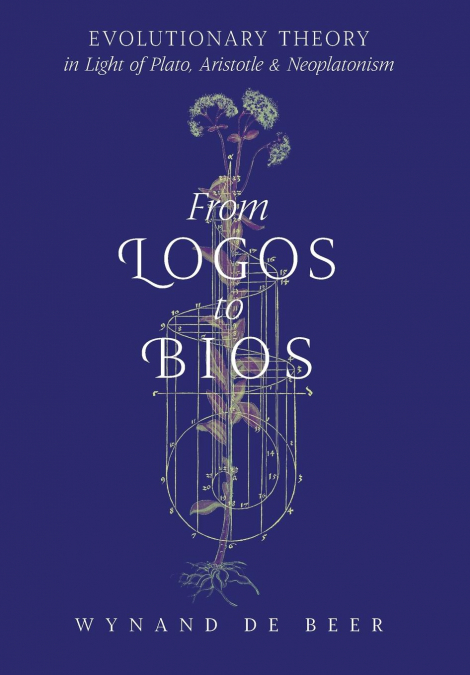
  • From Logos to Bios
    Wynand de Beer
    ...
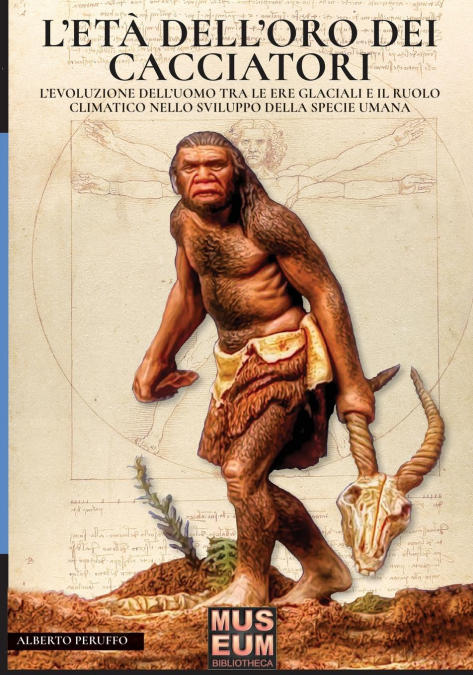
  • L’età dell’oro dei cacciatori
    Alberto Peruffo
    L'universo, il pianeta Terra, l'uomo. L'avventura della specie umana si dipana lentamente dall'essere unicellulare fino all'uomo dei giorni nostri che, tra mille travagli, ha raggiunto la condizione di assoluta supremazia.La presenza nell'uomo moderno dei geni del DNA dell'uomo di Neanderthal ha chiarito che, questi antichi uomini, facevano parte, a ...
    Disponible

    40,53 €

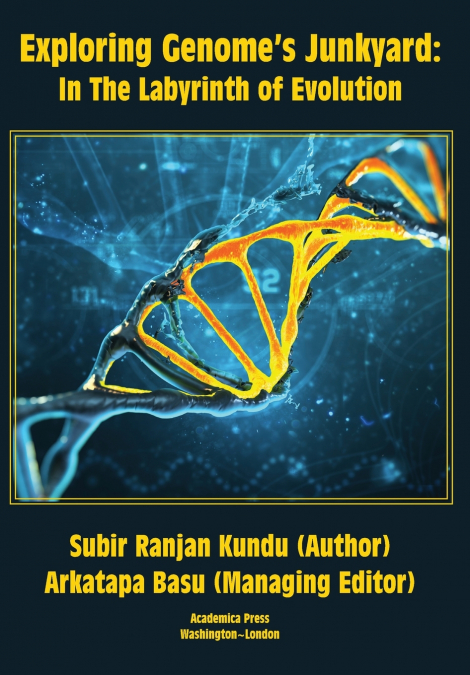
  • Exploring Genome’s Junkyard
    Subir Ranjan Kundu
    Exploring Genome’s Junkyard: In the Labyrinth of Evolution narrates the progress of biological evolution, beginning with the conceptual introspection of gene and continuing with the contemporary understanding of the structural and function aspects of the human genome. Recent advances in human genome research have led scientists to the term 'biological dark matter,' which refers...
  • European Hair, Eye, and Skin Color
    Peter Frost
    Europeans, especially those from northern and eastern Europe, are unique in having diverse hair and eye colors and a skin almost as pale as an albino’s. Those colors are not only brighter than the original black and brown but also 'purer'-they lie within thin slices of the visible spectrum. Overall, that color scheme is more developed in women, who naturally have a higher incid...
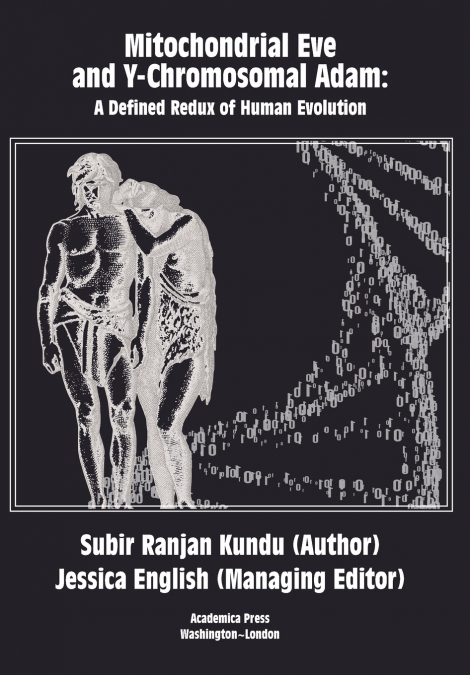
  • Mitochondrial Eve and Y-Chromosomal Adam
    Subir Ranjan Kundu
    Mitochondrial Eve and Y-Chromosomal Adam discusses theoretical ideas, interpretations, and paleontological evidence to narrate the origin and evolutionary story of Sapiens through the transitional stages of archaic human species involved in the evolutionary pilgrimage, from the great apes and to modern humans. Author Subir Ranjan Kundu investigates the DNA footprints of primate...
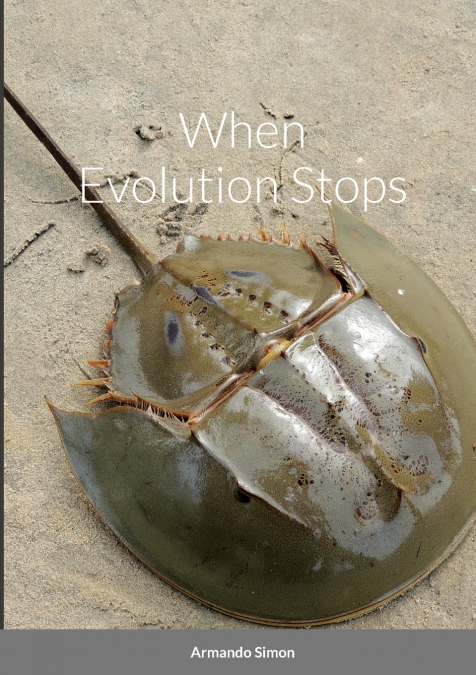
  • When Evolution Stops
    Armando Simon
    Evolution is a fact. The evidence for it is simply overwhelming. However, the original mechanism that generates the evolutionary process, as first put forth simultaneously by Charles Darwin and Alfred R. Wallace and which became known as Natural Selection, has now been seen to be too simplistic by some scientists aside from the hard-core neo-Darwinists who insist that nothing w...
    Disponible

    28,77 €

Otros libros del autor

  • What We Are
    Lonnie Aarssen
    Other animals are driven to spend essentially their whole lives just trying to get fed, stay alive, and get laid.  That’s about it.  The same was true for our proto-human ancestors. And modern humans of course also require a Survival Drive and a Sex Drive in order to leave descendants.  But today we spend most of our lives mainly just trying to convince ourselves that our exist...