
What Is Property?

What Is Property?

Pierre-Joseph Proudhon

27,74 €
IVA incluido
Disponible
Editorial:
Les prairies numériques
Año de edición:
2026
Materia
Teoría social
ISBN:
9791043139802
27,74 €
IVA incluido
Disponible

Selecciona una librería:

  • Librería Samer Atenea
  • Kálamo Books
  • Librería Elías (Asturias)
  • Librería Kolima (Madrid)
  • Librería Proteo (Málaga)

'Property is robbery!' This slogan coined by the French political philosopher Pierre-Joseph Proudhon is one of his answers to the titular question of his 1840 treatise, What Is Property? A fervent attack against the established order of capitalism and private property, the publication of What Is Property? almost immediately led to Proudhon’s official prosecution and the revocation of Proudhon’s scholarship by the Academy of Besançon. (Proudhon, an autodidact of humble origins who began his working life as a printer, relied on the scholarship for financial support.) Proudhon evaded the worst of the consequences thanks to the intervention of the economist Jérôme-Adolphe Blanqui, to whom the second memoir contained in the book is addressed.In this treatise, Proudhon contrasts the legitimate right to possession, in which individuals own the products of their labor and the necessary means of production, and the illegitimate right to property, the absolute right granted to proprietors by civil laws to 'use and abuse.' Proudhon examines the implications of the right to property and concludes that, among other things, property is 'impossible,' 'homicide,' and 'the mother of tyranny.' As an alternative to both the proprietary and communist systems of economic organization, Proudhon advances his anarchist economic theory of 'mutualism,' in which a socialist society would be organized based on free market exchanges wherein the value of a good or service is determined by the time and expense it has cost the laborer to produce.This edition of What Is Property? was translated in 1876 by Benjamin Tucker, who was a notable advocate of individualist anarchism in his own right in the United States.'Property is robbery!' This slogan coined by the French political philosopher Pierre-Joseph Proudhon is one of his answers to the titular question of his 1840 treatise, What Is Property? A fervent attack against the established order of capitalism and private property, the publication of What Is Property? almost immediately led to Proudhon’s official prosecution and the revocation of Proudhon’s scholarship by the Academy of Besançon. (Proudhon, an autodidact of humble origins who began his working life as a printer, relied on the scholarship for financial support.) Proudhon evaded the worst of the consequences thanks to the intervention of the economist Jérôme-Adolphe Blanqui, to whom the second memoir contained in the book is addressed.In this treatise, Proudhon contrasts the legitimate right to possession, in which individuals own the products of their labor and the necessary means of production, and the illegitimate right to property, the absolute right granted to proprietors by civil laws to 'use and abuse.' Proudhon examines the implications of the right to property and concludes that, among other things, property is 'impossible,' 'homicide,' and 'the mother of tyranny.' As an alternative to both the proprietary and communist systems of economic organization, Proudhon advances his anarchist economic theory of 'mutualism,' in which a socialist society would be organized based on free market exchanges wherein the value of a good or service is determined by the time and expense it has cost the laborer to produce.This edition of What Is Property? was translated in 1876 by Benjamin Tucker, who was a notable advocate of individualist anarchism in his own right in the United States.
Artículos relacionados

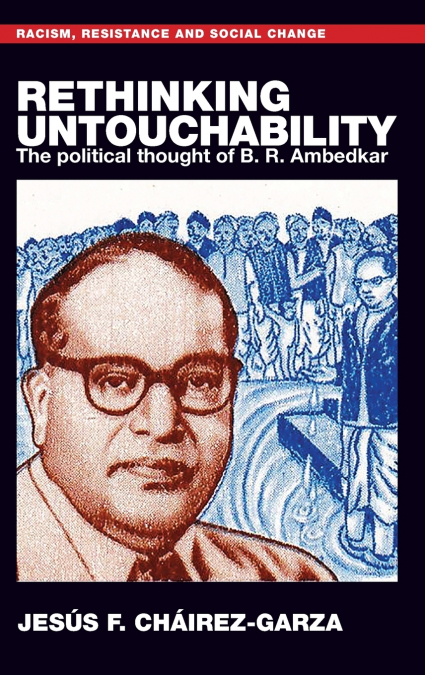
  • Rethinking untouchability
    Jesús F. Cháirez-Garza
    This book examines the transformation of untouchability into a political idea in India during the first half of the twentieth century. At its heart is Ambedkar’s role and the concepts he used to champion untouchability as a political problem. Ambedkar’s main objective was to comprehend the numerous avatars of untouchability in order to eradicate this practice. Ambedkar understo...
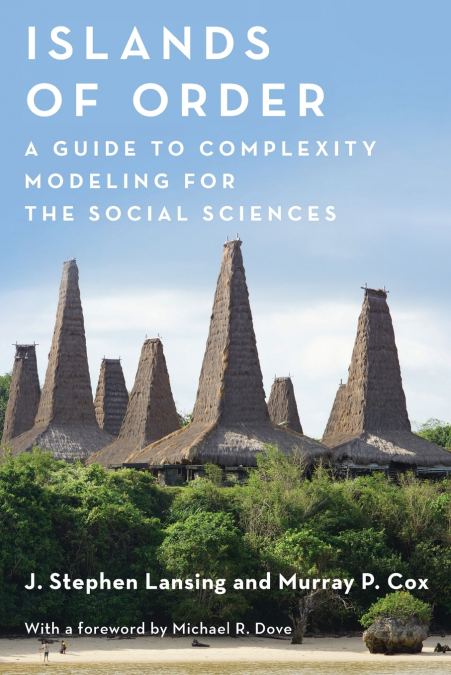
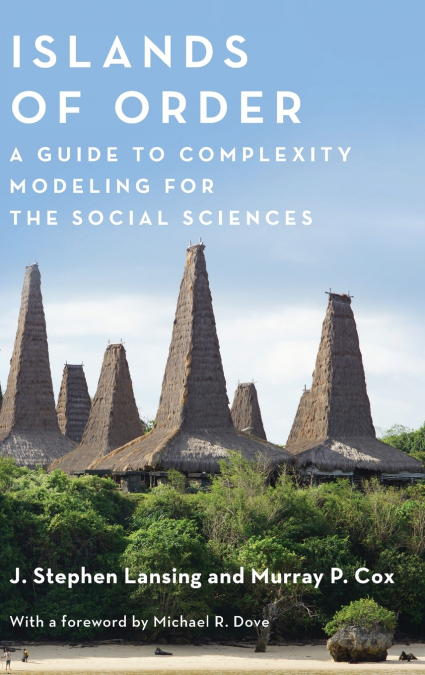
  • Islands of Order
    J. Stephen Lansing / Murray P. Cox
    Two pioneering anthropologists reveal how complexity science can help us better understand how societies change over timeOver the past two decades, anthropologist J. Stephen Lansing and geneticist Murray Cox have explored dozens of villages on the islands of the Malay Archipelago, combining ethnographic research with research into genetic and linguistic markers to shed light on...
  • Islands of Order
    J. Stephen Lansing / Murray P. Cox
    Two pioneering anthropologists reveal how complexity science can help us better understand how societies change over timeOver the past two decades, anthropologist J. Stephen Lansing and geneticist Murray Cox have explored dozens of villages on the islands of the Malay Archipelago, combining ethnographic research with research into genetic and linguistic markers to shed light on...
    Disponible

    37,20 €

  • The Sage Handbook of Global Sociology
    ...
  • Human Rights, Security Politics and Embodiment
    Aneira J. Edmunds
    How have human rights been entangled with state control of the body? And how have they failed to intervene effectively on tipping points such as the US’s endorsement of torture that removes the victim’s control over their own body? This book explores the way institutional human rights have glossed over such abuses and been complicit in security politics which see the Muslim bod...
    Disponible

    35,86 €

  • Better?
    Brian Martin
    Over the past fifty years, have things been getting better or worse? Brian Martin sets out to address this big question by looking at a range of topics, from climate to feminism, from happiness to war, from deschooling to death. Along the way, he offers personal stories and assessments of key studies. This is an invitation to avoid excessive gloom and unwarranted optimism by th...
    Disponible

    27,71 €

Otros libros del autor

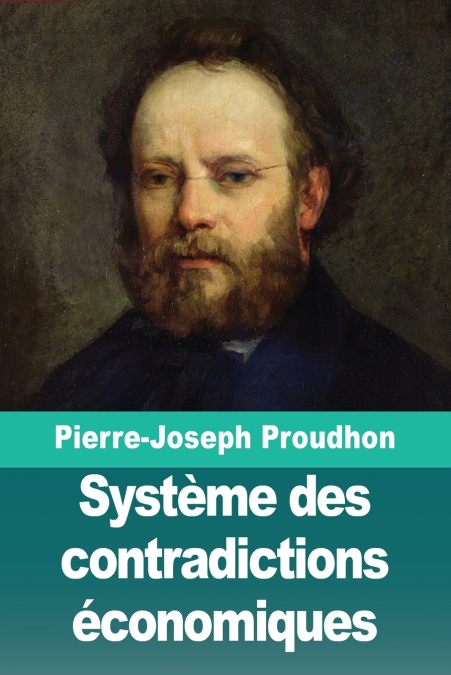
  • Système des contradictions économiques
    Pierre-Joseph Proudhon
    Dans cet essai fondamental sous-titré Philosophie de la misère , Pierre-Joseph Proudhon analyse avec une rigueur dialectique les contradictions internes du système économique de son temps, entre valeur, division du travail, concurrence et propriété. Ce texte majeur de la pensée socialiste française du XIXe siècle, qui suscitera la célèbre réplique de Karl Marx dans Misère de l...
    Disponible

    15,19 €

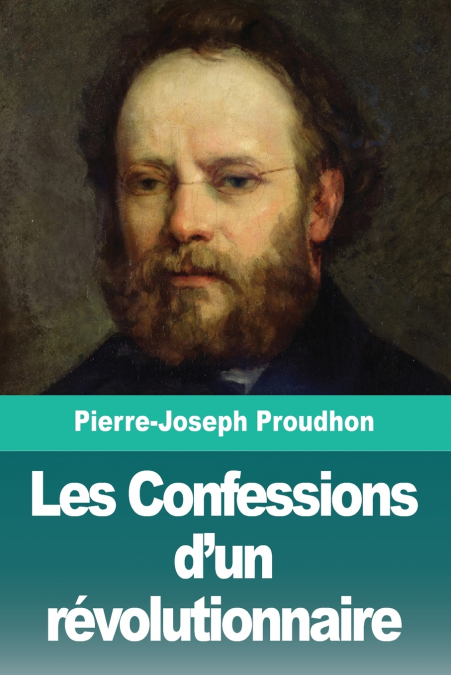
  • Les Confessions d’un révolutionnaire
    Pierre-Joseph Proudhon
    Rédigées à chaud au lendemain des journées révolutionnaires de 1848, ces confessions de Pierre-Joseph Proudhon offrent un témoignage direct et sans complaisance sur les événements auxquels il a lui-même participé, mêlant analyse politique acérée et introspection critique sur les erreurs et les illusions du mouvement révolutionnaire. Texte essentiel de la pensée anarchiste franç...
    Disponible

    16,60 €

  • 革命与教会中的正义(第一卷)
    Pierre-Joseph Proudhon
    De la Justice dans la Révolution et dans l’Église, published in 1858, marks the mature phase of Pierre-Joseph Proudhon’s political and moral philosophy. Volume I, which constitutes a complete and self-contained work, is devoted to a systematic inquiry into the concept of justice and its role in modern society, set against the enduring conflict between revolutionary principles a...
    Disponible

    16,07 €

  • 革命与教会中的正义(第二卷)
    Pierre-Joseph Proudhon
    In De la Justice dans la Révolution et dans l’Église, Volume II shifts the investigation from the foundational principles of justice to their formation, deformation, and contestation within concrete social practices. If the first volume establishes justice as an immanent moral law grounded in reciprocity and human dignity, the second volume examines how this law is shaped-or di...
    Disponible

    16,87 €

  • 革命与教会中的正义(第三卷)
    Pierre-Joseph Proudhon
    De la Justice dans la Révolution et dans l’Église, Volume III represents the critical culmination of Pierre-Joseph Proudhon’s inquiry into justice, freedom, and modern civilization. Where the first two volumes establish justice as an immanent moral law and examine its social formation, the third volume confronts the most resilient ideological obstacle to emancipation: the doctr...
    Disponible

    23,30 €

  • Qu’est-Ce Que La Propriété?
    Pierre-Joseph Proudhon
    This work has been selected by scholars as being culturally important, and is part of the knowledge base of civilization as we know it.This work is in the 'public domain in the United States of America, and possibly other nations. Within the United States, you may freely copy and distribute this work, as no entity (individual or corporate) has a copyright on the body of the wor...
    Disponible

    28,65 €