
Warum Unfälle

Warum Unfälle

Hans Dombrowsky

85,49 €
IVA incluido
Disponible
Editorial:
Springer Nature B.V.
Año de edición:
1935
Materia
Ciencia: cuestiones generales
ISBN:
9783322983756
85,49 €
IVA incluido
Disponible

Selecciona una librería:

  • Librería Samer Atenea
  • Librería Aciertas (Toledo)
  • Kálamo Books
  • Librería Perelló (Valencia)
  • Librería Elías (Asturias)
  • Donde los libros
  • Librería Kolima (Madrid)
  • Librería Proteo (Málaga)

Die zunehmende Mechanisierung fast aller Produktions stätten und zugleich das ständige Anwachsen des Verkehrs in den letzten Jahrzehnten führen uns zu Unfallziffern, die geradezu erschreckend wirken. Nach den uns jetzt in Deutschland für das Jahr 1930 vor­ liegenden Unfallstatistiken entfielen allein bei 66 gewerblichen Berufsgenossenschaften auf 9622304 versicherte Personen nicht weniger als 481260, die zu Unfall kamen; von diesen Personen wurden 3852 tödlich verletzt, 403 dagegen galten als völlig er­ werbsunfähig 1). Die Deutsche Reichsbahn als Verkehrsbetrieb zählte in dem gleichen Jahre 2422 Betriebsunfälle, bei denen 1861 Personen verletzt und 550 getötet wurden 2) . Diese Zahlen sprechen für sich; sie bedeuten für uns die Ver­ pflichtung, Mittel und Wege zu erforschen, die dazu geeignet sind, die Anzahl der Unfälle auf ein unvermeidbares Minimum herab­ zusetzen. Dabei kommt es aber zunächst auf eine genaue Analyse der Unfallursachen an. Sind es technische Fehler unserer Maschinen und Verkehrs­ einrichtungen, die zu Unfällen führen, oder aber ist es die Persön­ lichkeit des Menschen, die dafür verantwortlich gemacht werden muß? Gewiß sind beide Faktoren im Spiele; doch haben neuere Untersuchungsergebnisse 8) übereinstimmend bewiesen, daß etwa zu 80 v. H. der Mangel an gewissen menschlichen Qualitäten als Ursache für das Geschehen von Unfällen in Betracht kommt. Diese Eigenschaften und Anlagen, durch deren Mangel die persönliche Unfallneigung besonders begünstigt wird, näher zu untersuchen, ist Aufgabe der Psychologie. 1) Statistisches Jahrbuch für das Deutsche Reich. Herausgegeben vom Statistischen Reichsamt. 52. Jahrgang. 1933. S. 394. 2) a. a. o. S. 164.


Artículos relacionados

  • Cases on Research-Based Teaching Methods in Science Education
    Eugene de Silva
    While the great scientists of the past recognized a need for a multidisciplinary approach, today’s schools often treat math and science as subjects separate from the rest. This not only creates a disinterest among students, but also a potential learning gap once students reach college and then graduate into the workforce. Cases on Research-Based Teaching Methods in Science Educ...
  • Enhancing Qualitative and Mixed Methods Research with Technology
    Shalin Hai-Jew
    In light of the expensive nature of quantitative research, such as experiments, researchers must seek other methods of understanding the world around them. As such, new qualitative methods are gaining ground in the modern research community. Enhancing Qualitative and Mixed Methods Research with Technology explores the integration of new digital tools into the research process. ...
  • Emerging Research on Bioinspired Materials Engineering
    Mohamed Bououdina
    Bioinspired materials can be defined as the organic or inorganic materials that mimic naturally occurring substances. With applications in a number of fields such as biomedical, chemical, mechanical, and civil engineering, research on the development of biologically-inspired materials is essential to further advancement. Emerging Research on Bioinspired Materials Engineering pr...
  • Contemporary Knowledge and Systems Science
    As branches of research and knowledge continue to expand, platforms for gathering and understanding new information become important aspects of organizational improvement. Contemporary Knowledge and Systems Science provides emerging research on the methods and applications of knowledge systems in social science, economics, and technological developments. While highlighting topi...
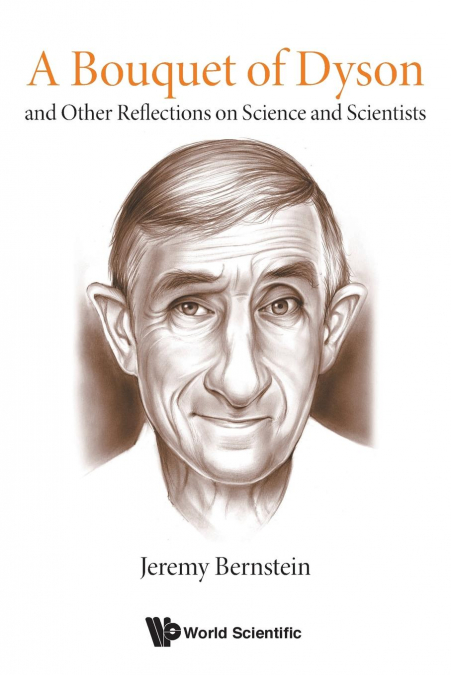
  • BOUQUET OF DYSON, A
    BERNSTEIN JEREMY / Jeremy Bernstein
    University of Texas at Austin My friendship with Freeman Dyson goes back over a half century. My first contact with him goes back to the late 1950s, when I was at the Institute for Advanced Study, and then evolved when I was a consultant at General Atomics in La Jolla, California. Freeman was then trying to design a space ship — the Orion — which would be propelled by atomic bo...
    Disponible

    33,35 €

  • CLOUDS ARE NOT SPHERES
    LESMOIR-GORDON NIGEL / NIGEL LESMOIR-GORDON
     The time is right, following Benoît Mandelbrot's death in 2010, to publish this landmark book about the life and work of this maverick math genius.This compact book celebrates the life and achievements of Benoît Mandelbrot with the ideas of fractals presented in a way that can be understood by the interested lay-person. Mathematics is largely avoided. Instead, Mandelbrot&#...