
War, Violence, and Collapse

War, Violence, and Collapse

Hui Wang

23,34 €
IVA incluido
Disponible
Editorial:
Hui Wang
Año de edición:
2025
Materia
Historia general y mundial
ISBN:
9789190115794
23,34 €
IVA incluido
Disponible

Selecciona una librería:

  • Librería Samer Atenea
  • Librería Aciertas (Toledo)
  • Kálamo Books
  • Librería Perelló (Valencia)
  • Librería Elías (Asturias)
  • Donde los libros
  • Librería Kolima (Madrid)
  • Librería Proteo (Málaga)

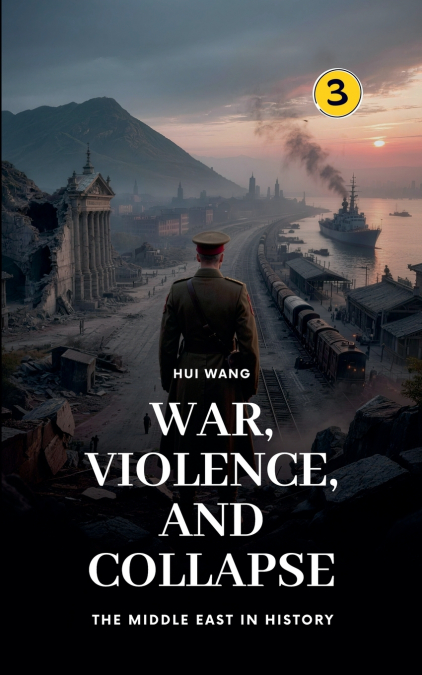
War, Violence, and Collapse: The Middle East in History, opens with a simple question that kept pushing me back to the archives and the map: what actually happened when the global war crashed into the Middle East? I follow a cast of leaders who stood at the edge of ruin and had to choose between survival, loyalty, and ambition - from Abdul Hamid II, the deposed sultan whose long shadow still shaped Ottoman politics, to Mustafa Kemal, the battlefield officer who would become the architect of modern Turkey, and to Sharif Husayn (Husayn ibn Ali), the Sharif of Mecca who would spark the Arab Revolt. These were not distant figures merely reacting to Europe’s storms; they were actors shaping events that would decide the fate of empires.As the narrative pushes forward, the war spreads fast and brutally across deserts, mountains, and river plains. From Sarikamish in the high Caucasus to Deir ez-Zor on the Euphrates, from the embattled city of Van to long convoys into exile and shattered hope, violence remade entire communities and polities. Meanwhile Verdun and Jutland thundered in Europe, and the Arab Revolt flared across desert tracks and coastal towns. My book argues that these fronts were never separate worlds but facets of a single expanding catastrophe - a vast convulsion that dragged soldiers, civilians, and rulers alike into its deadly orbit.Ideas mattered as much as armies. The rise of Islam under Muhammad and the early caliphs cast a long, indelible shadow over later conflicts, and at a pivotal crossroads where faith, empire, and rebellion collided stood Sharif Husayn ibn Ali - the Sharif of Mecca whose revolt would reshape the map of the Middle East. Figures such as T. E. Lawrence and Gertrude Bell slipped into a quieter, hidden war for influence, intelligence, and control - a war fought with promises, maps, and carefully chosen words.The turning point of 1917 brought new forces into the arena. Lenin and Woodrow Wilson emerged as symbols of radically different futures, while blockade, hunger, and sheer exhaustion pushed societies toward breaking. From the Schlieffen Plan to the Kiel mutiny, from America’s entry into the war to Wilson’s Fourteen Points, the book traces how grand designs unraveled and how ordinary people ultimately paid the price.The final chapters follow the collapse itself. Bulgaria is the first of the Central Powers to crumble-signing an armistice at Salonika on 29 September 1918-and that initial rupture sets the pace. Empires begin to unravel. From the Armistice of Mudros on 30 October to the Armistice of Compiègne on 11 November, old orders fall apart faster than anyone had expected. I wrote this book to show that war destroys more than armies-it shatters illusions and reshapes political life. If you want to understand why the modern Middle East bears the lines and wounds it does, and how a global war turned local struggles into lasting scars, this book invites you to read on.
Artículos relacionados

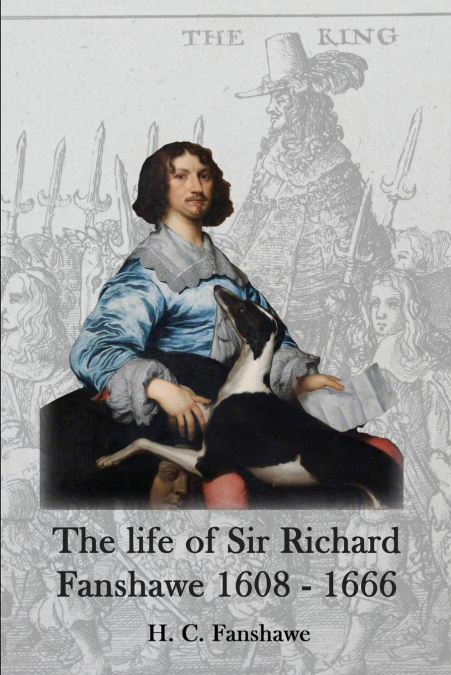
  • The life of Sir Richard Fanshawe, 1608 - 1666
    H C Fanshawe
    Sir Richard Fanshawe (1608-1666), was a diplomat, poet and linguist. As Ambassador to Spain and Portugal he negotiated the marriage of Charles II and Catherine of Braganza. He was also acclaimed for his poetry and his translations of Latin and European works such as the Lusiads by Luis de Camoes and Il Pastor Fido (the Faithful Shepherd) by Giovanni Battista Guarini. Sir Richar...
    Disponible

    17,51 €

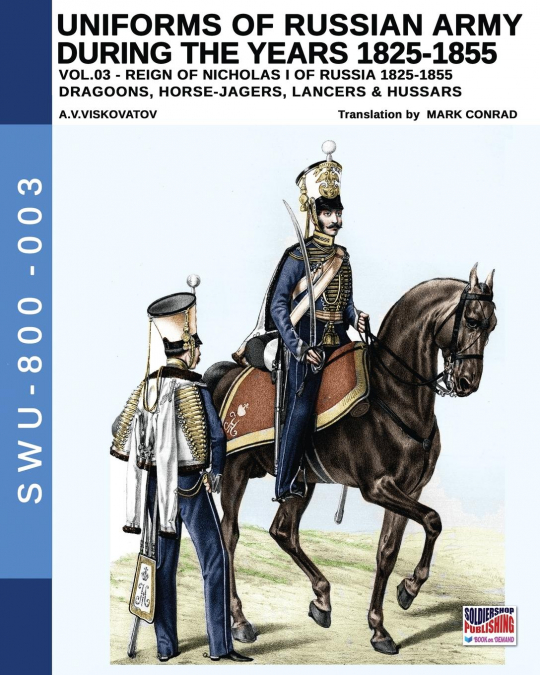
  • Uniforms of Russian Army during the years 1825-1855. Vol. 3
    Aleksandr Vasilevich Viskovatov / Mark Conrad
    This volume is related to the Russian Army during the zar Nicolas Ist era, and are about the uniforms cavalry in use from 1825 to 1855. Compiled at Saint Petersburg during the year from 1837 and 1851, the Historical Description of the Clothing and Arms of the Russian Army has had an enormous impact and great importance for the study on the history of Russian costume and uniform...
    Disponible

    52,04 €

  • Archaeology and Entomology in the Eastern Mediterranean
    Eva Panagiotakopulu
    ...
    Disponible

    74,97 €

  • Luoghi e Architetture della Transizione
    Maria Antonietta Breda
    I sistemi difensivi di confine e la protezione antiaerea nelle città. Storia conservazione riuso / Border defense system and air raid protection in the cities. History conservation reuseThis book collects the papers presented at the Second International Congress on Conoscenza e valorizzazione delle opere militari moderne - Knowledge and development of modern military structures...
    Disponible

    139,91 €

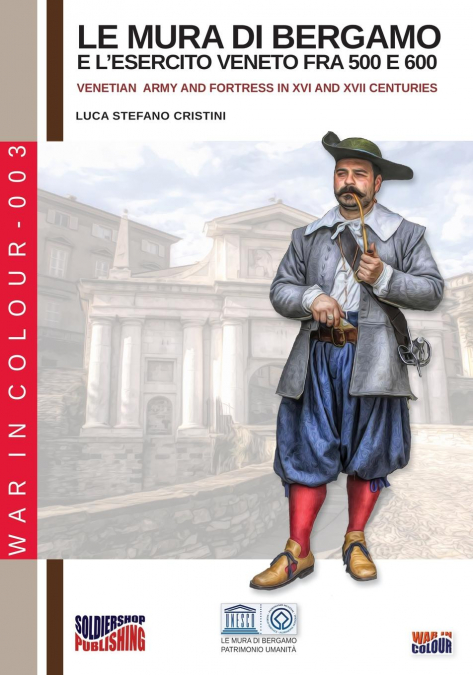
  • Le mura di Bergamo e l’esercito veneto fra 500 e 600
    Luca Stefano Cristini
    Correva l'Anno del Signore 1590. Così scriveva un soddisfatto e pago Alvise Grimani, l'allora comandante veneto della piazza di Bergamo, al termine dei lavori di realizzazione degli oltre cinque chilometri di mura porte e bastioni : 'La città è tutta serrata con baluardi e i suoi membri quasi tutti terrapienati, compite le piazze, i parapetti e le traverse per coprirsi ...
    Disponible

    36,31 €

  • Psychology of Revolution
    Gustave Lebon
    The present age is not merely an epoch of discovery; it is also a period of revision of the various elements of knowledge. Having recognised that there are no phenomena of which the first cause is still accessible, science has resumed the examination of her ancient certitudes, and has proved their fragility. To-day she sees her ancient principles vanishing one by one. ...
    Disponible

    27,92 €

Otros libros del autor

  • Ancient Rome
    Hui Wang
    Ancient Rome: Europe in History, PART TWO, is the book I wish I’d had when I first tried to make sense of Rome’s long slide from republic to empire. I start with Gaius Marius - the reformer whose changes to recruitment and the structure of the legions quietly altered the balance of power in Rome - and then press on to the hard question of why the Republic broke down at all.From...
    Disponible

    24,28 €

  • Ancient Rome
    Hui Wang
    Ancient Rome: Europe in History, PART ONE, is the book I wrote to tell Rome’s story from the ground up, starting with Romulus and Numa and the fragile order they tried to build. These early figures were not just legends; they shaped how Romans thought about law, religion, violence, and authority. From sacred rituals to kingship, from fear to discipline, this opening part shows ...
    Disponible

    25,39 €

  • Ancient Greece
    Hui Wang
    Ancient Greece: Europe in History, PART TWO, is my attempt to tell the Greek story the way it actually felt to live it-tense, unstable, and full of agonizing choices. I open the book with two competing roads to power, Athens and Sparta, and trace how their very different ideas about freedom, discipline, and leadership pushed the Greek world toward confrontation. What begins as ...
    Disponible

    24,40 €

  • Ancient Greece
    Hui Wang
    Ancient Greece: Europe in History, PART ONE, is the book I wrote to chase one question that kept bothering me: where did Europe really start to take shape? Not Europe as a modern idea, but Europe as a lived experience - a mosaic of places, practices, and habits people actually inhabited and remembered.The story opens before written records, threads through prehistory, and final...
    Disponible

    24,34 €

  • Iraq and the Age of Intervention
    Hui Wang
    Iraq and the Age of Intervention: The Middle East in History, is my attempt to make sense of how a single country kept drifting from one war into the next-and why outside powers kept stepping in. I start at the Shatt al‑Arab, that contested waterway where borders, currents, and national pride conspire to make conflict almost inevitable. From there the story moves into the bitte...
    Disponible

    25,34 €

  • From Shah to Revolution
    Hui Wang
    From Shah to Revolution: The Middle East in History, is my attempt to tell the modern Middle East as it actually unfolded - not as tidy abstractions, but through the messy, human forces of people, pressure, and hard choices. I start in Iraq, not Iran: with oil and power, and with the slow, relentless rise of Saddam Hussein. Moving from the chapter 'Iraq First' to 'Saddam Hussei...
    Disponible

    24,30 €