
Walking the Design for Six Sigma Bridge with Your Customer

Walking the Design for Six Sigma Bridge with Your Customer

Walking the Design for Six Sigma Bridge with Your Customer

Carl Cordy

50,82 €
IVA incluido
Disponible
Editorial:
Xlibris
Año de edición:
2017
Materia
Atención al cliente
ISBN:
9781543454765
50,82 €
IVA incluido
Disponible

Selecciona una librería:

  • Librería Samer Atenea
  • Librería Aciertas (Toledo)
  • Kálamo Books
  • Librería Perelló (Valencia)
  • Librería Elías (Asturias)
  • Donde los libros
  • Librería Kolima (Madrid)
  • Librería Proteo (Málaga)

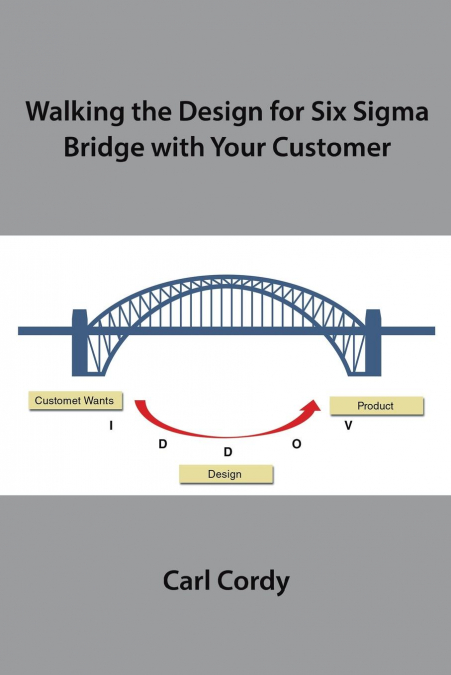
Besides providing a technical overview of design for Six Sigma, this is a text that goes the extra step beyond in presenting real-life examples of structured tool use to satisfy the needs of the customer. The discussion covers the background behind the tools used and real-life examples of their use. The general theme of this text is to know what the customer wants out of a product or service and to keep these in mind throughout the project life cycle through implementation.Topics are arranged in the design cycle that Taguchi devised: identify, define, develop, optimize, and verify. Throughout the book, Carl Cordy presents the technical discussion and example applications with a reminder as to why we are using them: to satisfy customer wants and desires for a product or service. Also, as continuous improvement, design for Six Sigma is part of a firm’s strategy for maintaining the competitive edge and ensuring it is the supplier of choice for its goods and services with its current and potential customers.Specific tools covered—including survey design, Kano analysis, quality functional deployment, and SWOT—are examples of “soft” or subjective analysis tools. Risk analysis includes DFMEA, fault tree, and variation effect analysis. The “hard” or quantification tools include regression analysis, designed experiments, response surface, and transfer function generation. At the end of topic discussion, a sample real-life project illustrates tool use from start to end.The last set of tools and principles includes the initial setting of tolerances in a linked pattern from system performance to component tolerances. A new concept of determining the value of a design includes placing a financial number on its function. A discussion of ensuring the design makes both mathematical and physical sense wrap up the tools discussion.Finally, the conclusion briefly sums up the design cycle phases and tools used to complete the actions from identifying customer needs to verification and validation of the physical system. The last statement is an emphasis on ensuring that we continue to understand what the customer wants and needs out of the system we provide.


Artículos relacionados

  • Innovations in Services Marketing and Management
    Goyal
    Modern corporations face a variety of challenges and opportunities in the field of sustainable development. Properly managing assets and maintaining effective relationships with customers are crucial considerations in successful businesses. Innovations in Services Marketing and Management: Strategies for Emerging Economies presents insights into marketing strategies and tactica...
  • Analyzing the Cultural Diversity of Consumers in the Global Marketplace
    Esmeralda Crespo-Almendros / Juan Miguel Alcántara-Pilar / Salvador del Salvador del Barrio-Garcia
    The key to any marketing strategy is finding a way to reach and appeal to the consumer. In the case of a diverse consumer pool, marketers must strive to direct their promotional efforts to appeal to a global customer base. Analyzing the Cultural Diversity of Consumers in the Global Marketplace explores the strategies associated with promoting products and services to a cultural...
  • The Mad Clientist’s ABCs of Client Service
    Michael B. Rynowecer / Michael BRynowecer
    The Mad Clientist distilled 14,000 in-depth interviews with top executives into 26 pithy, pointed actions for you to start using today. Spend just 26 minutes with The Mad Clientist and his ABCs of Client Service and improve your client service immediately. An unconventional look at a serious topic, The Mad Clientist, a.k.a. Michael B. Rynowecer, shows you how to deliver superio...
  • Managing Customer Trust, Satisfaction, and Loyalty through Information Communication Technologies
    Riyad Eid
    Due to the growth of internet and mobile applications, relationship marketing continues to evolve as technology offers more collaborative and social communication opportunities. Managing Customer Trust, Satisfaction, and Loyalty through Information Communication highlights technology’s involvement with business processes in different sectors and industries while identifying mar...
  • Legendary Business Workbook
    Sharon Galluzzo
    This is a workbook to go with the book Legendary Business: From Rats to Riche$. You want action and you want it now!  Legendary Business: From Rats to Riche$ Workbook is just the tool you need to accelerate the business transformation you desire. Designed as a companion piece to Legendary Business: From Rats to Riche$, this workbook takes your progress to the next level.  Why ...
    Disponible

    16,33 €

  • Atención al Público y Técnicas de Comunicación
    ICB Editores
    El objetivo de este contenido es proporcionar conocimientos sobre las técnicas de información y comunicación efectivas para una buena atención al administrado. Introducir nuevas pautas de comportamiento en la actuación diaria del personal de las administraciones en sus relaciones con los ciudadanos que les permitan mejorar la calidad del servicio que prestan, así como analizar ...
    Disponible

    22,95 €

Otros libros del autor

  • Walking the Design for Six Sigma Bridge with Your Customer
    Carl Cordy
    Besides providing a technical overview of design for Six Sigma, this is a text that goes the extra step beyond in presenting real-life examples of structured tool use to satisfy the needs of the customer. The discussion covers the background behind the tools used and real-life examples of their use. The general theme of this text is to know what the customer wants out of a prod...