
Vedic Cosmology

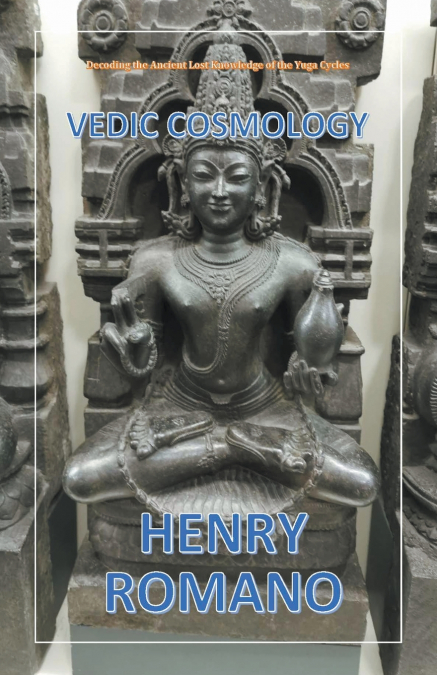
Vedic Cosmology

HENRY ROMANO

11,00 €
IVA incluido
Disponible
Editorial:
Draft2Digital
Año de edición:
2021
Materia
Historia de Asia
ISBN:
9798201757366
11,00 €
IVA incluido
Disponible

Selecciona una librería:

  • Librería Samer Atenea
  • Librería Aciertas (Toledo)
  • Kálamo Books
  • Librería Perelló (Valencia)
  • Librería Elías (Asturias)
  • Donde los libros
  • Librería Kolima (Madrid)
  • Librería Proteo (Málaga)

We are situated in the fifty-first Brahma year of the existence of our Brahma.Inside that Brahma year, we are in the primary Brahma day, called the Varaha Kalpa.Inside that Brahma day, we are in the seventh manvantara and in the 28th maha yuga of that manvantara. This would put us at about the 454th maha yuga of the 1,000 maha yugas that include this day of Brahma.Inside this maha yuga, we are in Kali Yuga. The 5100th year of Kali Yuga will relate to the year 2,000 A.D. That implies that we are genuinely right off the bat in Kali Yuga, and this age will proceed with more than 426,000 additional years.Variation Interpretations of Hindu ChronologyThe "Customary Puranic Model" portrayed above is settled upon by most creators on Hinduism and Yoga. Six distinct creators, recorded toward the finish of this paper, represent this model indistinguishably.A few different creators, some of the notable Hindu instructors, have distributed portrayals of the pattern of ages that vary from the conventional Puranic model. These variation hypotheses are depicted beneath.
Artículos relacionados

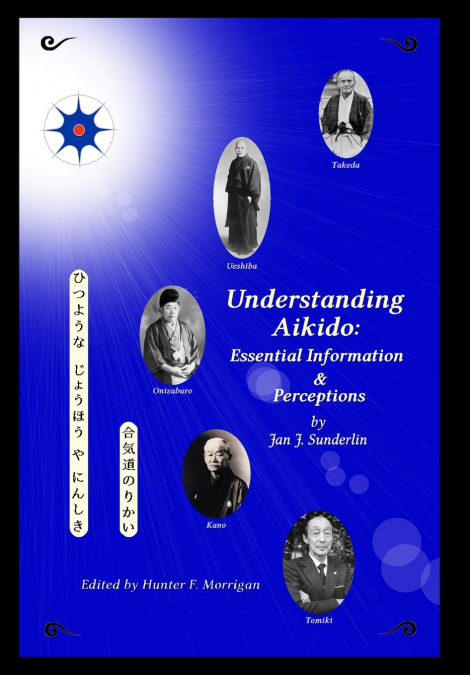
  • Understanding Aikido
    Jan J Sunderlin
    Understanding Aikido: Essential Information and Perceptions (Special Edition) presents an historical, cultural, and philosophical look at the development of the Japanese martial art of Aikido. Sunderlin focuses on the influences brought to bear on Morihei Ueshiba, the founder of Aikido, and the subsequent cultivation of the latter's martial art as a vessel of Budo. The author a...
    Disponible

    63,06 €

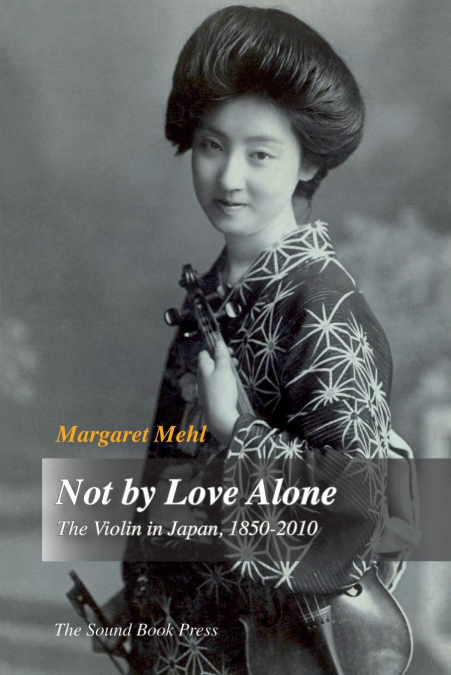
  • Not by Love Alone
    Margaret Mehl
    Suzuki Shin'ichi, the Tokyo String Quartet, Midori - How did Japanese violinists manage to revolutionize violin teaching, win international competitions, conquer Western concert stages, study at world-famous conservatoires and take up positions in leading orchestras and prestigious music faculties? What enabled the Japanese to master Western classical music within a few decades...
    Disponible

    29,32 €

  • Pictures in Transformation
    Luca Maria Olivieri
    ...
    Disponible

    54,79 €

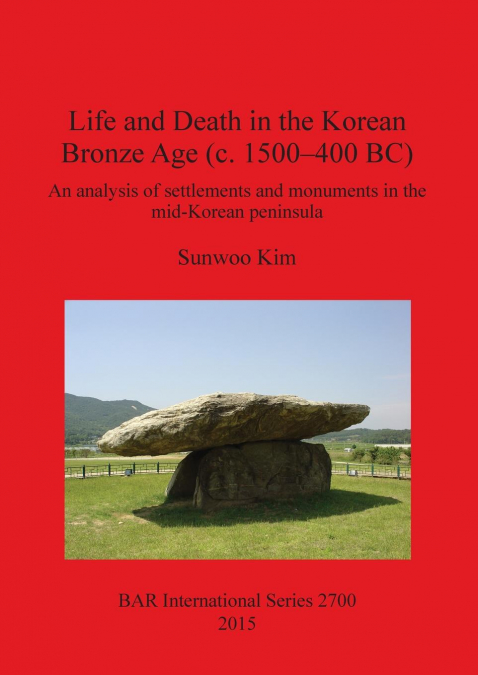
  • Life and Death in the Korean Bronze Age (c. 1500-400 BC)
    Sunwoo Kim
    This research focuses on the Bronze Age in selected areas of Korea; Seoul, Incheon, and Gyeonggi province. Two forms of evidence - settlements and monuments - are taken into account to identify their relationship with landscape and the social changes occurring between ca. 1500 to 400 cal BC. Life and death in the Bronze Age in Korea has not been synthetically investigated befor...
    Disponible

    108,34 €

  • South Asian Archaeology 2007
    Proceedings of the 19th Meeting of the European Association of South Asian Archaeology in Ravenna, Italy, July 2007.                     ...
    Disponible

    182,04 €

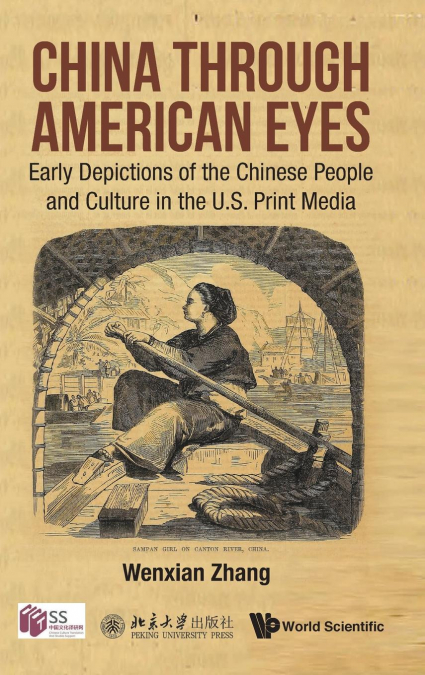
  • CHINA THROUGH AMERICAN EYES
    Wenxian Zhang / ZHANG WENXIAN
    Cultural understanding between the United States and China has been a long and complex process. The period from the mid-nineteenth century to the early twentieth century is not only a critical era in modern Chinese history, but also the peak time of illustrated news reporting in the United States. Besides images from newspapers and journals, this collection also contains pictur...

Otros libros del autor

  • Hindu Mysteries of India
    HENRY ROMANO
    The Hinduism of today is a vast and diverse religion, but its roots can be traced back thousands of years to the Vedas. The Rig Veda is an ancient text that outlines the beliefs of early Hindus, including their pantheon of deities. There are many different types of gods in the Hindu tradition (more than 330 million). Still, some hold special significance in the ancient texts: R...
    Disponible

    22,48 €

  • Decoding the Vedic System of Knowledge
    HENRY ROMANO
    One of the oldest libraries of texts in India is the Vedas. Vedic texts are painstakingly corrected by the teacher. Instructors and students still teach them orally today. Virtual classrooms have allowed females to learn the Vedas and how they were changed through technology.Samaveda has a much more intricate connection with Rigveda than the other Vedas. Because all its verses ...
    Disponible

    21,42 €

  • Mysteries of the Rig Veda
    HENRY ROMANO
    To what extent is lost knowledge, advanced technology, and advanced philosophy encoded in the hymns of the Rigveda before we attempt to describe it? Is it possible to comprehend the true meaning of a book written in the remotest ages of Indian literature?Identifying the appropriate method of interpretation for that ancient body of poetry is the key to answering this question. A...
    Disponible

    22,54 €

  • Decoding Hindu Chronology
    HENRY ROMANO
    Since ancient times, the Hindus have had a lunisolar cycle based on the combination of solar and lunar years, determined by the course of the sun and the moon, but with the lunar year beginning near the solar year. Exactly how their earliest Calendar was arranged remains a mystery. Our focus is on the current form of their Calendar, developed around 400 under the influence of G...
    Disponible

    21,47 €

  • The Rise of Civilizations Concerning Vedic Knowledge
    HENRY ROMANO
    Between 3300 and 2900 BC, archaeologists believe that civilization (the rise of Sumeria, the Indus Valley Civilization, and Egypt) marked the beginning of complex cities. The Neolithic Revolution, when agriculture, animal domestication, pottery, and the plow came together, seems not to hold together, as we explored in the final chapter of descending Treta Yuga. There had alread...
    Disponible

    22,50 €

  • A History of Lost Knowledge in Sanskrit Literature
    HENRY ROMANO
    The discovery of Sanskrit literature at the end of the eighteenth century was the most significant cultural event since the Renaissance. The Greeks became acquainted with the Indians after Alexander’s invasion; the Arabs brought Indian science to the West during the Middle Ages; some European missionaries from the sixteenth century on gained some familiarity with the ancient la...
    Disponible

    21,42 €