Inicio > Matemáticas y ciencia > Biologia, ciencias de la vida > Botánica y ciencias de las plantas > Utilização do novo adsorvente de argila de bentonite georgiana 'Askangel' na alimentação de trutas
Utilização do novo adsorvente de argila de bentonite georgiana 'Askangel' na alimentação de trutas

Utilização do novo adsorvente de argila de bentonite georgiana 'Askangel' na alimentação de trutas

Amrosi Chkuaseli / Tornike Lashkarashvili

64,05 €
IVA incluido
Disponible
Editorial:
KS OmniScriptum Publishing
Año de edición:
2025
Materia
Botánica y ciencias de las plantas
ISBN:
9786208004422
64,05 €
IVA incluido
Disponible

Selecciona una librería:

  • Librería Samer Atenea
  • Librería Aciertas (Toledo)
  • Kálamo Books
  • Librería Perelló (Valencia)
  • Librería Elías (Asturias)
  • Donde los libros
  • Librería Kolima (Madrid)
  • Librería Proteo (Málaga)

O consumo global de peixe e marisco está a aumentar anualmente, uma vez que são fontes ricas de proteínas. Estatisticamente, 65-70% do total de proteínas consumidas pelos seres humanos provêm de animais de criação e aves de capoeira (incluindo leite, ovos e carne), enquanto os restantes 30-35% provêm do peixe e de outros mariscos. Nos últimos 50 anos, a produção de peixe duplicou a nível mundial, passando de 9 quilogramas per capita para 21 quilogramas, e prevê-se que atinja 30 quilogramas per capita na próxima década.A qualidade das matérias-primas para a alimentação dos peixes é uma preocupação, uma vez que cerca de 50-55% estão frequentemente contaminadas com micotoxinas - produtos metabólicos de fungos microscópicos.As micotoxinas representam riscos significativos para os animais de criação, aves de capoeira e peixes devido à sua toxicidade pronunciada. A investigação recente centrou-se na eficácia dos adsorventes de micotoxinas, com inúmeras opções disponíveis no mercado global.Adicionalmente, a nossa investigação teve como objetivo estudar a eficácia da argila bentonítica de origem aluminossilicatada (Askangel) da Geórgia como um novo adsorvente natural de micotoxinas em aquacultura, tal como descrito no livro mencionado.'

Artículos relacionados

  • The Green Architecture
    Ali Mirshafieyan / Ghazal Yeganeh / Maryam Zamani Motlagh
    Protecting green energy as well as non-renewable energy, as well as their sustainable use, many advances in the technology of extracting oil products and other reserves under the ground have caused many improvements. In this regard, proposing the design of buildings in which the consumption of fossil fuels reaches its lowest level is considered one of the important solutions in...
    Disponible

    82,54 €

  • Responsible Use and Management of Agrochemicals
    Juan Carlos Nava
    Uso y manejo responsable de agroquímicos is a work product of the author’s experiences (undergraduate and graduate professor, with research and extension projects), aimed at producers, companies, professionals, students, advisors, researchers, among others.Due to its structure and content, it is expected to be a valuable aid to all people directly or indirectly involved in the ...
    Disponible

    49,45 €

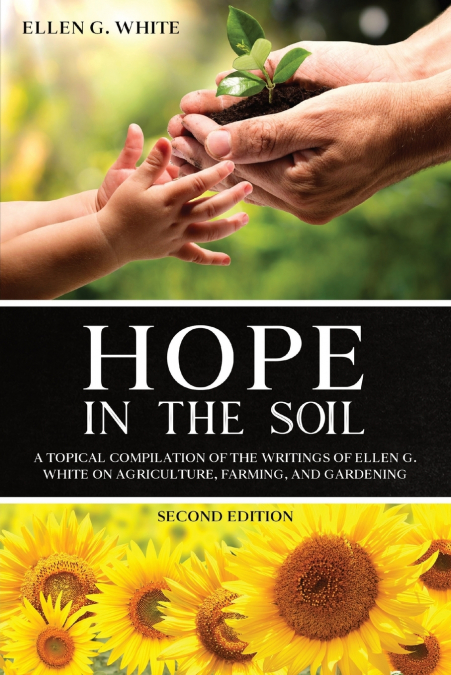
  • Hope in the Soil
    Ellen G White
    Before edible classrooms began 'sprouting' in elementary schools, before buzzwords like 'sustainable agriculture', 'organic,' or 'veganic' came into existence, an exceptional woman named Ellen G. White penned numerous letters and articles on the importance of farming, an outdoor life, and manual labor. Though often remembered for other things, Mrs. White was actively engaged in...
    Disponible

    18,38 €

  • The Green Revolution
    Binitha Sophine Emmanuel
    The Green Revolution, a transformative era in the annals of agriculture, emerged as a game-changing force during the mid-20th century, fundamentally reshaping the methodology of food production and steering the trajectory of global food security. Characterized by a sequence of technological breakthroughs, the Green Revolution aimed to substantially augment agricultural producti...
    Disponible

    53,23 €

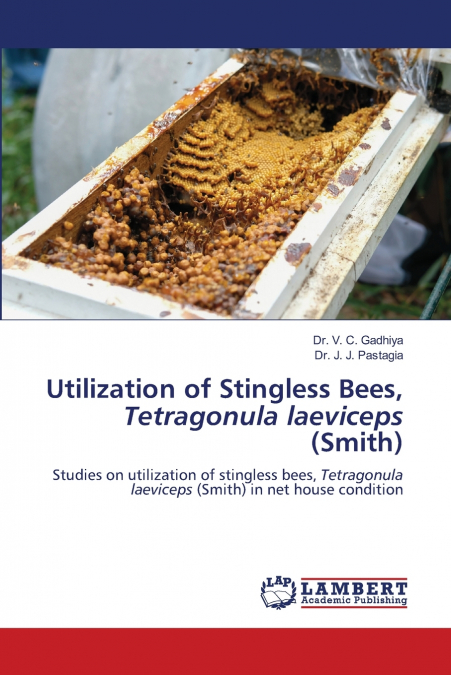
  • Utilization of Stingless Bees, Tetragonula laeviceps (Smith)
    Dr. J. J. Pastagia / Dr. V. C. Gadhiya
    The present investigations on utilization of stingless bees, T. laeviceps Smith in net house condition carried out with the broad aspects like flowers visited by stingless bees, T. laeviceps Smith, toxicity of insecticides to T. laeviceps Smith workers, floral biology of musk melon, foraging behavior of stingless bees, T. laeviceps Smith in net house condition, effect of pollin...
    Disponible

    84,80 €

  • La révolution verte
    Binitha Sophine Emmanuel
    La révolution verte, une ère transformatrice dans les annales de l’agriculture, est apparue comme une force qui a changé la donne au milieu du 20e siècle, remodelant fondamentalement la méthodologie de la production alimentaire et orientant la trajectoire de la sécurité alimentaire mondiale. Caractérisée par une série de percées technologiques, la révolution verte visait à augm...
    Disponible

    53,29 €

Otros libros del autor

  • Utilizzo del nuovo adsorbente argilla bentonite georgiana 'Askangel' nell’alimentazione delle trote
    Amrosi Chkuaseli / Tornike Lashkarashvili
    Il consumo globale di pesce e frutti di mare è in aumento ogni anno, poiché sono fonti ricche di proteine. Statisticamente, il 65-70% delle proteine totali consumate dall’uomo proviene da animali da allevamento e pollame (compresi latte, uova e carne), mentre il restante 30-35% deriva da pesce e altri frutti di mare. Negli ultimi 50 anni, la produzione di pesce è raddoppiata a ...
    Disponible

    64,05 €

  • Utilisation d’un nouvel adsorbant, l’argile bentonite géorgienne 'Askangel', dans l’alimentation des truites
    Amrosi Chkuaseli / Tornike Lashkarashvili
    La consommation mondiale de poisson et de fruits de mer augmente chaque année, car ce sont de riches sources de protéines. Statistiquement, 65 à 70 % des protéines totales consommées par l’homme proviennent des animaux d’élevage et de la volaille (y compris le lait, les œufs et la viande), tandis que les 30 à 35 % restants proviennent du poisson et d’autres fruits de mer. Au co...
    Disponible

    64,05 €

  • Verwendung des neuen Adsorptionsmittels Georgischer Bentonit-Ton 'Askangel' in Forellenfutter
    Amrosi Chkuaseli / Tornike Lashkarashvili
    Der weltweite Verbrauch von Fisch und Meeresfrüchten nimmt jährlich zu, da sie reichhaltige Proteinquellen sind. Statistisch gesehen stammen 65-70 % des gesamten von Menschen konsumierten Proteins von Nutztieren und Geflügel (einschließlich Milch, Eiern und Fleisch), während die restlichen 30-35 % von Fisch und anderen Meeresfrüchten stammen. In den letzten 50 Jahren hat sich d...
    Disponible

    64,12 €

  • Using new Adsorbent Georgian Bentonite clay 'Askangel' in Trout feed
    Amrosi Chkuaseli / Tornike Lashkarashvili
    The global consumption of fish and seafood is increasing annually, as they are rich sources of protein. Statistically, 65-70% of the total protein consumed by humans comes from farm animals and poultry (including milk, eggs, and meat), while the remaining 30-35% is derived from fish and other seafood. Over the past 50 years, fish production has doubled worldwide, rising from 9 ...
    Disponible

    51,75 €