Inicio > Matemáticas y ciencia > Biologia, ciencias de la vida > Botánica y ciencias de las plantas > Trasformazione del cotone con costrutto basato su siRNA mirato a CLCuD
Trasformazione del cotone con costrutto basato su siRNA mirato a CLCuD

Trasformazione del cotone con costrutto basato su siRNA mirato a CLCuD

Aneela Yasmeen / Sarfraz Kiani / Tayyab Husnain

107,98 €
IVA incluido
Disponible
Editorial:
KS OmniScriptum Publishing
Año de edición:
2025
Materia
Botánica y ciencias de las plantas
ISBN:
9786209247385
107,98 €
IVA incluido
Disponible

Selecciona una librería:

  • Librería Samer Atenea
  • Librería Aciertas (Toledo)
  • Kálamo Books
  • Librería Perelló (Valencia)
  • Librería Elías (Asturias)
  • Donde los libros
  • Librería Kolima (Madrid)
  • Librería Proteo (Málaga)

Il cotone è una coltura importante. Negli ultimi anni, la malattia del ricciolo fogliare del cotone (CLCuD) è diventata endemica. Ciò ha ostacolato enormemente la produzione di cotone ad alto rendimento. Questa malattia è causata da un gruppo di begomovirus denominato Cotton Leaf Curl Disease (CLCuD). Sono stati tentati diversi approcci di selezione e transgenici per superare il problema. Tra questi, l’interferenza dell’RNA (RNAi) si è dimostrata la più promettente. L’uso dell’interferenza dell’RNA è vantaggioso in quanto la tecnica è rispettosa dell’ambiente. Nell’attuale lavoro di ricerca, il costrutto genico basato sull’RNAi è stato trasformato in due varietà di cotone d’élite, MNH-786 e VH-289, per migliorare la resistenza virale contro la CLCuD. La trasformazione del costrutto nelle piante è stata effettuata con il metodo dell’apice del germoglio mediato da Agrobacterium. La trasformazione e l’integrazione riuscite del costrutto RNAi basato sull’amplicone sono state confermate tramite PCR nella generazione T1 e T2 utilizzando primer specifici per il gene. La capacità di abbattimento del costrutto C2 è stata confermata tramite PCR in tempo reale del titolo CLCuD. Il confronto tra l’indice di malattia virale e il titolo virale ha assicurato che le piante che mostravano un’integrazione positiva del gene RNAi con sintomi minimi avevano anche un titolo virale basso.
Artículos relacionados

  • The Green Architecture
    Ali Mirshafieyan / Ghazal Yeganeh / Maryam Zamani Motlagh
    Protecting green energy as well as non-renewable energy, as well as their sustainable use, many advances in the technology of extracting oil products and other reserves under the ground have caused many improvements. In this regard, proposing the design of buildings in which the consumption of fossil fuels reaches its lowest level is considered one of the important solutions in...
    Disponible

    82,54 €

  • Responsible Use and Management of Agrochemicals
    Juan Carlos Nava
    Uso y manejo responsable de agroquímicos is a work product of the author’s experiences (undergraduate and graduate professor, with research and extension projects), aimed at producers, companies, professionals, students, advisors, researchers, among others.Due to its structure and content, it is expected to be a valuable aid to all people directly or indirectly involved in the ...
    Disponible

    49,45 €

  • Hope in the Soil
    Ellen G White
    Before edible classrooms began 'sprouting' in elementary schools, before buzzwords like 'sustainable agriculture', 'organic,' or 'veganic' came into existence, an exceptional woman named Ellen G. White penned numerous letters and articles on the importance of farming, an outdoor life, and manual labor. Though often remembered for other things, Mrs. White was actively engaged in...
    Disponible

    18,38 €

  • The Green Revolution
    Binitha Sophine Emmanuel
    The Green Revolution, a transformative era in the annals of agriculture, emerged as a game-changing force during the mid-20th century, fundamentally reshaping the methodology of food production and steering the trajectory of global food security. Characterized by a sequence of technological breakthroughs, the Green Revolution aimed to substantially augment agricultural producti...
    Disponible

    53,23 €

  • Utilization of Stingless Bees, Tetragonula laeviceps (Smith)
    Dr. J. J. Pastagia / Dr. V. C. Gadhiya
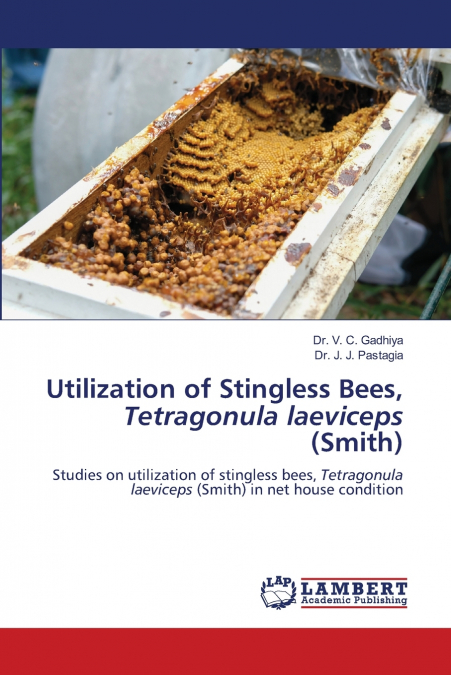
    The present investigations on utilization of stingless bees, T. laeviceps Smith in net house condition carried out with the broad aspects like flowers visited by stingless bees, T. laeviceps Smith, toxicity of insecticides to T. laeviceps Smith workers, floral biology of musk melon, foraging behavior of stingless bees, T. laeviceps Smith in net house condition, effect of pollin...
    Disponible

    84,80 €

  • La révolution verte
    Binitha Sophine Emmanuel
    La révolution verte, une ère transformatrice dans les annales de l’agriculture, est apparue comme une force qui a changé la donne au milieu du 20e siècle, remodelant fondamentalement la méthodologie de la production alimentaire et orientant la trajectoire de la sécurité alimentaire mondiale. Caractérisée par une série de percées technologiques, la révolution verte visait à augm...
    Disponible

    53,29 €

Otros libros del autor

  • Transformation du coton à l’aide d’une construction basée sur l’ARNsi ciblant CLCuD
    Aneela Yasmeen / Sarfraz Kiani / Tayyab Husnain
    Le coton est une culture importante. Au cours des dernières années, la maladie du frisolée du coton (CLCuD) est devenue endémique. Elle a considérablement entravé la production de rendements élevés de coton. Cette maladie est causée par un groupe de bégomovirus appelé Cotton Leaf Curl Disease (CLCuD). Plusieurs approches de sélection et de transgénèse ont été essayées pour surm...
    Disponible

    107,98 €

  • Transformacja bawełny za pomocą konstrukcji opartej na siRNA ukierunkowanej na CLCuD
    Aneela Yasmeen / Sarfraz Kiani / Tayyab Husnain
    Bawełna jest ważną rośliną uprawną. W ciągu ostatnich kilku lat pojawiła się endemiczna choroba zwana CLCuD (Cotton Leaf Curl Disease). Stanowi ona ogromną przeszkodę w uzyskaniu wysokich plonów bawełny. Choroba ta jest wywoływana przez grupę begomowirusów, a mianowicie Cotton Leaf Curl Disease (CLCuD). Aby rozwiązać ten problem, wypróbowano kilka metod hodowlanych i transgenic...
    Disponible

    107,98 €

  • Transformação do algodão com construção baseada em siRNA direcionada ao CLCuD
    Aneela Yasmeen / Sarfraz Kiani / Tayyab Husnain
    O algodão é uma cultura importante. Nos últimos anos, a doença do enrolamento das folhas do algodão (CLCuD) surgiu como uma endemia. Ela tem causado um grande obstáculo na produção de altos rendimentos de algodão. Esta doença é causada por um grupo de begomovírus, chamado doença do enrolamento das folhas do algodão (CLCuD). Várias abordagens de melhoramento genético e transgéni...
    Disponible

    107,99 €

  • Transformation von Baumwolle mit siRNA-basiertem Konstrukt, das auf CLCuD abzielt
    Aneela Yasmeen / Sarfraz Kiani / Tayyab Husnain
    Baumwolle ist eine wichtige Kulturpflanze. In den letzten Jahren hat sich die Baumwollblattrollkrankheit (CLCuD) zu einer endemischen Krankheit entwickelt. Sie hat die Produktion hoher Baumwollerträge erheblich beeinträchtigt. Diese Krankheit wird durch eine Gruppe von Begomoviren verursacht, nämlich die Baumwollblattrollkrankheit (CLCuD). Es wurden verschiedene Züchtungs- und ...
    Disponible

    107,98 €