 Librería Samer Atenea
 Kálamo Books
 Librería Elías (Asturias)
 Librería Kolima (Madrid)
 Librería Proteo (Málaga)
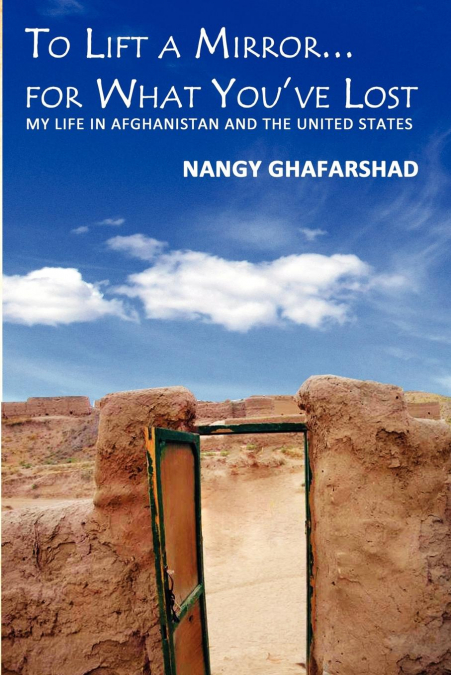
When we entered Afghanistan airspace, the mountainous terrain full of snow reminded me of when I flew over them as an air force pilot.Where I live in the United States, I am close to a mountain range where it snows during the winter, but these mountains, of my native land, are very different. Seeing them took me back to another time in my life. It reminded me of the people who live around these mountains in the most primitive way of life with roots so deep and structured by tradition that they are perversely proud that the most powerful nation of the world, the United States, has difficulty understanding why they behave the way they do.We landed at Kabul International Airport. Things looked very different from what I remembered from forty years before. It did not look like the same country I left so long ago. Everything was filthy and broken. My wife, Fahima, and I couldn’t hold back our tears. Through them we saw our country, which besides being primitive, was now ruined. The innocence of the country that I knew was gone. When we got out of the airplane, my cousin Mary (Mauree jan Ashraf) was waiting for us with a car. She warned me not to hug and hold her like we used to. Unlike the way she dressed while in the west, she was now covered from head to toe. The road to Kabul was totally different; many traffic circles and shack-like stores all around the street. Most buildings had barbed wire surrounding them for safety. One traffic circle named after the Soviet war hero Ahmad Shah Massoud (according to what I heard) was the most dangerous where suicide bombers (a tactic from Iraq) got close to a car they suspected was carrying foreigners, then blew up themselves and the cars around them. Check points by coalition and Afghan security forces were all around us. We headed toward the house where my cousin lived, which was next to the palace. I remembered the palace and the streets around it but I couldn’t tell where I was. Most of the roads were barricaded and unrecognizable, barbed wire and guards were everywhere. To my disappointment I couldn’t find my own home-where I was raised as a boy. The roads were blocked and when we got out of the car there were beautiful kids begging everywhere. As we passed by every corner, the flashback of my youth, my friends, our playgrounds; nothing matched-nothing I saw was the same.Fahima, and I cried for days for what was lost.I think it was at that point, even if only subconsciously at the time, when I knew I must write this story. It’s largely about me and my family; where we came from, some of our past and present-and some about the future. Throughout it you’ll find a message of faith and belief in one’s self and in following your heart. And it’s about doorways that we step through in life. It’s been said, 'When one door closes, another one opens.' I believe this to be true-it has been so for me personally.It is sad that for Afghanistan those doors continue to lead to tenuous structures often without walls and ceilings; no roof, no stability. Just an opening that exposes its people to any number of outside influences and interference. To understand more of how and why that is so, in this story, I’ve included some of Afghanistan’s past, present and thoughts on its future as well. I hope that you will sit for a while, read my story and even listen to the words and what they share with you. For the reader I promise that there are things you will glean from the reading and that you will learn about Afghanistan you did not know before.