 Librería Samer Atenea
 Kálamo Books
 Librería Elías (Asturias)
 Librería Kolima (Madrid)
 Librería Proteo (Málaga)
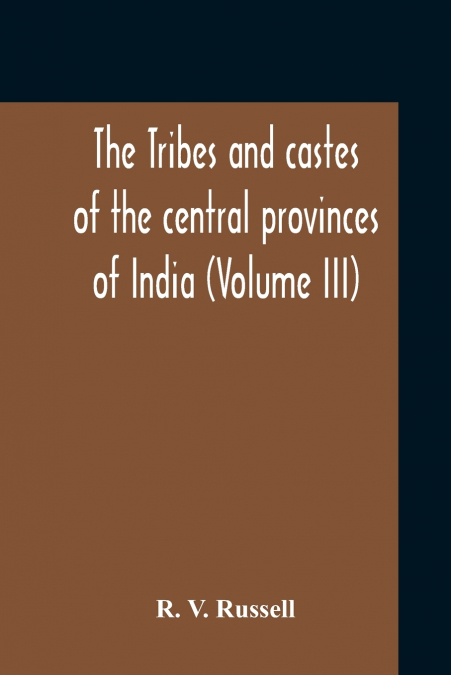
A vivid, uncompromising portrait of communities shaped by custom and caste. Scholarly yet readable, always engrossing.R. V. Russell’s The Tribes And Castes Of The Central Provinces Of India (Volume III) is a foundational Indian ethnographic study from early 20th century India that brings close, often granular attention to Hindu and tribal communities across the Central Provinces. Written in the idiom of a colonial anthropology book, its field observation and administrative reporting document social customs in India and trace the structures at the heart of caste system history and British India society. Russell balances methodical description with moments of unexpected human detail, so that ritual, occupation and kinship appear in full context rather than as isolated curios. The material is both immediate and archival, indispensable to those reconstructing central provinces history and to scholars examining comparative caste studies.Valued both as an academic research resource and as a cultural heritage reference, Volume III sits at the intersection of history and human story: a record of everyday life under colonial rule that continues to inform debates about social organisation and identity. Republished by Alpha Editions in a careful modern edition, this volume preserves the spirit of the original while making it effortless to enjoy today - a heritage title prepared for readers and collectors alike. Casual readers will find vivid reportage and distinctive regional flavour; classic-literature collectors and historians will prize the book’s documentary authority and its place in any serious V Russell collection. Accessible yet rigorous, the volume rewards close study and long-term consultation as a source for British India society, for social customs India, and for the unfolding of caste system history. Its blend of reportage and analytical rigour secures the book’s literary and historical significance; it functions as both a primary document and a thoughtfully composed work of social history. For libraries and private shelves alike, the volume remains a lasting cultural heritage reference.