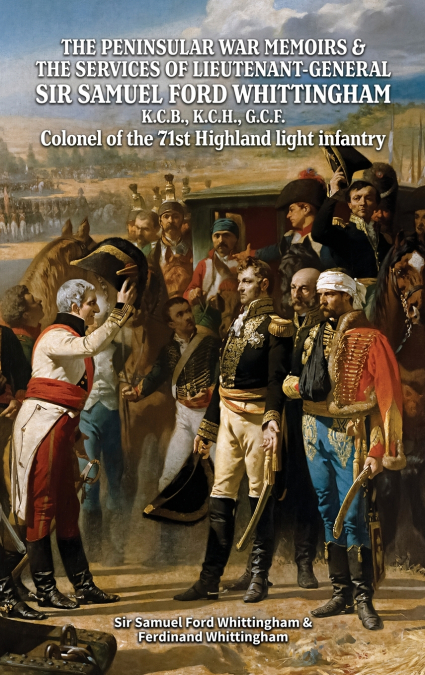

Inicio > Humanidades > Historia > Historia general y mundial > THE PENINSULAR WAR MEMOIRS & THE SERVICES OF LIEUTENANT-GENERAL SIR SAMUEL FORD WHITTINGHAM K.C.B., K.C.H., G.C.F. Colonel of the 71st Highland light infantry
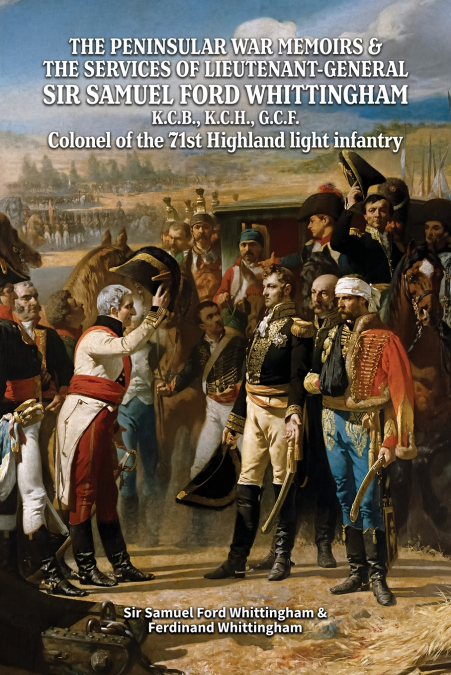
THE PENINSULAR WAR MEMOIRS & THE SERVICES OF LIEUTENANT-GENERAL SIR SAMUEL FORD WHITTINGHAM K.C.B., K.C.H., G.C.F. Colonel of the 71st Highland light infantry

THE PENINSULAR WAR MEMOIRS & THE SERVICES OF LIEUTENANT-GENERAL SIR SAMUEL FORD WHITTINGHAM K.C.B., K.C.H., G.C.F. Colonel of the 71st Highland light infantry

Sir Samuel Ford Whittingham

48,00 €
IVA incluido
Consulta disponibilidad
Editorial:
Naval & Military Press
Año de edición:
2024
Materia
Historia general y mundial
ISBN:
9781474540872

Selecciona una librería:

  • Librería Samer Atenea
  • Librería Aciertas (Toledo)
  • Kálamo Books
  • Librería Perelló (Valencia)
  • Librería Elías (Asturias)
  • Donde los libros
  • Librería Kolima (Madrid)
  • Librería Proteo (Málaga)

Whittingham took part under La Peña on 18 July 1808 in the victorious battle of Baylen, and for his services was made a colonel of cavalry in the Spanish army on 20 July. In February 1809 he joined the army corps of the Duke of Alburquerque in La Mancha, where he took part in several cavalry affairs with such distinction that he was promoted to be brigadier-general in the Spanish army. He was present at the battle of Medellin on 28 March, when the Spanish general Cuesta was defeated by the French general Victor-Perrin. On this occasion Whittingham re-formed the routed cavalry and led them against the enemy. A short time previous to Wellesley’s advance into Spain Whittingham joined the British headquarters on the frontier of Portugal. On 28 July at the battle of Talavera he was severely wounded when gallantly bringing up two Spanish battalions to the attack and was mentioned in Sir Arthur Wellesley’s despatch of 29 July 1809. He was given the command of the Spanish cavalry, which he remodelled upon British lines.Whittingham served in command of a force of Spanish cavalry and infantry under La Peña at the battle of Barrosa, on 5 March 1811, and kept in check a French corps of cavalry and infantry which attempted to turn the Barossa heights by the seaward side. He was engaged on the 7th of the month in the affair of Xegona, and on the 15th in the affair of Concentayña was wounded by a musket-ball in the right cheek, and was on both occasions most favourably mentioned by Sir John Murray in despatches. On 13 April he took part in the victorious battle of Castalla and was again mentioned in despatches. When Murray invested Tarragona on 3 June Whittingham’s division occupied the left. On Suchet’s advance to relieve the place Whittingham vainly suggested to Murray that a corps of observation should be left before Tarragona, and that Murray should move to meet Suchet with all his force. The siege was raised. Murray was relieved in command of the army by Lord William Bentinck, and Whittingham covered the retreat, checking and repulsing the French column in pursuit, and joining the main army again at Cambrils.In March 1814 Whittingham escorted King Ferdinand VII in his progress to Madrid, who on 16 June 1814 promoted him to be lieutenant-general in the Spanish army. On 4 June Wellington wrote from Madrid to the Duke of York, in anticipation of Whittingham’s return home: 'He has served most zealously and gallantly from the commencement of the war in the peninsula, and I have had every reason to be satisfied with his conduct in every situation in which he has been placed.'Whittingham reached Calcutta on 2 November 1822. He was busy in 1824 with the preparations for the expedition to Ava, and in November of that year with the Barrackpur Mutiny. He took part in the siege of Bhartpur, was slightly wounded on 13 January 1826, but was present at the capture on the 18th
Artículos relacionados

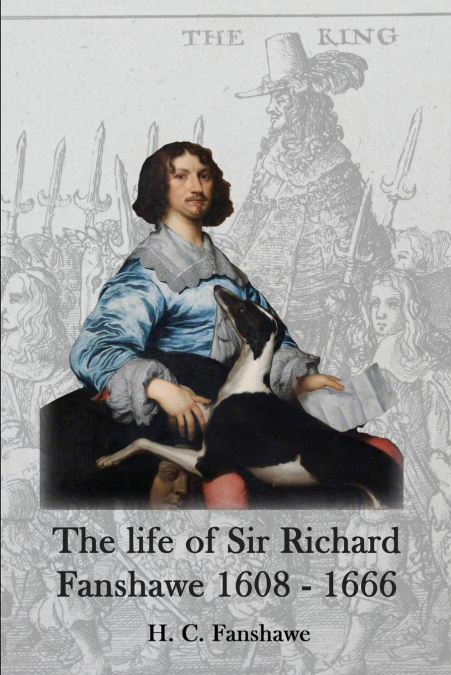
  • The life of Sir Richard Fanshawe, 1608 - 1666
    H C Fanshawe
    Sir Richard Fanshawe (1608-1666), was a diplomat, poet and linguist. As Ambassador to Spain and Portugal he negotiated the marriage of Charles II and Catherine of Braganza. He was also acclaimed for his poetry and his translations of Latin and European works such as the Lusiads by Luis de Camoes and Il Pastor Fido (the Faithful Shepherd) by Giovanni Battista Guarini. Sir Richar...
    Disponible

    17,51 €

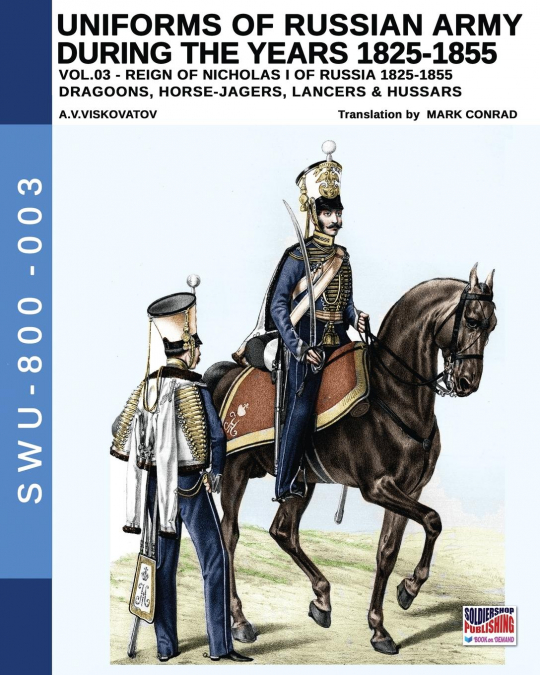
  • Uniforms of Russian Army during the years 1825-1855. Vol. 3
    Aleksandr Vasilevich Viskovatov / Mark Conrad
    This volume is related to the Russian Army during the zar Nicolas Ist era, and are about the uniforms cavalry in use from 1825 to 1855. Compiled at Saint Petersburg during the year from 1837 and 1851, the Historical Description of the Clothing and Arms of the Russian Army has had an enormous impact and great importance for the study on the history of Russian costume and uniform...
    Disponible

    52,04 €

  • Archaeology and Entomology in the Eastern Mediterranean
    Eva Panagiotakopulu
    ...
    Disponible

    74,97 €

  • Luoghi e Architetture della Transizione
    Maria Antonietta Breda
    I sistemi difensivi di confine e la protezione antiaerea nelle città. Storia conservazione riuso / Border defense system and air raid protection in the cities. History conservation reuseThis book collects the papers presented at the Second International Congress on Conoscenza e valorizzazione delle opere militari moderne - Knowledge and development of modern military structures...
    Disponible

    139,91 €

  • Le mura di Bergamo e l’esercito veneto fra 500 e 600
    Luca Stefano Cristini
    Correva l'Anno del Signore 1590. Così scriveva un soddisfatto e pago Alvise Grimani, l'allora comandante veneto della piazza di Bergamo, al termine dei lavori di realizzazione degli oltre cinque chilometri di mura porte e bastioni : 'La città è tutta serrata con baluardi e i suoi membri quasi tutti terrapienati, compite le piazze, i parapetti e le traverse per coprirsi ...
    Disponible

    36,31 €

  • Psychology of Revolution
    Gustave Lebon
    The present age is not merely an epoch of discovery; it is also a period of revision of the various elements of knowledge. Having recognised that there are no phenomena of which the first cause is still accessible, science has resumed the examination of her ancient certitudes, and has proved their fragility. To-day she sees her ancient principles vanishing one by one. ...

Otros libros del autor