Joseph Bridgeo Lindsey / Carlos Loring Beals / John Geddie Archibald
 Librería Samer Atenea
 Kálamo Books
 Librería Elías (Asturias)
 Librería Kolima (Madrid)
 Librería Proteo (Málaga)
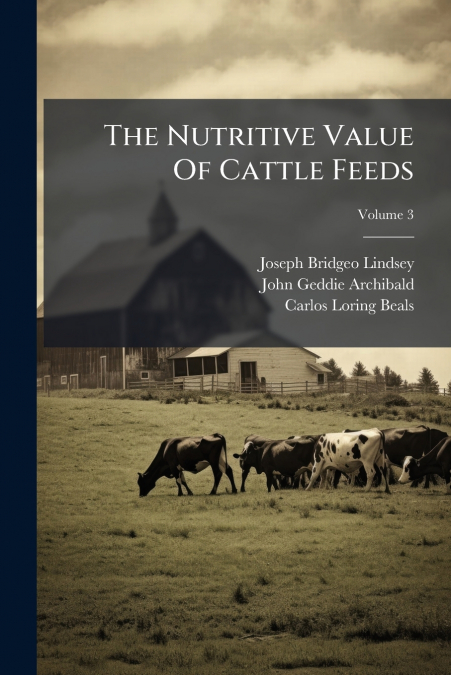
The Nutritive Value of Cattle Feeds, Volume 3: Dried Apple Pomace For Farm Stock explores the nutritional content and efficacy of various feedstuffs used in animal husbandry. Authored by Joseph Bridgeo Lindsey, John Geddie Archibald, and Carlos Loring Beals, this volume specifically examines the use of dried apple pomace as a viable component of cattle feed. The book delves into the chemical composition of dried apple pomace, analyzing its protein, carbohydrate, and fiber content to determine its overall nutritive value for livestock. This study provides valuable insights for farmers and agricultural scientists seeking to optimize feeding strategies and improve animal health and productivity. By focusing on a specific feed source and its impact on cattle, the authors offer a practical resource for enhancing livestock management practices and understanding alternative feed options.This work has been selected by scholars as being culturally important, and is part of the knowledge base of civilization as we know it. This work was reproduced from the original artifact, and remains as true to the original work as possible. Therefore, you will see the original copyright references, library stamps (as most of these works have been housed in our most important libraries around the world), and other notations in the work.This work is in the public domain in the United States of America, and possibly other nations. Within the United States, you may freely copy and distribute this work, as no entity (individual or corporate) has a copyright on the body of the work.As a reproduction of a historical artifact, this work may contain missing or blurred pages, poor pictures, errant marks, etc. Scholars believe, and we concur, that this work is important enough to be preserved, reproduced, and made generally available to the public. We appreciate your support of the preservation process, and thank you for being an important part of keeping this knowledge alive and relevant.