 Librería Samer Atenea
 Kálamo Books
 Librería Elías (Asturias)
 Librería Kolima (Madrid)
 Librería Proteo (Málaga)
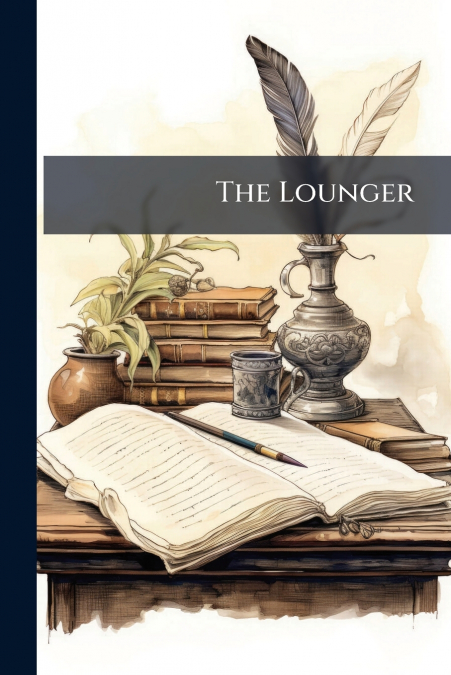
The Lounger, a periodical paper published anonymously in Edinburgh during the late 18th century, offers a fascinating glimpse into the social, cultural, and intellectual life of Scotland during the Enlightenment. Modeled after earlier British periodicals such as The Spectator and The Rambler, The Lounger features a collection of essays on a wide range of topics, including manners, literature, philosophy, and the arts. Written in an elegant and accessible style, these essays provide insightful commentary on the issues and debates of the day, reflecting the values and concerns of the Scottish elite.Though published anonymously, the essays are believed to have been written by a circle of prominent Edinburgh intellectuals, including Henry Mackenzie, who also edited the publication. Their contributions offer a valuable window into the minds of some of the leading thinkers of the Scottish Enlightenment, and shed light on the cultural and intellectual landscape of 18th-century Scotland. The Lounger remains a significant work of Scottish literature and a valuable resource for scholars interested in the history of ideas.This work has been selected by scholars as being culturally important, and is part of the knowledge base of civilization as we know it. This work was reproduced from the original artifact, and remains as true to the original work as possible. Therefore, you will see the original copyright references, library stamps (as most of these works have been housed in our most important libraries around the world), and other notations in the work.This work is in the public domain in the United States of America, and possibly other nations. Within the United States, you may freely copy and distribute this work, as no entity (individual or corporate) has a copyright on the body of the work.As a reproduction of a historical artifact, this work may contain missing or blurred pages, poor pictures, errant marks, etc. Scholars believe, and we concur, that this work is important enough to be preserved, reproduced, and made generally available to the public. We appreciate your support of the preservation process, and thank you for being an important part of keeping this knowledge alive and relevant.