 Librería Samer Atenea
 Kálamo Books
 Librería Elías (Asturias)
 Librería Kolima (Madrid)
 Librería Proteo (Málaga)
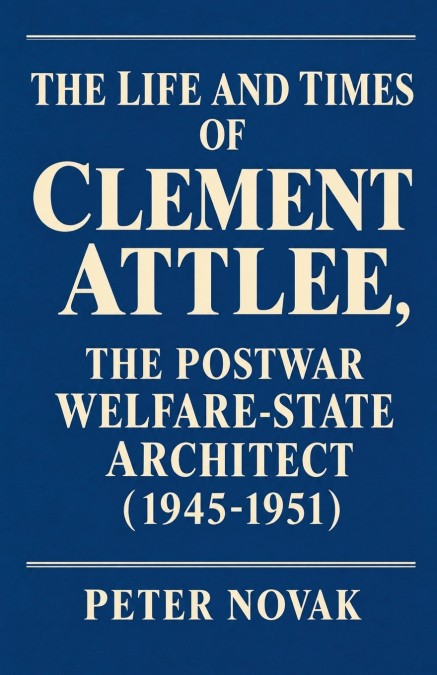
Few political leaders have transformed their countries as profoundly as Clement Richard Attlee, yet few have remained so curiously overshadowed in popular memory. In the pantheon of twentieth-century British statesmen, towering figures such as Winston Churchill, Margaret Thatcher, and even David Lloyd George have often occupied more conspicuous places in public consciousness. Churchill, in particular, has long dominated historical narratives of Britain in the mid-twentieth century through his leadership during the Second World War and his enduring rhetorical brilliance. Against such larger-than-life personalities, Attlee appears at first glance an unlikely candidate for greatness. Reserved in manner, modest in bearing, and deliberately unpretentious, he seemed almost immune to the cult of personality that surrounded many of his contemporaries. Yet it was under his premiership, from 1945 to 1951, that Britain experienced one of the most ambitious and consequential periods of social, economic, and political transformation in its history.This book seeks to examine the life, career, and legacy of the man who presided over that transformation. It argues that Attlee’s importance rests not only upon the policies enacted during his years in office, but also upon the distinctive political vision that guided those reforms and the remarkable leadership that enabled their realization under extraordinarily difficult circumstances. The institutions and principles established during the Attlee years reshaped British society for generations. The National Health Service, universal social insurance, expanded educational opportunity, extensive public housing, commitments to full employment, and the creation of a more comprehensive social safety net altered the relationship between citizens and the state in ways that continue to define modern Britain. Even governments that later challenged elements of Attlee’s settlement often found themselves operating within frameworks that his administration had created.