 Librería Samer Atenea
 Kálamo Books
 Librería Elías (Asturias)
 Librería Kolima (Madrid)
 Librería Proteo (Málaga)
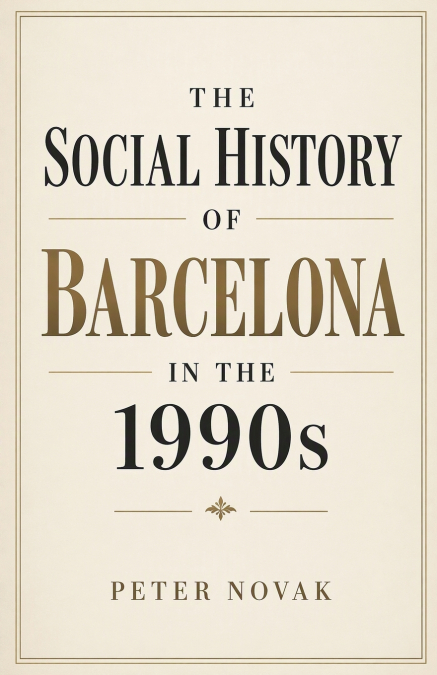
Few European cities experienced a transformation during the 1990s as profound, visible, and internationally celebrated as Barcelona. By the end of the decade, the Catalan capital had emerged as a global symbol of urban renewal, cultural vitality, architectural innovation, and economic dynamism. Visitors arriving in the city encountered renovated waterfronts, vibrant public spaces, modern infrastructure, and a cosmopolitan atmosphere that appeared to embody the promises of the post-Cold War world. Journalists, urban planners, politicians, and scholars from across Europe, the Americas, and Asia came to study what many began to call the 'Barcelona Model,' a strategy that seemed to reconcile economic modernization with civic pride and democratic governance. Yet beneath the triumphant narratives of success lay a more complex social reality, one marked by tensions, inequalities, competing identities, and divergent experiences of change.This book explores the social history of Barcelona during the 1990s, a decade that not only reshaped the physical environment of the city but also transformed the lives of the people who inhabited it. Rather than focusing exclusively on political leaders, planners, or major institutions, the chapters that follow examine how social groups experienced, interpreted, and contested the changes occurring around them. The story of Barcelona in the 1990s is not simply the story of urban redevelopment or Olympic achievement. It is equally the story of workers adapting to economic restructuring, families navigating rising housing costs, migrants building new communities, women expanding their presence in the labor market, young people forging new cultural identities, and neighborhood organizations seeking to defend local interests amid rapid transformation.