 Librería Samer Atenea
 Kálamo Books
 Librería Elías (Asturias)
 Librería Kolima (Madrid)
 Librería Proteo (Málaga)
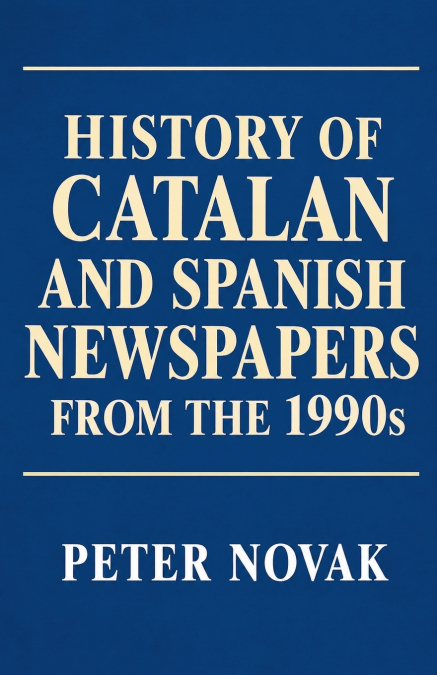
The 1990s occupy a singular place in the history of Spanish and Catalan journalism. Situated between the democratic consolidation that followed the end of Francisco Franco’s dictatorship and the digital revolution that would transform communication in the twenty-first century, the decade represented both the culmination of a historical process and the beginning of a new era. Newspapers remained the principal arena for political debate, intellectual exchange, cultural reflection, and public accountability. Their editorials could influence government agendas, their investigations could shake institutions, and their cultural sections continued to shape literary and artistic reputations. Yet beneath this apparent stability, profound transformations were already underway. New technologies altered newsroom practices, commercial pressures intensified competition, and the first signs of the internet foreshadowed the challenges that would soon redefine the media industry.This book examines the history of Catalan and Spanish newspapers during that decisive decade. Its objective is not merely to reconstruct a chronology of events or to describe the evolution of individual publications. Rather, it seeks to understand how newspapers functioned as political actors, cultural institutions, economic enterprises, and social intermediaries within a changing democratic society. The press did not simply report the history of Spain and Catalonia during the 1990s; it actively participated in the construction of that history. Newspapers interpreted political developments, framed public controversies, mediated debates over national and regional identities, and provided citizens with narratives through which they understood both their immediate environment and broader global transformations.