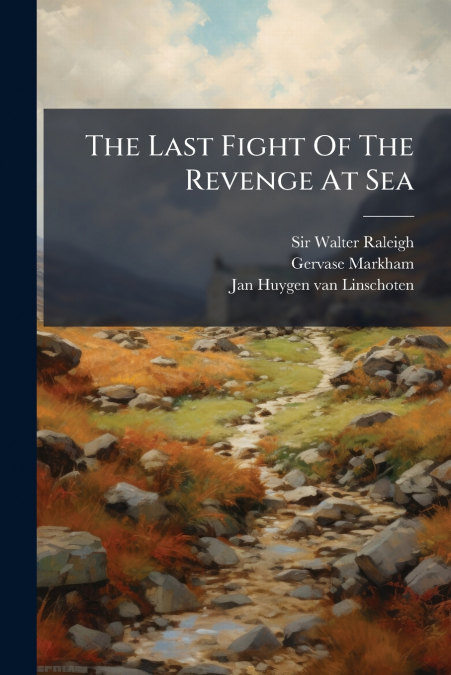
Gervase Markham / Sir Walter Raleigh / Jan Huygen van Linschoten
 Librería Samer Atenea
 Kálamo Books
 Librería Elías (Asturias)
 Librería Kolima (Madrid)
 Librería Proteo (Málaga)
'The Last Fight Of The Revenge At Sea' recounts the famous naval engagement of 1591 between the English ship Revenge, commanded by Sir Richard Grenville, and a large Spanish fleet. This collection features accounts by Sir Walter Raleigh, Gervase Markham, and Jan Huygen van Linschoten, providing multiple perspectives on the heroic, though ultimately doomed, defense of the Revenge. Raleigh’s narrative, known for its vivid prose and patriotic fervor, immortalized Grenville as a symbol of English courage and defiance against overwhelming odds. These historical narratives offer insights into the naval strategies, shipboard life, and political tensions of the late 16th century. Readers will gain a deeper understanding of the Elizabethan era and the maritime conflicts that shaped England’s destiny. The battle of the Revenge remains a powerful story of valor and sacrifice, continuing to resonate with those interested in naval history and the age of exploration.This work has been selected by scholars as being culturally important, and is part of the knowledge base of civilization as we know it. This work was reproduced from the original artifact, and remains as true to the original work as possible. Therefore, you will see the original copyright references, library stamps (as most of these works have been housed in our most important libraries around the world), and other notations in the work.This work is in the public domain in the United States of America, and possibly other nations. Within the United States, you may freely copy and distribute this work, as no entity (individual or corporate) has a copyright on the body of the work.As a reproduction of a historical artifact, this work may contain missing or blurred pages, poor pictures, errant marks, etc. Scholars believe, and we concur, that this work is important enough to be preserved, reproduced, and made generally available to the public. We appreciate your support of the preservation process, and thank you for being an important part of keeping this knowledge alive and relevant.