
The Judge in a Democracy

The Judge in a Democracy

Aharon Barak

49,77 €
IVA incluido
Disponible
Editorial:
Princeton University Press
Año de edición:
2008
Materia
Estructuras políticas: democracia
ISBN:
9780691136158
49,77 €
IVA incluido
Disponible

Selecciona una librería:

  • Librería Samer Atenea
  • Librería Aciertas (Toledo)
  • Kálamo Books
  • Librería Perelló (Valencia)
  • Librería Elías (Asturias)
  • Donde los libros
  • Librería Kolima (Madrid)
  • Librería Proteo (Málaga)

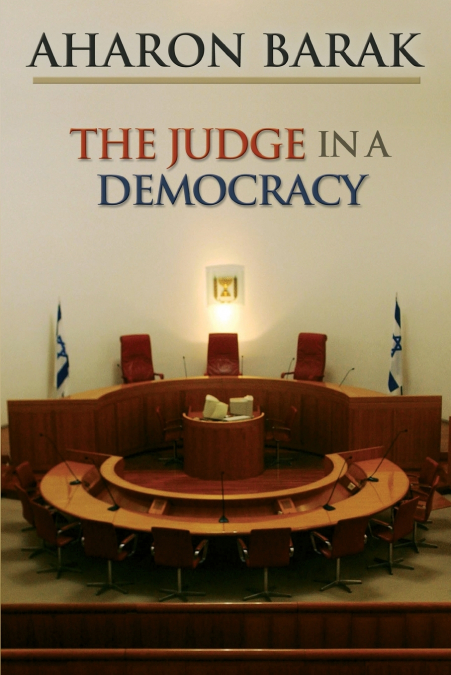
Whether examining election outcomes, the legal status of terrorism suspects, or if (or how) people can be sentenced to death, a judge in a modern democracy assumes a role that raises some of the most contentious political issues of our day. But do judges even have a role beyond deciding the disputes before them under law? What are the criteria for judging the justices who write opinions for the United States Supreme Court or constitutional courts in other democracies? These are the questions that one of the world’s foremost judges and legal theorists, Aharon Barak, poses in this book. In fluent prose, Barak sets forth a powerful vision of the role of the judge. He argues that this role comprises two central elements beyond dispute resolution: bridging the gap between the law and society, and protecting the constitution and democracy. The former involves balancing the need to adapt the law to social change against the need for stability; the latter, judges’ ultimate accountability, not to public opinion or to politicians, but to the 'internal morality' of democracy. Barak’s vigorous support of 'purposive interpretation' (interpreting legal texts--for example, statutes and constitutions--in light of their purpose) contrasts sharply with the influential 'originalism' advocated by U.S. Supreme Court Justice Antonin Scalia. As he explores these questions, Barak also traces how supreme courts in major democracies have evolved since World War II, and he guides us through many of his own decisions to show how he has tried to put these principles into action, even under the burden of judging on terrorism.


Artículos relacionados

  • Argumentos de filosofía política de la tercera y cuarta transformaciones de México. Una aproximación interdisciplinar
    Ana Paola Tiro Chagoyán / Virginia Aspe Armella
    Presentamos al lector el tercero de los tres libros que fueron resultado del proyecto de investigación semilla Fondo Fomento a la Investigación de la Universidad Panamericana que en nuestro caso fue titulado Argumentos de filosofía política de las cuatro transformaciones de México, etapa primera, la Ilustración mexicana de los siglos XVIII y primeros años del XIX, la Independen...
    Disponible

    30,68 €

  • Making Democracy Fun
    Josh A. Lerner
    ...
    Disponible

    33,87 €

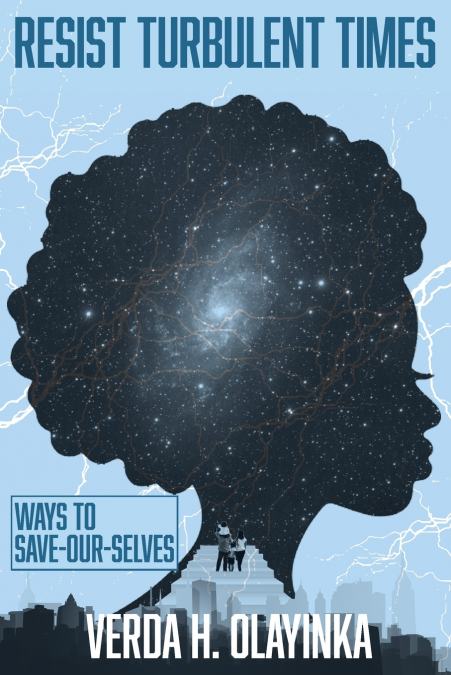
  • Resist Turbulent Times
    Verda Harris-Olayinka
    Resist Turbulent Times is for Everyday People and College students (who are also Everyday Ppl) - and their professors who assign textbooks for their students.Verda H. Olayinka followed the advice of noted Kemetic (African) American visionary, Harold Cruse who advised theCultural Intellectual to 'Synthesize a Black Social Science methodology in the process of developing a functi...
    Disponible

    16,64 €

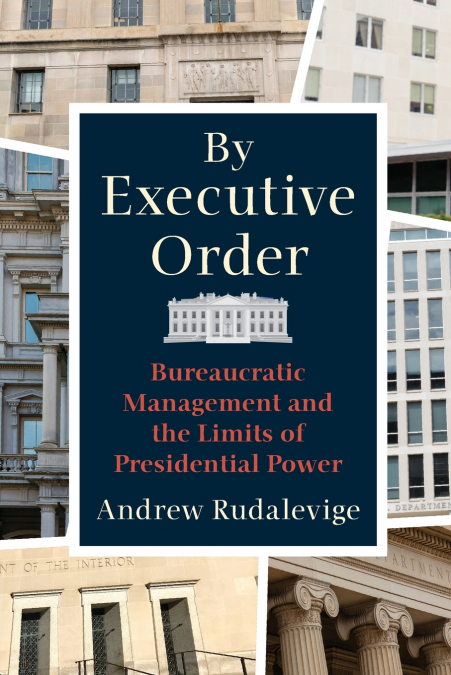
  • By Executive Order
    Andrew Rudalevige
    How the executive branch-not the president alone-formulates executive orders, and how this process constrains the chief executive’s ability to act unilaterallyThe president of the United States is commonly thought to wield extraordinary personal power through the issuance of executive orders. In fact, the vast majority of such orders are proposed by federal agencies and shaped ...
    Disponible

    43,00 €

  • The Autocratic Middle Class
    Bryn Rosenfeld
    How middle-class economic dependence on the state impedes democratization and contributes to authoritarian resilienceConventional wisdom holds that the rising middle classes are a force for democracy. Yet in post-Soviet countries like Russia, where the middle class has grown rapidly, authoritarianism is deepening. Challenging a basic tenet of democratization theory, Bryn Rosenf...
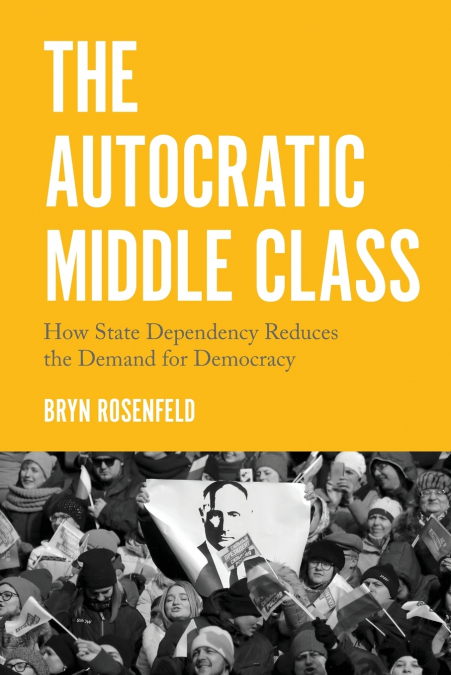
  • The Autocratic Middle Class
    Bryn Rosenfeld
    How middle-class economic dependence on the state impedes democratization and contributes to authoritarian resilienceConventional wisdom holds that the rising middle classes are a force for democracy. Yet in post-Soviet countries like Russia, where the middle class has grown rapidly, authoritarianism is deepening. Challenging a basic tenet of democratization theory, Bryn Rosenf...
    Disponible

    54,14 €

Otros libros del autor