Inicio > Humanidades > Historia > Historia regional y nacional > Historia de Asia > The Japanese Business Community and National Trade Policy, 1920-1942
The Japanese Business Community and National Trade Policy, 1920-1942

The Japanese Business Community and National Trade Policy, 1920-1942

The Japanese Business Community and National Trade Policy, 1920-1942

William Miles Fletcher III

64,40 €
IVA incluido
Disponible
Editorial:
Longleaf on behalf of Univ of N. Carolina Press
Año de edición:
2012
Materia
Historia de Asia
ISBN:
9780807857311
64,40 €
IVA incluido
Disponible

Selecciona una librería:

  • Librería Samer Atenea
  • Librería Aciertas (Toledo)
  • Kálamo Books
  • Librería Perelló (Valencia)
  • Librería Elías (Asturias)
  • Donde los libros
  • Librería Kolima (Madrid)
  • Librería Proteo (Málaga)

Miles Fletcher examines the role of the Japanese business community in helping the nation solve an unprecedented combination of economic challenges in the 1920s and 1930s: chronic trade deficits, world depression, rampant protectionism, and mobilization for war in Asia. Because of such severe crises, business executives changed their attitudes toward foreign trade and types of national economic policies needed to succeed in a global marketplace.After trade deficits began occurring in the 1920s, business leaders and business groups became obsessed with finding ways of expanding trade and ensuring a healthy balance of exports and imports. The onset of worldwide depression in 1930 brought trade barriers to Japanese exports in every major market, and the failure of the World Economic Conference in London in 1933 made prospects even more bleak. The idea that companies in each industrial sector would have to cooperate through national cartels began to take hold.Although the business community did not always operate as a unified interest group, its leaders in the interwar decades made progressively more effective attempts to secure a consensus on important proposals. As trade problems mounted, businessmen in many instances urged the increased national control of trade, with government officials and corporate executives working together to form policies.According to Fletcher, business attitudes toward foreign trade and the role of the government that developed during the economic crises of the 1920s and 1930s helped make Japan an economic power today. Japan is an economic power today because of the techniques developed during the period of economic crisis following World War I. After World War II, business leaders once again collaborated closely with the government to guide the nation to economic recovery and then to prominence as a trading power. Fletcher concludes that the travails of the interwar period forged a conviction that the Japanese business community has maintained well into the 1980s as a guiding concept: the task of expanding Japan’s international trade resembles a form of competitive warfare demanding national strategies.Originally published in 1989.A UNC Press Enduring Edition - UNC Press Enduring Editions use the latest in digital technology to make available again books from our distinguished backlist that were previously out of print. These editions are published unaltered from the original, and are presented in affordable paperback formats, bringing readers both historical and cultural value.

Artículos relacionados

  • Understanding Aikido
    Jan J Sunderlin
    Understanding Aikido: Essential Information and Perceptions (Special Edition) presents an historical, cultural, and philosophical look at the development of the Japanese martial art of Aikido. Sunderlin focuses on the influences brought to bear on Morihei Ueshiba, the founder of Aikido, and the subsequent cultivation of the latter's martial art as a vessel of Budo. The author a...
    Disponible

    63,06 €

  • Not by Love Alone
    Margaret Mehl
    Suzuki Shin'ichi, the Tokyo String Quartet, Midori - How did Japanese violinists manage to revolutionize violin teaching, win international competitions, conquer Western concert stages, study at world-famous conservatoires and take up positions in leading orchestras and prestigious music faculties? What enabled the Japanese to master Western classical music within a few decades...
    Disponible

    29,32 €

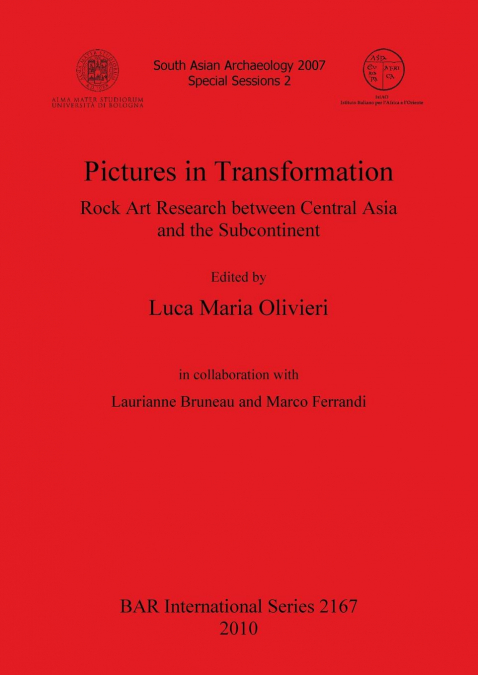
  • Pictures in Transformation
    Luca Maria Olivieri
    ...
    Disponible

    54,79 €

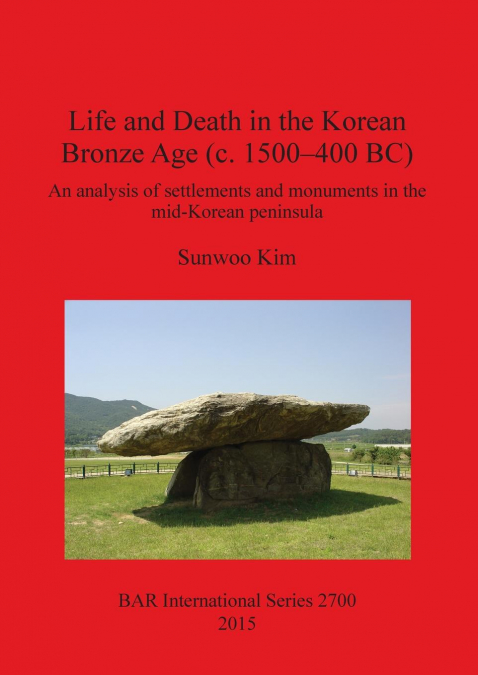
  • Life and Death in the Korean Bronze Age (c. 1500-400 BC)
    Sunwoo Kim
    This research focuses on the Bronze Age in selected areas of Korea; Seoul, Incheon, and Gyeonggi province. Two forms of evidence - settlements and monuments - are taken into account to identify their relationship with landscape and the social changes occurring between ca. 1500 to 400 cal BC. Life and death in the Bronze Age in Korea has not been synthetically investigated befor...
    Disponible

    108,34 €

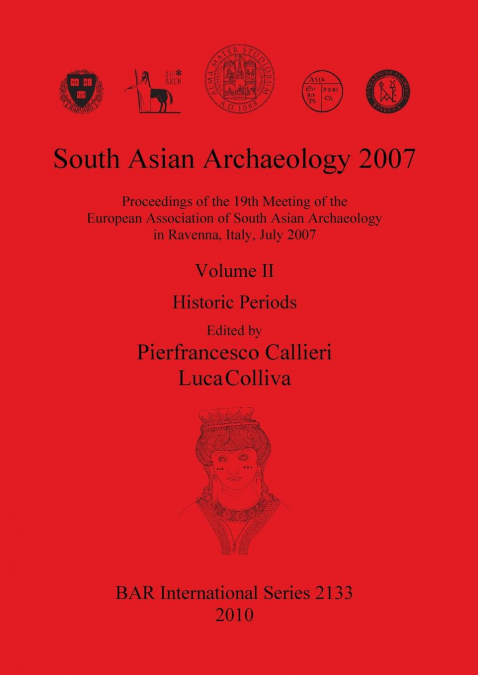
  • South Asian Archaeology 2007
    Proceedings of the 19th Meeting of the European Association of South Asian Archaeology in Ravenna, Italy, July 2007.                     ...
    Disponible

    182,04 €

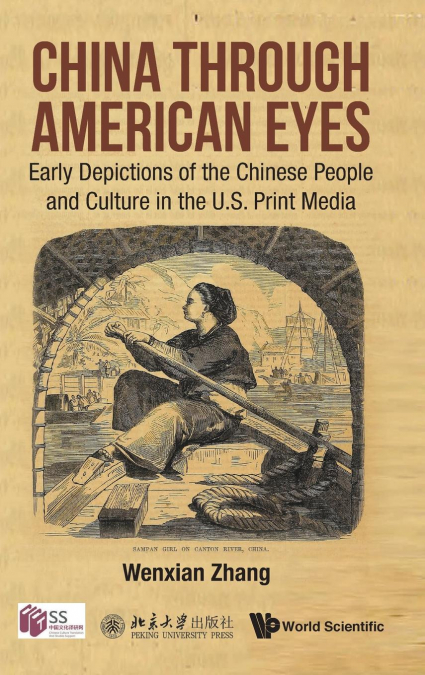
  • CHINA THROUGH AMERICAN EYES
    Wenxian Zhang / ZHANG WENXIAN
    Cultural understanding between the United States and China has been a long and complex process. The period from the mid-nineteenth century to the early twentieth century is not only a critical era in modern Chinese history, but also the peak time of illustrated news reporting in the United States. Besides images from newspapers and journals, this collection also contains pictur...
    Disponible

    159,39 €

Otros libros del autor

  • The Search for a New Order
    William Miles Fletcher III
    Fletcher explains how three writers--Ryu Shintaro, Royama Masamichi, and Miki Kiyoshi--who were supporters of democratic socialism became ideologues for the East Asian bloc ideal that rationalized Japan’s dominance of Asia after 1937, and he demonstrates how and why they designed the New Order movement of 1940. He concludes that the advocacy of fascism was a reasoned effort to ...
    Disponible

    64,40 €