 Librería Samer Atenea
 Kálamo Books
 Librería Elías (Asturias)
 Librería Kolima (Madrid)
 Librería Proteo (Málaga)
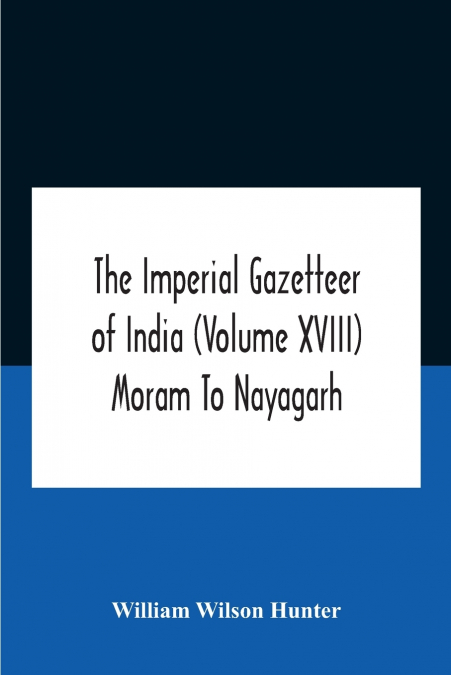
The Imperial Gazetteer of India (Volume XVIII): Moram to Nayagarh arrives as a sober ledger of empire written in district-sized strokes. A vital reference for scholars. Compiled in the late nineteenth century and set within the imperial gazetteer series, this work functions as a british india reference book and a focused entry in a historical gazetteer collection. Its pages record district-by-district notes on topography, settlement patterns, governance and economy, presenting the granular materials that underpinned colonial administration. Read with attention, it operates as a colonial india encyclopedia of place: measured, factual and sometimes surprising in the small human details it preserves. Arranged district by district and driven by official returns, the Gazetteer preserves the administrative vocabulary and local place-names that prove invaluable for reconstructing nineteenth century india at a local scale. Casual readers will discover a clear-eyed portrait of victorian era india; antiquarian collectors and libraries will prize it as a direct imprint of the india british raj era.As a primary source for indian administrative history and regional geography india, the volume is indispensable to researchers and historians, and it functions handsomely as an academic library resource for courses in south asian studies. Scholars will value its methodical entries for tracing the interaction of landscape and policy; genealogists, local historians and cultural students will uncover leads and context that later narratives often obscure. Its registers and systematic descriptions support comparative work across provinces and illuminate the priorities of imperial governance. Republished by Alpha Editions in a careful modern edition, this volume preserves the spirit of the original while making it effortless to enjoy today - a heritage title prepared for readers and collectors alike. Accessible enough for readers newly curious about colonial social life yet rigorous enough for classic-literature collectors and archivists, it sits at the intersection of utility and cultural memory: a working reference and a document of how empire named and measured its world.