 Librería Samer Atenea
 Kálamo Books
 Librería Elías (Asturias)
 Librería Kolima (Madrid)
 Librería Proteo (Málaga)
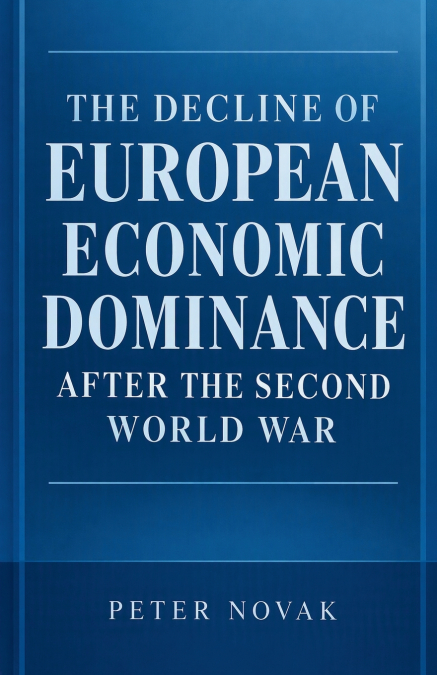
In the decades immediately following the Second World War, a profound transformation unfolded in the structure of the global economy. The change was neither sudden nor universally recognized at the time. Indeed, many contemporaries believed that Europe, despite the devastation of war, would eventually recover its traditional position at the center of world affairs. The continent retained highly educated populations, sophisticated financial institutions, advanced industrial sectors, and centuries of accumulated cultural, technological, and political influence. Yet beneath the remarkable story of reconstruction and recovery lay a deeper historical process: the gradual erosion of European economic dominance and the emergence of a more dispersed and multipolar global system.This book examines that transformation. It seeks to explain how a continent that had exercised unparalleled influence over the world economy for almost two centuries experienced a relative decline in its economic predominance after 1945. The story is not one of collapse, nor is it one of irreversible decay. On the contrary, many European societies achieved unprecedented levels of prosperity during the postwar era. Living standards improved dramatically, social welfare systems expanded, productivity increased, and many countries enjoyed sustained periods of economic growth. Nevertheless, prosperity should not be confused with dominance. A nation or region may become wealthier while simultaneously losing its relative position within the international distribution of power. Understanding this distinction is essential for analyzing Europe’s trajectory since the end of the Second World War.