

Inicio > Humanidades > Filosofía > The Crucial Role of Boethius in Preserving Aristotelian Works
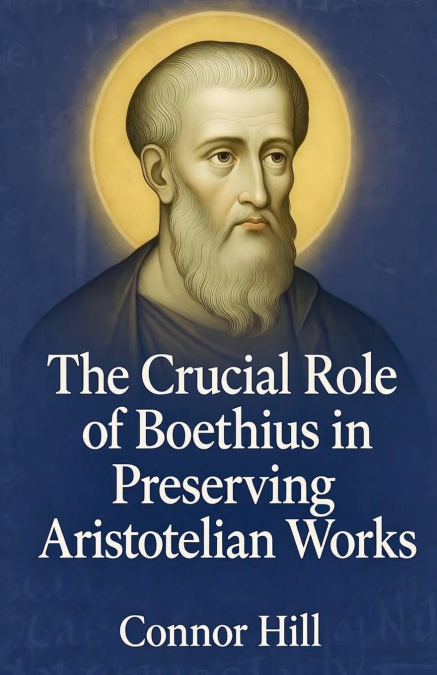
The Crucial Role of Boethius in Preserving Aristotelian Works

The Crucial Role of Boethius in Preserving Aristotelian Works

Connor Hill

19,16 €
IVA incluido
Disponible
Editorial:
Colloquium
Año de edición:
2025
Materia
Filosofía
ISBN:
9798232150044
19,16 €
IVA incluido
Disponible

Selecciona una librería:

  • Librería Samer Atenea

  • Kálamo Books
  • Librería Elías (Asturias)
  • Librería Kolima (Madrid)
  • Librería Proteo (Málaga)

In the twilight of the Roman Empire, one remarkable scholar stood between the wisdom of antiquity and a thousand years of darkness. Anicius Manlius Severinus Boethius-statesman, philosopher, and eventual martyr-recognized that the intellectual treasures of Greece were slipping away as the classical world crumbled. His desperate race to translate and preserve Aristotle’s works would become one of the most consequential intellectual projects in history.This book reveals the extraordinary story of Boethius’s preservation efforts and their profound impact on Western civilization. Born to Roman nobility but living under Ostrogothic rule, Boethius witnessed firsthand the fragmentation of classical learning. As knowledge of Greek rapidly disappeared in the Latin West, he undertook a monumental project: translating Aristotle’s complete works to ensure these philosophical foundations wouldn’t vanish forever.Though tragically cut short by his politically-motivated execution at age forty-four, Boethius’s achievement was remarkable. His translations of Aristotle’s logical works provided the only access Latin Europe had to these texts for nearly six centuries. The technical vocabulary he created-terms like 'substance,' 'quality,' and 'relation'-still shapes our philosophical discourse today. His commentaries and original works transmitted not just content but methods of thinking that would define medieval intellectual life and lay groundwork for the eventual rebirth of classical learning during the Renaissance.From his early promise as the brilliant scion of an ancient family to his final days composing the timeless Consolation of Philosophy while awaiting execution in prison, Boethius’s life reads like a classical tragedy. Yet his intellectual legacy represents one of history’s great triumphs-the preservation of essential philosophical tools that would eventually help rebuild Western thought.Drawing on recent scholarship and primary sources, this book takes readers on a journey through late antiquity’s tumultuous intellectual landscape. We explore how Boethius’s translations survived through monastic scriptoria during Europe’s darkest hours, influenced medieval cathedral schools and emerging universities, and eventually converged with Arabic and Byzantine preservation efforts to fuel the scholastic revolution. The book concludes by examining what might have been lost without Boethius’s crucial intervention-a counterfactual history that illuminates his true significance.For readers fascinated by the fragile threads connecting our intellectual heritage across centuries, this book offers a compelling account of how one individual’s dedication preserved philosophical treasures at the moment of their greatest vulnerability. It reminds us that the transmission of knowledge across generations is never guaranteed but depends on the foresight and commitment of those who recognize what is truly worth saving.

Artículos relacionados

  • Introduction to a Future Way of Thought
    Kostas Axelos / Kenneth Mills
    'Technologists only change the world in various ways in generalized indifference; the point is to think the world and interpret the changes in its unfathomability, to perceive and experience the difference binding being to the nothing.'Anticipating the age of planetary technology Kostas Axelos, a Greek-French philosopher, approaches the technological question in this book, firs...
    Disponible

    18,58 €

  • Capsule
    John Kenneth Press
    Join John and Adam as they wander the mean streets of Japan on a psychedelic fueled search for identity. While fun for the average reader, this book could also serve as a philosphy textbook because of its ordered exploration of sources of identity. Ultimately this trip through nationalist attacks, sex, and drugs, will take you to a better understanding of yourself and your pl...
    Disponible

    11,51 €

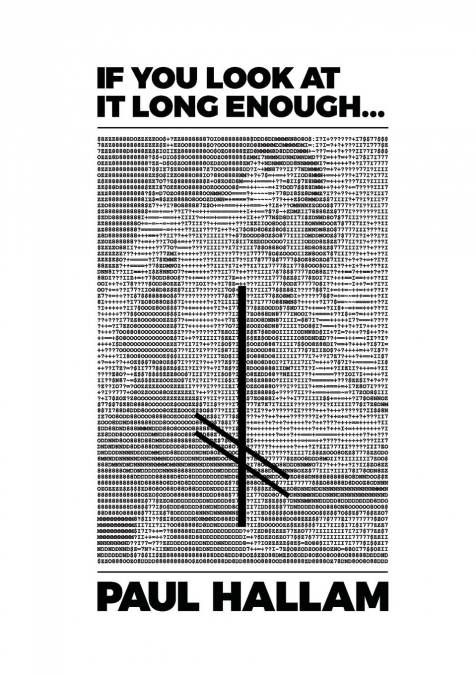
  • If you look at it long enough...
    Paul Hallam
    Originally written for an academic journal, If you look at it long enough... is primarily a personal account of Paul Hallam’s recollections of “self-abuse” through the consumption of porn over several decades. Challenging the familiar form of an “academic essay,” this autobiographical narrative raises several questions in relation to our contemporary morals related to sex in ge...
    Disponible

    11,30 €

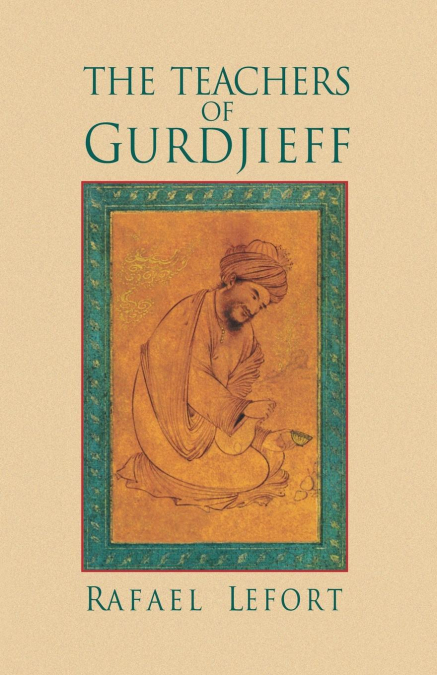
  • The Teachers of Gurdjieff
    Rafael Lafort / Rafael Lefort
    When The Teachers of Gurdjieff was first published more than 50 years ago, it made a considerable stir. George Ivanovich Gurdjieff had been one of the most famous mystics in the West in the first half of the 20th century - a teaching master who had many fashionable and influential pupils. He had a striking appearance and manner of teaching, and his teaching proved to be very in...
    Disponible

    20,45 €

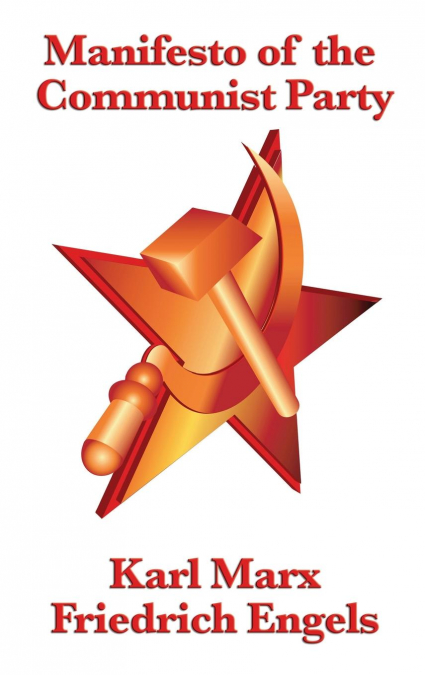
  • Manifesto of the Communist Party
    Karl Marx
    The Communist Manifesto was first published on February 21, and it is one of the world’s most influential political tracts. Commissioned by the Communist League and written by communist theorists Karl Marx and Friedrich Engels, it laid out the League’s purposes and program. The Manifesto suggested a course of action for a proletarian (working class) revolution to overthrow the ...
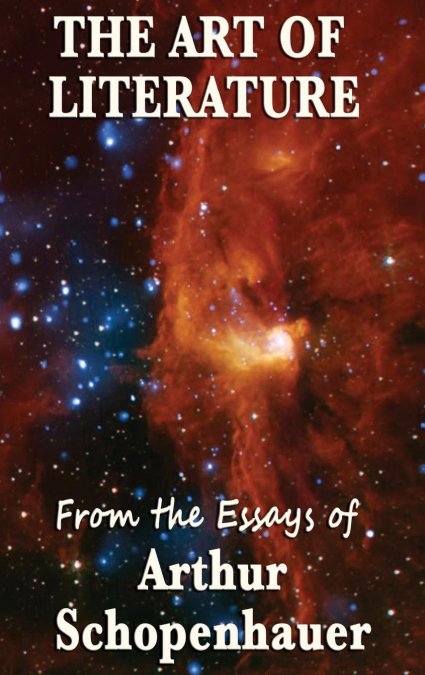
  • The Art of Literature
    Arthur Schopenhauer
    Collected here are eight short essays, On Authorship, On Style, On the Study of Latin, On Men of Learning, On Thinking for Ones Self, On Criticism, On Reputation, On Genius, by the world renowned philosopher Arthur Achopenhauer. ...

Otros libros del autor

  • The Rise of Medieval Islamic Scholarly Culture
    Connor Hill
    Few phenomena in world history rival the remarkable emergence of scholarly culture in the medieval Islamic world. Within a span of several centuries, communities stretching from the Atlantic shores of North Africa to the river valleys of Central Asia participated in the creation of one of the most extensive intellectual networks the premodern world had ever known. Across desert...
    Disponible

    20,97 €

  • The Thirteenth-Century Intellectual World
    Connor Hill
    The thirteenth century occupies a singular place in the history of human thought. Few periods before the modern age witnessed such a concentration of intellectual energy, institutional innovation, and cultural exchange. Across the cities, monasteries, courts, universities, and religious houses of Europe, new forms of inquiry transformed the understanding of nature, society, gov...
    Disponible

    20,87 €

  • The Translation Movements in Medieval Spain and Sicily
    Connor Hill
    The history of medieval Europe has often been told as a story of kingdoms, dynasties, wars, crusades, and religious transformation. Yet beneath these visible structures of political and social change lay another process that was equally consequential for the development of European civilization: the movement of knowledge across linguistic, cultural, and religious boundaries. Be...
    Disponible

    20,90 €

  • Christianity and Neoplatonism Before Augustine
    Connor Hill
    The encounter between Christianity and Platonism ranks among the most consequential intellectual events in the history of Western civilization. Long before Christianity emerged as the dominant religious force of the Roman Empire, the philosophical tradition originating with Plato had already shaped the intellectual language through which educated people understood reality, the ...
    Disponible

    20,96 €

  • The Platonic Influences on Later Christian Thought
    Connor Hill
    Few relationships in the history of ideas have generated as much fascination, controversy, and scholarly debate as the encounter between Christianity and Platonism. From the earliest centuries of the Christian era, believers and theologians found themselves living within a cultural world deeply shaped by Greek philosophical traditions. Among these traditions, none proved more i...
    Disponible

    21,05 €

  • Thomas Aquinas and the Christianization of Neoplatonism
    Connor Hill
    Few questions have exercised historians of philosophy and theology more persistently than the question of how Christianity came to appropriate, transform, and ultimately baptize elements of Greek philosophy. From the earliest centuries of the Church, Christian thinkers found themselves confronted by intellectual traditions that had been developed long before the emergence of Ch...
    Disponible

    21,03 €