
The Connections Between Ecology and Infectious Disease

The Connections Between Ecology and Infectious Disease

Christon J. Hurst

271,68 €
IVA incluido
Disponible
Editorial:
Springer Nature B.V.
Año de edición:
2019
Materia
Evolución
ISBN:
9783030064198
271,68 €
IVA incluido
Disponible

Selecciona una librería:

  • Librería Samer Atenea
  • Librería Aciertas (Toledo)
  • Kálamo Books
  • Librería Perelló (Valencia)
  • Librería Elías (Asturias)
  • Donde los libros
  • Librería Kolima (Madrid)
  • Librería Proteo (Málaga)

This book summarizes current advances in our understanding of how infectious disease represents an ecological interaction between a pathogenic microorganism and the host species in which that microbe causes illness.The contributing authors explain that pathogenic microorganisms often also have broader ecological connections, which can include a natural environmental presence; possible transmission by vehicles such as air, water, and food; and interactions with other host species, including vectors for which the microbe either may or may not be pathogenic.This field of science has been dubbed disease ecology, and the chapters that examine it have been grouped into three sections. The first section introduces both the role of biological community interactions and the impact of biodiversity on infectious disease. In turn, the second section considers those diseases directly affecting humans, with a focus on waterborne and foodborne illnesses, while also examining the critical aspect of microbial biofilms. Lastly, the third section presents the ecology of infectious diseases from the perspective of their impact on mammalian livestock and wildlife as well as on humans. Given its breadth of coverage, the volume offers a valuable resource for microbial ecologists and biomedical scientists alike.
Artículos relacionados

  • From Logos to Bios
    Wynand de Beer
    ...
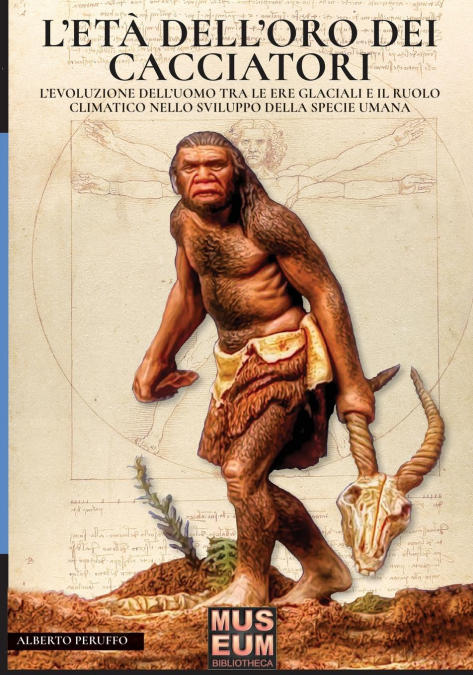
  • L’età dell’oro dei cacciatori
    Alberto Peruffo
    L'universo, il pianeta Terra, l'uomo. L'avventura della specie umana si dipana lentamente dall'essere unicellulare fino all'uomo dei giorni nostri che, tra mille travagli, ha raggiunto la condizione di assoluta supremazia.La presenza nell'uomo moderno dei geni del DNA dell'uomo di Neanderthal ha chiarito che, questi antichi uomini, facevano parte, a ...
    Disponible

    40,53 €

  • Exploring Genome’s Junkyard
    Subir Ranjan Kundu
    Exploring Genome’s Junkyard: In the Labyrinth of Evolution narrates the progress of biological evolution, beginning with the conceptual introspection of gene and continuing with the contemporary understanding of the structural and function aspects of the human genome. Recent advances in human genome research have led scientists to the term 'biological dark matter,' which refers...
  • European Hair, Eye, and Skin Color
    Peter Frost
    Europeans, especially those from northern and eastern Europe, are unique in having diverse hair and eye colors and a skin almost as pale as an albino’s. Those colors are not only brighter than the original black and brown but also 'purer'-they lie within thin slices of the visible spectrum. Overall, that color scheme is more developed in women, who naturally have a higher incid...
  • Mitochondrial Eve and Y-Chromosomal Adam
    Subir Ranjan Kundu
    Mitochondrial Eve and Y-Chromosomal Adam discusses theoretical ideas, interpretations, and paleontological evidence to narrate the origin and evolutionary story of Sapiens through the transitional stages of archaic human species involved in the evolutionary pilgrimage, from the great apes and to modern humans. Author Subir Ranjan Kundu investigates the DNA footprints of primate...
  • When Evolution Stops
    Armando Simon
    Evolution is a fact. The evidence for it is simply overwhelming. However, the original mechanism that generates the evolutionary process, as first put forth simultaneously by Charles Darwin and Alfred R. Wallace and which became known as Natural Selection, has now been seen to be too simplistic by some scientists aside from the hard-core neo-Darwinists who insist that nothing w...
    Disponible

    28,77 €

Otros libros del autor

  • Microbial Metabolism of Metals and Metalloids
    Christon J. Hurst
    This book explains the metabolic processes by which microbes obtain and control the intracellular availability of their required metal and metalloid ions. The book also describes how intracellular concentrations of unwanted metal and metalloid ions successfully are limited. Its authors additionally provide information about the ways that microbes derive metabolic energy by chan...
    Disponible

    248,24 €

  • Microbes
    Christon J. Hurst
    This collection of essays discusses fascinating aspects of the concept that microbes are at the root of all ecosystems. The content is divided into seven parts, the first of those emphasizes that microbes not only were the starting point, but sustain the rest of the biosphere and shows how life evolves through a perpetual struggle for habitats and niches. Part II explains the w...
    Disponible

    248,31 €

  • Microbial Metabolism of Metals and Metalloids
    Christon J. Hurst
    This book explains the metabolic processes by which microbes obtain and control the intracellular availability of their required metal and metalloid ions. The book also describes how intracellular concentrations of unwanted metal and metalloid ions successfully are limited. Its authors additionally provide information about the ways that microbes derive metabolic energy by chan...
  • The Biological Role of a Virus
    Christon J. Hurst
    This book answers the question 'What is it that viruses do?' by presenting three aspects of viral ecology.The first aspect explains how viruses affect the population diversity and energetics of their host communities. Perhaps the most notable example of this concept is our understanding that primary production within ecosystems often depends upon those viruses which serve as co...
  • Microbes
    Christon J. Hurst
    This collection of essays discusses fascinating aspects of the concept that microbes are at the root of all ecosystems. The content is divided into seven parts, the first of those emphasizes that microbes not only were the starting point, but sustain the rest of the biosphere and shows how life evolves through a perpetual struggle for habitats and niches. Part II explains the w...
  • The Structure and Function of Aquatic Microbial Communities
    Christon J. Hurst
    This book discusses how aquatic microbial communities develop interactive metabolic coordination both within and between species to optimize their energetics. It explains that microbial community structuration often includes functional stratification among a multitude of organisms that variously exist either suspended in the water, lodged in sediments, or bound to one another a...