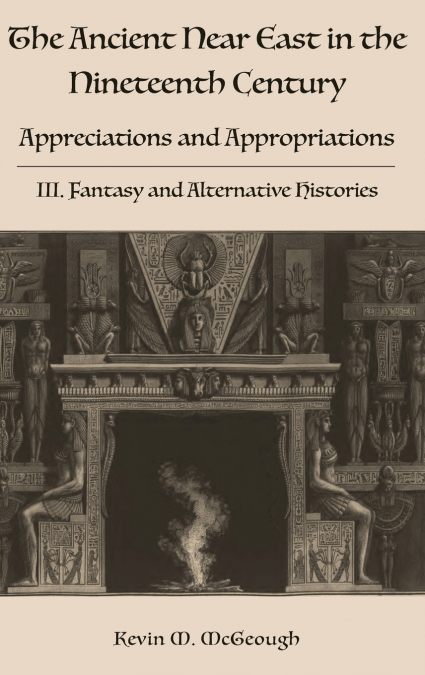
Inicio > Artes > The Ancient Near East in the Nineteenth Century
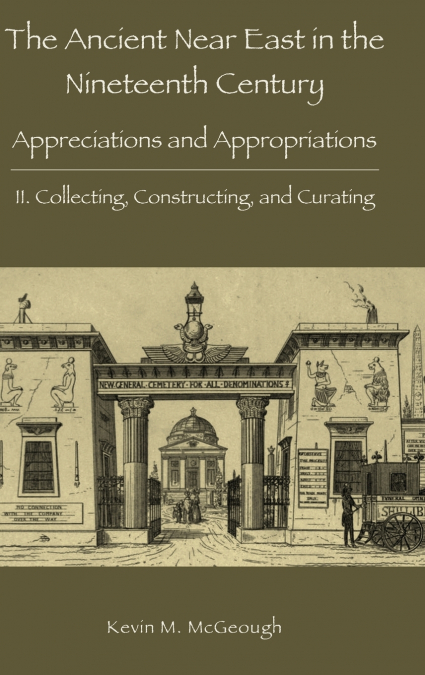
The Ancient Near East in the Nineteenth Century

The Ancient Near East in the Nineteenth Century

Kevin M. McGeough / Kevin MMcGeough

120,67 €
IVA incluido
Consulta disponibilidad
Editorial:
Sheffield Phoenix Press
Año de edición:
2015
Materia
Artes
ISBN:
9781909697676

Selecciona una librería:

  • Librería Samer Atenea
  • Librería Aciertas (Toledo)
  • Kálamo Books
  • Librería Perelló (Valencia)
  • Librería Elías (Asturias)
  • Donde los libros
  • Librería Kolima (Madrid)
  • Librería Proteo (Málaga)

At the beginning of the nineteenth century, little was known of the ancient Near East except for what was preserved in the Bible and classical literature. By the end of the nineteenth century, an amazing transformation had occurred: the basic outline of ancient Near Eastern history was understood and the material culture of the region was recognizable to the general public. This three-volume study explores the various ways that non-specialists would have encountered ancient Egypt, Mesopotamia, and the Holy Land and how they derived and constructed meaning from those discoveries. McGeough challenges the simplistic view that the experience of the ancient Near East was solely a matter of ’othering’ and shows how different people claimed the Near East as their own space and how connections were drawn between the ancient and contemporary worlds.Volume III argues that fiction and fantasy play an important role in establishing expectations about the past. Changing sensitivities towards realism in art meant that imaginary visions were charged with an archaeological aesthetic. Orientalist painting offered seemingly realistic glimpses of ancient life. Stage plays and opera used the ancient Near East for performances that explored contemporary issues. Mummy stories evolved from humorous time-travel tales into horror fiction rooted in fears of materialism, and adventure novels ruminated on the obligations and dangers of empire.Alongside these explicitly fictional modes of thinking about the past, the nineteenth century saw a rise in popularity of esoteric thinking. People offered alternative versions of ancient history, imagining that ancient religious practices continued into the present, through secret societies like the Freemasons and the Rosicrucians or in the new movements of Mormonism and Theosophy. Volume III ends by examining the interpretations of the Near East offered by Sigmund Freud and H.P. Lovecraft, showing how these two figures influenced later popular experiences of the ancient Near East.
Artículos relacionados

  • The Eagle Returns
    C. Paul Burnham / CPaul Burnham
    The Gospel of John was long assumed to be the work of an eyewitness, usually identified as John, son of Zebedee. More recently, many have judged it the unhistorical product of a ''Johannine community.'' Reconsideration by Richard Bauckham has suggested that the author was a Jerusalem disciple who housed the ''Last Supper.'' This book explores the possibility that he was present...
    Disponible

    11,04 €

  • The Old Testament in Theology and Teaching
    APTS Press is privileged to offer this festschrift honoring Dr. Kay Fountain, who for more than twenty years has served the Lord at the Asia Pacific Theological Seminary (APTS), in Baguio City, Philippines, first as a student, then as a faculty member and finally as the Academic Dean. Our hope is that this book will reflect her passion for teaching and understanding the Old Tes...
    Disponible

    22,13 €

  • MEL4414 - Roberto Grela, La guitarra del tango
    Julián Graciano
    del mayor guitarrista de la historia del tango. Con solo percibir el empleo del plectro (la llamada púa de guitarra en nuestro canyengue) descubrimos un sonido y estilo tan particular que terminó por deslumbrar a todos. Pero si decimos “bastaría”, en potencial, es que nos debemos mucho más: suele decirse del gran Aníbal Troilo que su música y sus orquestas son la gran marca de ...
    Disponible

    29,64 €

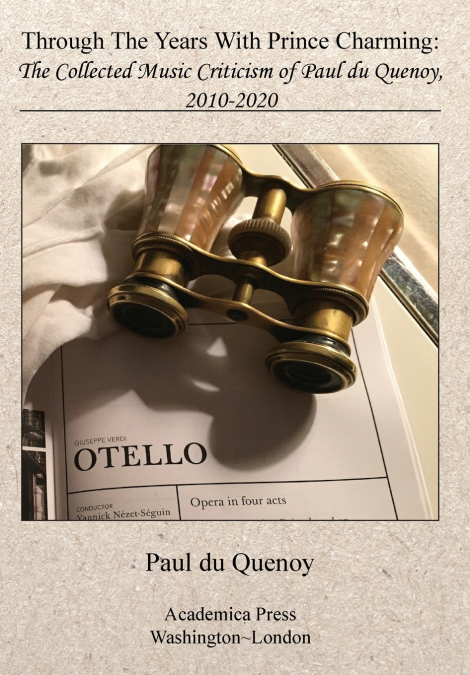
  • Through the years with prince charming
    Paul du Quenoy
    The past decade has overflowed in a raging stream of contradictions. Old certainties have yielded to relentless insecurity over a time when much of the human experience got immeasurably better even as many things only ever seemed to get worse. As Paul du Quenoy’s globetrotting criticism reveals, the arts were in a ferment that matched profound and yet totally unpredicted social...
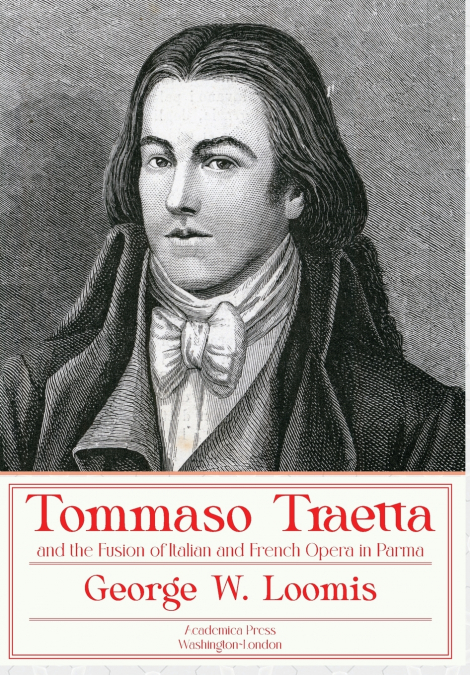
  • Tommaso Traetta and the Fusion of Italian and French Opera in Parma
    George W. Loomis
    In 1759, the court of the Italian Duchy of Parma adopted the inspiration of cultural creators who recommended a reform of Italian opera along French lines. These writers favored combining Italian-style music with the wider range of musical genres and scenic variety of French opera. As the music critic and commentator George W. Loomis shows in this groundbreaking volume, the you...
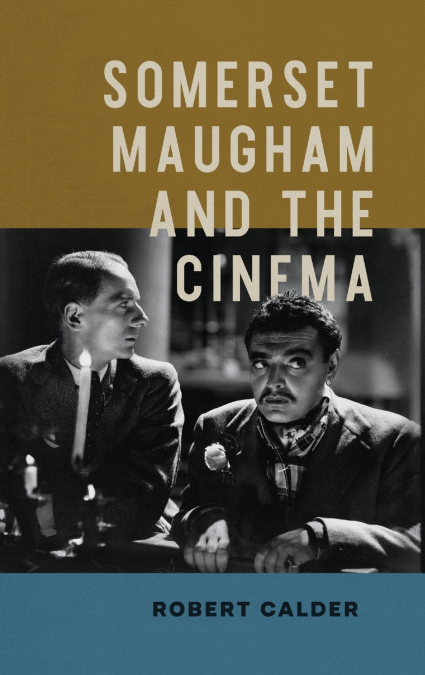
  • Somerset Maugham and the Cinema
    Robert Calder
    William Somerset Maugham (1874-1965) was one of the most prominent and productive authors of the twentieth century-and his works have been among the most cinematically transformed in history. For more than five decades, adaptations of his plays, stories, and novels dominated movie theaters and, later, television screens. More than ninety individual works were filmed, and for ma...

Otros libros del autor

  • The Ancient Near East in the Nineteenth Century
    Kevin M. McGeough / Kevin MMcGeough
    At the beginning of the nineteenth century, little was known of the ancient Near East except for what was preserved in the Bi¬ble and classical literature. By the end of the nineteenth cen¬tury, an amazing transformation had occurred: the basic out¬line of ancient Near Eastern history was understood and the mate¬rial culture of the region was recognizable to the general pub¬lic...
  • The Ancient Near East in the Nineteenth Century
    Kevin M. McGeough / Kevin MMcGeough
    At the beginning of the nineteenth century, little was known of the ancient Near East except for what was preserved in the Bible and Classical literature. By the end of that century, an amazing transformation had occurred: the basic outline of ancient Near Eastern history was now understood and the material culture of the region was recognizable to the general public. This thre...