
Inicio > Sociedad y ciencias sociales > Educación pedagogía > Destrezas y técnicas de enseñanza > Test Fairness in the New Generation of Large-Scale Assessment
Test Fairness in the New Generation of Large-Scale Assessment

Test Fairness in the New Generation of Large-Scale Assessment


73,58 €
IVA incluido
Disponible
Editorial:
Emerald Publishing Ltd
Año de edición:
2017
Materia
Destrezas y técnicas de enseñanza
ISBN:
9781681238937
73,58 €
IVA incluido
Disponible

Selecciona una librería:

  • Librería Samer Atenea
  • Librería Aciertas (Toledo)
  • Kálamo Books
  • Librería Perelló (Valencia)
  • Librería Elías (Asturias)
  • Donde los libros
  • Librería Kolima (Madrid)
  • Librería Proteo (Málaga)

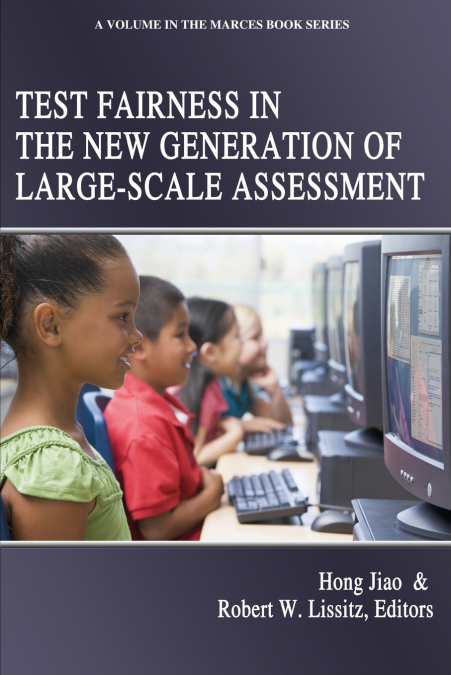
The new generation of tests is faced with new challenges. In the K-12 setting, the new learning targets are intended to assess higher-order thinking skills and prepare students to be ready for college and career and to keep American students competitive with their international peers. In addition, the new generation of state tests requires the use of technology in item delivery and embedding assessment in real-world, authentic, situations. It further requires accurate assessment of students at all ability levels. One of the most important questions is how to maintain test fairness in the new assessments with technology innovative items and technology delivered tests. In the traditional testing programs such as licensure and certification tests and college admission tests, test fairness has constantly been a key psychometric issue in test development and this continues to be the case with the national testing programs.As test fairness needs to be addressed throughout the whole process of test development, experts from state, admission, and licensure tests will address test fairness challenges in the new generation assessment. The book chapters clarify misconceptions of test fairness including the use of admission test results in cohort comparison, the use of international assessment results in trend evaluation, whether standardization and fairness necessarily mean uniformity when test-takers have different cultural backgrounds, and whether standardization can insure fairness. More technically, chapters also address issues related to how compromised items and test fairness are related to classification decisions, how accessibility in item development and accommodation could be mingled with technology, how to assess special populations with dyslexia, using Blinder-Oaxaca Decomposition for differential item functioning detection, and differential feature functioning in automated scoring.Overall, this book addresses test fairness issues in state assessment, college admission testing, international assessment, and licensure tests. Fairness is discussed in the context of culture and special populations. Further, fairness related to performance assessment and automated scoring is a focus as well. This book provides a very good source of information related to test fairness issues in test development in the new generation of assessment where technology is highly involved.

Artículos relacionados

  • Virginal Mothers, Groovy Chicks & Blokey Blokes
    Donna Pendergast
    There is an expectation that teachers are, and will be, transformers of society as they prepare young people to deal with an ever-changing world. While the importance of this role has never been greater, the status and respect once enjoyed by teachers has declined over recent years. Diminishing status and negative stereotypes have in turn contributed to a growing teacher shorta...
    Disponible

    35,72 €

  • Educational Technology Use and Design for Improved Learning Opportunities
    Khosrow-Pour / Mehdi Khosrow-Pour
    The rise of technology within educational settings has allowed for a substantial shift in the way in which educators teach learners of all ages. In order to implement these new learning tools, school administrators and teachers alike must seek new research outlining the latest innovations in the field. Educational Technology Use and Design for Improved Learning Opportunities pr...
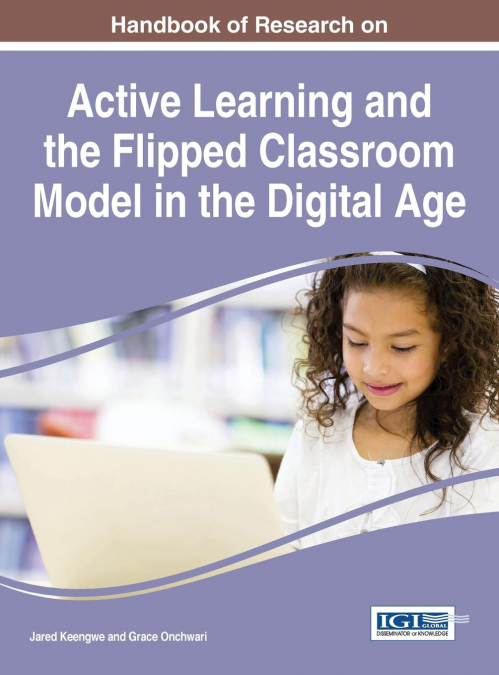
  • Handbook of Research on Active Learning and the Flipped Classroom Model in the Digital Age
    The notion of a flipped classroom draws on such concepts as active learning, student engagement, hybrid course design, and course podcasting. The value of a flipped class is in the repurposing of class time into a workshop where students can inquire about lecture content, test their skills in applying knowledge, and interact with one another in hands-on activities. The Handbook...
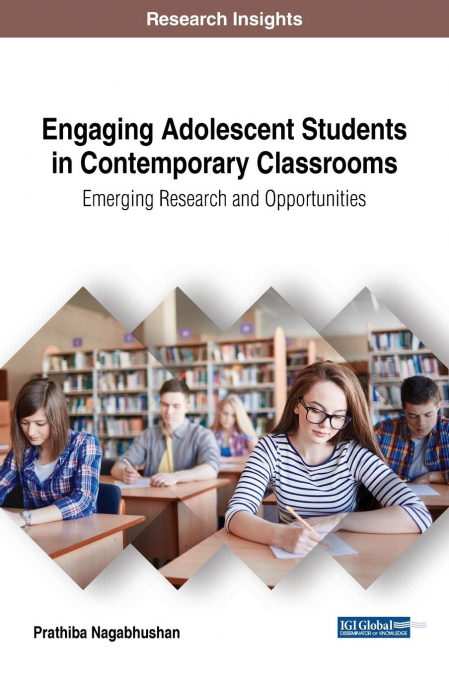
  • Engaging Adolescent Students in Contemporary Classrooms
    Prathiba Nagabhushan
    Preparation for university study and integration into the workforce is the academic goal in the final years of secondary education. This preparedness can only be achieved through the motivation and involvement of students in secondary education programs which will lead to successful outcomes. Engaging Adolescent Students in Contemporary Classrooms: Emerging Research and Opportu...
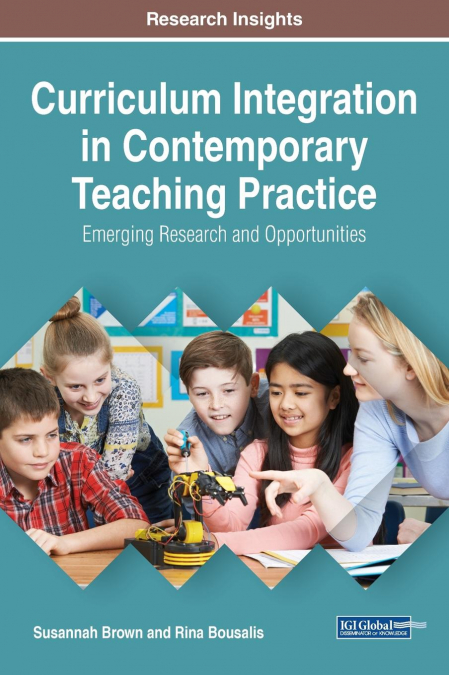
  • Curriculum Integration in Contemporary Teaching Practice
    Rina Bousalis / Susannah Brown
    Teaching and learning practices that are interconnected and value all subject areas benefit K-12 students by supporting creativity, critical thinking, communication, and collaboration. Curriculum Integration in Contemporary Teaching Practice: Emerging Research and Opportunities is an essential scholarly resource that presents detailed information on the benefits and implementat...
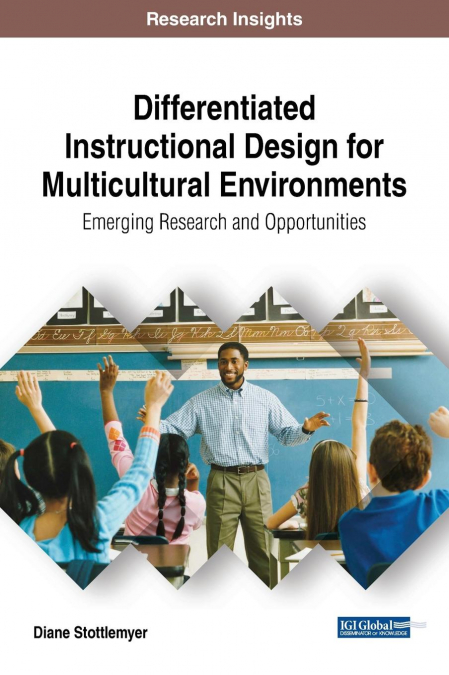
  • Differentiated Instructional Design for Multicultural Environments
    Diane Stottlemyer
    Modern technology is creating new challenges for teachers to keep up with today’s education and advancing teaching styles. The development of a differentiated curriculum is necessary and needed particularly for a diversified group of students. Differentiated Instructional Design for Multicultural Environments: Emerging Research and Opportunities provides emerging research on mo...