
Inicio > Matemáticas y ciencia > Ciencia: cuestiones generales > Sustainability and the New Economics
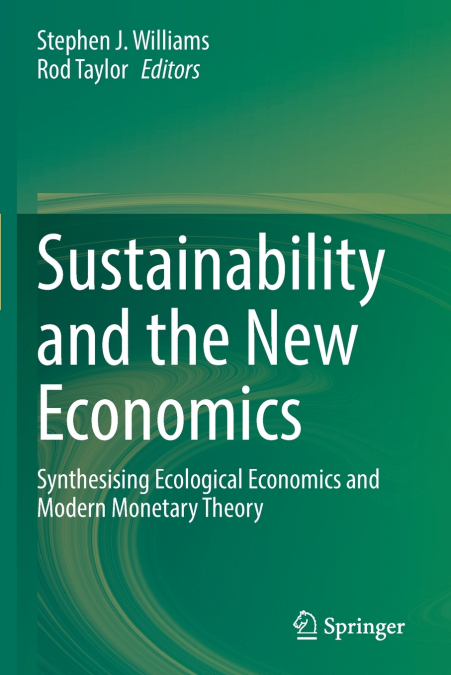
Sustainability and the New Economics

Sustainability and the New Economics


210,25 €
IVA incluido
Disponible
Editorial:
Springer Nature B.V.
Año de edición:
2022
Materia
Ciencia: cuestiones generales
ISBN:
9783030787974
210,25 €
IVA incluido
Disponible

Selecciona una librería:

  • Librería Samer Atenea
  • Librería Aciertas (Toledo)
  • Kálamo Books
  • Librería Perelló (Valencia)
  • Librería Elías (Asturias)
  • Donde los libros
  • Librería Kolima (Madrid)
  • Librería Proteo (Málaga)

This multidisciplinary book provides new insights and hope for sustainable prosperity given recent developments in economics - but only if swift and strong actions consistent with Earth’s biophysical limits and principles of justice are universally taken. It is one thing to put limits on resource throughput and waste generation to conform with the ecosphere’s biocapacity. It is another thing to efficiently allocate a sustainable rate of resource throughput and ensure it is equitably distributed in the form of final goods and services. While the separate but interdependent decisions regarding throughput, distribution, and allocation are the essence of ecological economics, dealing with them in a world that needs to cure its growth addiction requires a realistic understanding of macroeconomics and the fiscal capacity of currency-issuing central governments. Sustainable prosperity demands that we harness this understanding to carefully regulate the rate of resource throughput and manipulate macroeconomic outcomes to facilitate human flourishing. The book begins by outlining humanity’s current predicament of gross ecological overshoot and laments the half-century of missed opportunities since The Limits to Growth (1972). What was once economic growth has become, in many high-income countries, uneconomic growth (additional costs exceeding additional benefits), which is no longer advancing wellbeing. Meanwhile, low-income nations need a dose of efficient and equitable growth to escape poverty while protecting their environments and the global commons. The book argues for a synthesis of our increasing knowledge of the ecosphere’s limited carrying capacity and the power of governments to harness, transform, and distribute resources for the common good. Central to this synthesis must be a correct understanding of the difference between financial constraints and real resource constraints. While the latter apply to everyone, the former do not apply to currency-issuing central governments, which have much more capacity for corrective action than mainstream thinking perceives. The book joins the growing chorus of authoritative voices calling for a complete overhaul of the dominant economic system. We conclude with policy recommendations based on a new economics that, if implemented, would come close to guaranteeing a sustainable and prosperous future.  Upon reading this book, at least one thing should be crystal clear: business as usual is not a viable option.
Artículos relacionados

  • Cases on Research-Based Teaching Methods in Science Education
    Eugene de Silva
    While the great scientists of the past recognized a need for a multidisciplinary approach, today’s schools often treat math and science as subjects separate from the rest. This not only creates a disinterest among students, but also a potential learning gap once students reach college and then graduate into the workforce. Cases on Research-Based Teaching Methods in Science Educ...
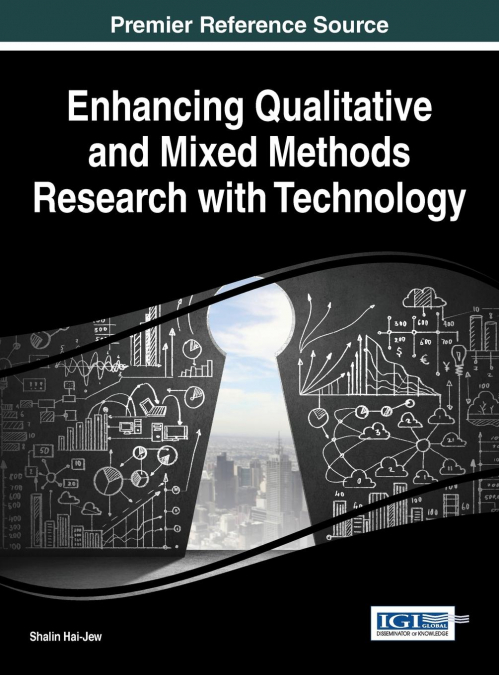
  • Enhancing Qualitative and Mixed Methods Research with Technology
    Shalin Hai-Jew
    In light of the expensive nature of quantitative research, such as experiments, researchers must seek other methods of understanding the world around them. As such, new qualitative methods are gaining ground in the modern research community. Enhancing Qualitative and Mixed Methods Research with Technology explores the integration of new digital tools into the research process. ...
  • Emerging Research on Bioinspired Materials Engineering
    Mohamed Bououdina
    Bioinspired materials can be defined as the organic or inorganic materials that mimic naturally occurring substances. With applications in a number of fields such as biomedical, chemical, mechanical, and civil engineering, research on the development of biologically-inspired materials is essential to further advancement. Emerging Research on Bioinspired Materials Engineering pr...
  • Contemporary Knowledge and Systems Science
    As branches of research and knowledge continue to expand, platforms for gathering and understanding new information become important aspects of organizational improvement. Contemporary Knowledge and Systems Science provides emerging research on the methods and applications of knowledge systems in social science, economics, and technological developments. While highlighting topi...
  • BOUQUET OF DYSON, A
    BERNSTEIN JEREMY / Jeremy Bernstein
    University of Texas at Austin My friendship with Freeman Dyson goes back over a half century. My first contact with him goes back to the late 1950s, when I was at the Institute for Advanced Study, and then evolved when I was a consultant at General Atomics in La Jolla, California. Freeman was then trying to design a space ship — the Orion — which would be propelled by atomic bo...
    Disponible

    33,35 €

  • CLOUDS ARE NOT SPHERES
    LESMOIR-GORDON NIGEL / NIGEL LESMOIR-GORDON
     The time is right, following Benoît Mandelbrot's death in 2010, to publish this landmark book about the life and work of this maverick math genius.This compact book celebrates the life and achievements of Benoît Mandelbrot with the ideas of fractals presented in a way that can be understood by the interested lay-person. Mathematics is largely avoided. Instead, Mandelbrot&#...