Stratospheric Flight

Stratospheric Flight

Andras Sóbester

56,17 €
IVA incluido
Disponible
Editorial:
Springer Nature B.V.
Año de edición:
2011
Materia
Ciencia: cuestiones generales
ISBN:
9781441994578
56,17 €
IVA incluido
Disponible

Selecciona una librería:

  • Librería Samer Atenea
  • Librería Aciertas (Toledo)
  • Kálamo Books
  • Librería Perelló (Valencia)
  • Librería Elías (Asturias)
  • Donde los libros
  • Librería Kolima (Madrid)
  • Librería Proteo (Málaga)

In this book, Dr. Andras Sobester reviews the science behind high altitude flight. He takes the reader on a journey that begins with the complex physiological questions involved in taking humans into the 'death zone.' How does the body react to falling ambient pressure? Why is hypoxia (oxygen deficiency associated with low air pressure) so dangerous and why is it so difficult to ’design out’ of aircraft, why does it still cause fatalities in the 21st century? What cabin pressures are air passengers and military pilots exposed to and why is the choice of an appropriate range of values such a difficult problem? How do high altitude life support systems work and what happens if they fail? What happens if cabin pressure is lost suddenly or, even worse, slowly and unnoticed? The second part of the book tackles the aeronautical problems of flying in the upper atmosphere. What loads does stratospheric flight place on pressurized cabins at high altitude and why are these difficult to predict? What determines the maximum altitude an aircraft can climb to? What is the ’coffin corner’ and how can it be avoided? The history of aviation has seen a handful of airplanes reach altitudes in excess of 70,000 feet - what are the extreme engineering challenges of climbing into the upper stratosphere? Flying high makes very high speeds possible -- what are the practical limits?The key advantage of stratospheric flight is that the aircraft will be ’above the weather’ - but is this always the case? Part three of the book investigates the extreme atmospheric conditions that may be encountered in the upper atmosphere. How high can a storm cell reach and what is it like to fly into one? How frequent is high altitude ’clear air’ turbulence, what causes it and what are its effects on aircraft? The stratosphere can be extremely cold - how cold does it have to be before flight becomes unsafe? What happens when an aircraft encounters volcanic ash at high altitude? Very high winds can be encountered at the lower boundary of the stratosphere - what effect do they have on aviation?Finally, part four looks at the extreme limits of stratospheric flight. How high will a winged aircraft will ever be able to fly? What are the ultimate altitude limits of ballooning? What is the greatest altitude that you could still bail out from? And finally, what are the challenges of exploring the stratospheres of other planets and moons?The author discusses these and many other questions, the known knowns, the known unkonwns and the potential unknown unknowns of stratospheric flight through a series of notable moments of the recent history of mankind’s forays into the upper atmospheres, each of these incidents, accidents or great triumphs illustrating a key aspect of what makes stratospheric flight aviation at the limit.
Artículos relacionados

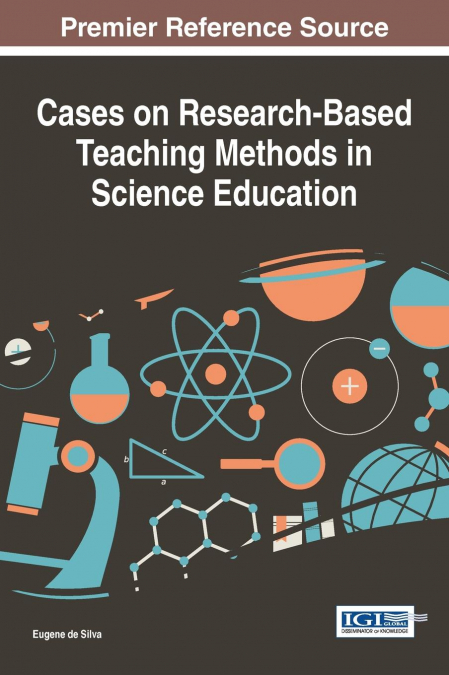
  • Cases on Research-Based Teaching Methods in Science Education
    Eugene de Silva
    While the great scientists of the past recognized a need for a multidisciplinary approach, today’s schools often treat math and science as subjects separate from the rest. This not only creates a disinterest among students, but also a potential learning gap once students reach college and then graduate into the workforce. Cases on Research-Based Teaching Methods in Science Educ...
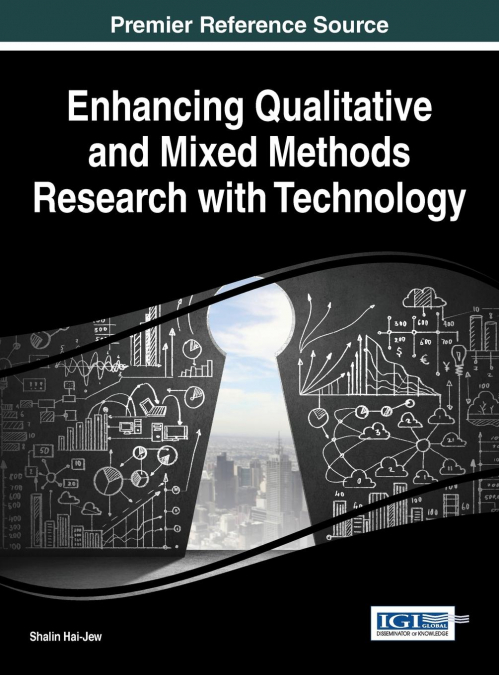
  • Enhancing Qualitative and Mixed Methods Research with Technology
    Shalin Hai-Jew
    In light of the expensive nature of quantitative research, such as experiments, researchers must seek other methods of understanding the world around them. As such, new qualitative methods are gaining ground in the modern research community. Enhancing Qualitative and Mixed Methods Research with Technology explores the integration of new digital tools into the research process. ...
  • Emerging Research on Bioinspired Materials Engineering
    Mohamed Bououdina
    Bioinspired materials can be defined as the organic or inorganic materials that mimic naturally occurring substances. With applications in a number of fields such as biomedical, chemical, mechanical, and civil engineering, research on the development of biologically-inspired materials is essential to further advancement. Emerging Research on Bioinspired Materials Engineering pr...
  • Contemporary Knowledge and Systems Science
    As branches of research and knowledge continue to expand, platforms for gathering and understanding new information become important aspects of organizational improvement. Contemporary Knowledge and Systems Science provides emerging research on the methods and applications of knowledge systems in social science, economics, and technological developments. While highlighting topi...
  • BOUQUET OF DYSON, A
    BERNSTEIN JEREMY / Jeremy Bernstein
    University of Texas at Austin My friendship with Freeman Dyson goes back over a half century. My first contact with him goes back to the late 1950s, when I was at the Institute for Advanced Study, and then evolved when I was a consultant at General Atomics in La Jolla, California. Freeman was then trying to design a space ship — the Orion — which would be propelled by atomic bo...
    Disponible

    33,35 €

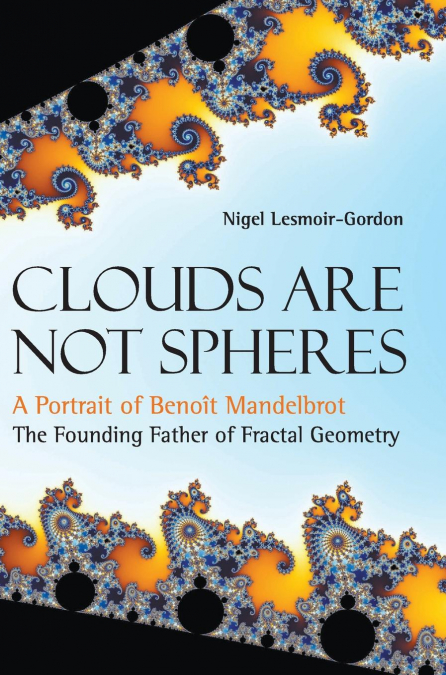
  • CLOUDS ARE NOT SPHERES
    LESMOIR-GORDON NIGEL / NIGEL LESMOIR-GORDON
     The time is right, following Benoît Mandelbrot's death in 2010, to publish this landmark book about the life and work of this maverick math genius.This compact book celebrates the life and achievements of Benoît Mandelbrot with the ideas of fractals presented in a way that can be understood by the interested lay-person. Mathematics is largely avoided. Instead, Mandelbrot&#...

Otros libros del autor

  • Stratospheric Flight
    Andras Sóbester
    In this book, Dr. Andras Sobester reviews the science behind high altitude flight. He takes the reader on a journey that begins with the complex physiological questions involved in taking humans into the 'death zone.' How does the body react to falling ambient pressure? Why is hypoxia (oxygen deficiency associated with low air pressure) so dangerous and why is it so difficult t...
    Disponible

    48,09 €