Inicio > Matemáticas y ciencia > Biologia, ciencias de la vida > Botánica y ciencias de las plantas > Skuteczność nowych herbicydów w uprawie orzeszków ziemnych latem
Skuteczność nowych herbicydów w uprawie orzeszków ziemnych latem

Skuteczność nowych herbicydów w uprawie orzeszków ziemnych latem

B.K. Sagarka / R.N. Daki / Satyakumari Sharma

83,19 €
IVA incluido
Disponible
Editorial:
KS OmniScriptum Publishing
Año de edición:
2025
Materia
Botánica y ciencias de las plantas
ISBN:
9786202437240
83,19 €
IVA incluido
Disponible

Selecciona una librería:

  • Librería Samer Atenea
  • Librería Aciertas (Toledo)
  • Kálamo Books
  • Librería Perelló (Valencia)
  • Librería Elías (Asturias)
  • Donde los libros
  • Librería Kolima (Madrid)
  • Librería Proteo (Málaga)

Orzeszki ziemne (Arachis hypogaea L.) to roślina strączkowa należąca do rodziny motylkowatych (Leguminoseae). Znane są również pod nazwą orzeszki ziemne, orzechy ziemne i orzechy małpie. Stanowią one największe źródło oleju jadalnego i zajmują 13. miejsce wśród roślin spożywczych oraz 3. miejsce wśród najważniejszych roślin oleistych na świecie. Orzeszki ziemne uprawiane są w regionach tropikalnych i subtropikalnych oraz w kontynentalnej części krajów o klimacie umiarkowanym. Nasiona (ziarna) zawierają do 50% oleju nie schnącego (40-50% tłuszczu), 20-50% białka i 10-20% węglowodanów. Spośród różnych roślin oleistych, orzech ziemny zajmuje 10,2 lakh hektarów powierzchni upraw oleistych i stanowi 8,1 miliona ton całkowitej produkcji w Indiach. Ziarna orzeszków ziemnych są ważnym źródłem witaminy E, wapnia, fosforu, magnezu, cynku, żelaza, ryboflawiny, tiaminy i potasu. Ziarna orzeszków ziemnych są spożywane bezpośrednio na surowo, prażone lub gotowane oraz do produkcji słodyczy. Z ziaren pozyskuje się również olej, który wykorzystuje się do celów kulinarnych. Zawiera on 7,0 do 8,0% N, 1,5% P2O5 i 1,0% K2O.
Artículos relacionados

  • The Green Architecture
    Ali Mirshafieyan / Ghazal Yeganeh / Maryam Zamani Motlagh
    Protecting green energy as well as non-renewable energy, as well as their sustainable use, many advances in the technology of extracting oil products and other reserves under the ground have caused many improvements. In this regard, proposing the design of buildings in which the consumption of fossil fuels reaches its lowest level is considered one of the important solutions in...
    Disponible

    82,54 €

  • Responsible Use and Management of Agrochemicals
    Juan Carlos Nava
    Uso y manejo responsable de agroquímicos is a work product of the author’s experiences (undergraduate and graduate professor, with research and extension projects), aimed at producers, companies, professionals, students, advisors, researchers, among others.Due to its structure and content, it is expected to be a valuable aid to all people directly or indirectly involved in the ...
    Disponible

    49,45 €

  • Hope in the Soil
    Ellen G White
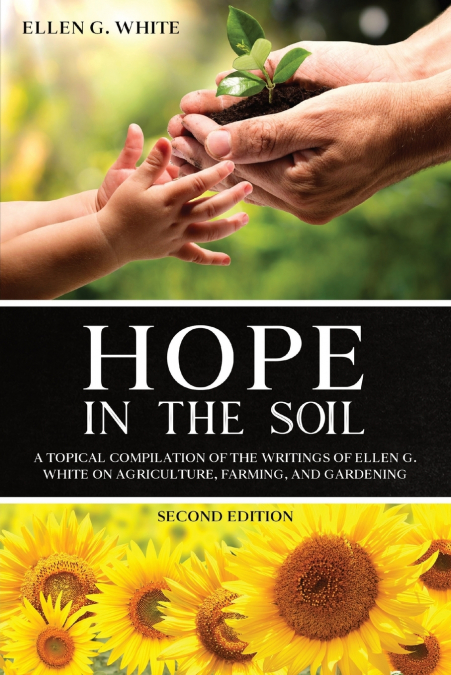
    Before edible classrooms began 'sprouting' in elementary schools, before buzzwords like 'sustainable agriculture', 'organic,' or 'veganic' came into existence, an exceptional woman named Ellen G. White penned numerous letters and articles on the importance of farming, an outdoor life, and manual labor. Though often remembered for other things, Mrs. White was actively engaged in...
    Disponible

    18,38 €

  • The Green Revolution
    Binitha Sophine Emmanuel
    The Green Revolution, a transformative era in the annals of agriculture, emerged as a game-changing force during the mid-20th century, fundamentally reshaping the methodology of food production and steering the trajectory of global food security. Characterized by a sequence of technological breakthroughs, the Green Revolution aimed to substantially augment agricultural producti...
    Disponible

    53,23 €

  • Utilization of Stingless Bees, Tetragonula laeviceps (Smith)
    Dr. J. J. Pastagia / Dr. V. C. Gadhiya
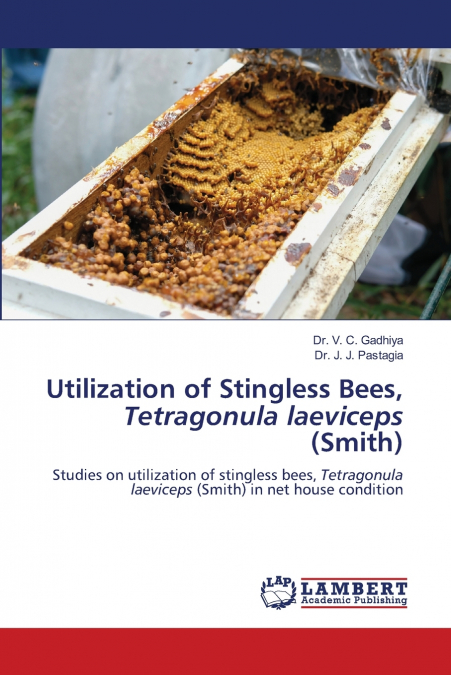
    The present investigations on utilization of stingless bees, T. laeviceps Smith in net house condition carried out with the broad aspects like flowers visited by stingless bees, T. laeviceps Smith, toxicity of insecticides to T. laeviceps Smith workers, floral biology of musk melon, foraging behavior of stingless bees, T. laeviceps Smith in net house condition, effect of pollin...
    Disponible

    84,80 €

  • La révolution verte
    Binitha Sophine Emmanuel
    La révolution verte, une ère transformatrice dans les annales de l’agriculture, est apparue comme une force qui a changé la donne au milieu du 20e siècle, remodelant fondamentalement la méthodologie de la production alimentaire et orientant la trajectoire de la sécurité alimentaire mondiale. Caractérisée par une série de percées technologiques, la révolution verte visait à augm...
    Disponible

    53,29 €

Otros libros del autor

  • Wirksamkeit neuer Herbizide bei Sommererdnüssen
    B.K. Sagarka / R.N. Daki / Satyakumari Sharma
    Die Erdnuss (Arachis hypogaea L.) ist eine einjährige Hülsenfrucht, die zur Familie der Leguminosae gehört. Sie ist auch unter den Namen Erdnuss, Erdnuss und Monkeynut bekannt. Sie ist die größte Quelle für Speiseöl und rangiert unter den Nahrungspflanzen auf Platz 13 sowie unter den wichtigsten Ölsaaten weltweit auf Platz 3. Erdnüsse werden in tropischen und subtropischen Regi...
    Disponible

    83,19 €

  • Efficacia dei nuovi erbicidi nell’arachide estiva
    B.K. Sagarka / R.N. Daki / Satyakumari Sharma
    L’arachide (Arachis hypogaea L.) è una coltura leguminosa annuale appartenente alla famiglia delle Leguminoseae. È conosciuta anche con il nome di nocciolina, nocciolina di terra e nocciolina delle scimmie. È la più grande fonte di olio commestibile e si colloca al 13° posto tra le colture alimentari e al 3° posto tra le colture oleaginose più importanti al mondo. L’arachide vi...
    Disponible

    83,19 €

  • Efficacité des nouveaux herbicides dans la culture estivale de l’arachide
    B.K. Sagarka / R.N. Daki / Satyakumari Sharma
    L’arachide (Arachis hypogaea L.) est une légumineuse annuelle appartenant à la famille des Leguminoseae. Elle est également connue sous les noms de cacahuète, noix de terre et noix de singe. Elle est la plus grande source d’huile comestible et se classe au 13e rang des cultures vivrières ainsi qu’au 3e rang des cultures oléagineuses les plus importantes au monde. L’arachide est...
    Disponible

    83,19 €

  • Eficácia de novos herbicidas no amendoim de verão
    B.K. Sagarka / R.N. Daki / Satyakumari Sharma
    O amendoim (Arachis hypogaea L.) é uma cultura anual de leguminosa, pertencente à família Leguminoseae. Também é conhecido como amendoim, amendoim-da-terra e amendoim-de-macaco. É a maior fonte de óleo comestível e ocupa o 13.º lugar entre as culturas alimentares, bem como o 3.º lugar entre as culturas oleaginosas mais importantes do mundo. O amendoim é cultivado em regiões tro...
    Disponible

    83,19 €