Separated and Vortical Flow in Aircraft Wing Aerodynamics

Separated and Vortical Flow in Aircraft Wing Aerodynamics

Arthur Rizzi / Christian Breitsamter / Ernst Heinrich Hirschel

221,59 €
IVA incluido
Disponible
Editorial:
Springer Nature B.V.
Año de edición:
2020
Materia
Ingeniería mecánica
ISBN:
9783662613269
221,59 €
IVA incluido
Disponible

Selecciona una librería:

  • Librería Samer Atenea
  • Librería Aciertas (Toledo)
  • Kálamo Books
  • Librería Perelló (Valencia)
  • Librería Elías (Asturias)
  • Donde los libros
  • Librería Kolima (Madrid)
  • Librería Proteo (Málaga)

Fluid mechanical aspects of separated and vortical flow in aircraft wing aerodynamics are treated. The focus is on two wing classes: (1) large aspect-ratio wings and (2) small aspect-ratio delta-type wings. Aerodynamic design issues in general are not dealt with.Discrete numerical simulation methods play a progressively larger role in aircraft design and development. Accordingly, in the introduction to the book the different mathematical models are considered, which underlie the aerodynamic computation methods (panel methods, RANS and scale-resolving methods). Special methods are the Euler methods, which as rather inexpensive methods embrace compressibility effects and also permit to describe lifting-wing flow.The concept of the kinematically active and inactive vorticity content of shear layers gives insight into many flow phenomena, but also, with the second break of symmetry---the first one is due to the Kutta condition---an explanation of lifting-wing flow fields. The prerequisite is an extended definition of separation: 'flow-off separation' at sharp trailing edges of class (1) wings and at sharp leading edges of class (2) wings. The vorticity-content concept, with a compatibility condition for flow-off separation at sharp edges, permits to understand the properties of the evolving trailing vortex layer and the resulting pair of trailing vortices of class (1) wings. The concept also shows that Euler methods at sharp delta or strake leading edges of class (2) wings can give reliable results.Three main topics are treated:1) Basic Principles are considered first: boundary-layer flow, vortex theory, the vorticity content of shear layers, Euler solutions for lifting wings, the Kutta condition in reality and the topology of skin-friction and velocity fields.2) Unit Problems treat isolated flow phenomena of the two wing classes. Capabilities of panel and Euler methods are investigated. One Unit Problem is the flow past the wing of the NASA Common Research Model. Other Unit Problems concern the lee-side vortex system appearing at the Vortex-Flow Experiment 1 and 2 sharp- and blunt-edged delta configurations, at a delta wing with partly round leading edges, and also at the Blunt Delta Wing at hypersonic speed.3) Selected Flow Problems of the two wing classes. In short sections practical design problems are discussed. The treatment of flow past fuselages, although desirable, was not possible in the frame of this book.


Artículos relacionados

  • Lab Manual-MSOE02-UFPT
    Dr. Medhat Khalil / DrMedhat Khalil / Medhat khalil
    Universal Trainer Lab Manual associated with the text book HSV2 and course MSOE02 (Electro-Hydraulic Components and Systems). The manual contains lab numbers 20 to 29. It also contains instructions about the lab objectives, the devices used in the lab, the step-by-step procedure of the lab and the expected observations. ...
    Disponible

    27,55 €

  • Reliability in Power Electronics and Electrical Machines
    Hashem Oraee / Shahriyar Kaboli
    In modern industries, electrical energy conversion systems consist of two main parts: electrical machines and power electronic converters. With global electricity use at an all-time high, uninterrupted operation of electrical power converters is essential. Reliability in Power Electronics and Electrical Machines: Industrial Applications and Performance Models provides an in-dep...
    Disponible

    334,82 €

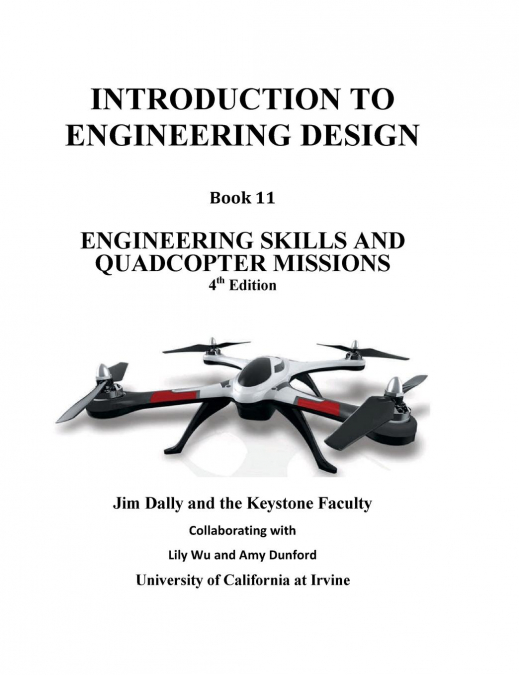
  • Introduction to Engineering Design, Book 11, 4th Edition
    Jim Dally
    This book is the fourth edition of the eBook edition of the eleventh textbook in this series: Introduction to Engineering Design.  Jim Dally, working with College House Enterprises, LLC and faculty members in the Keystone Program within the Clark School of Engineering, has prepared ten previous textbooks in this series—a new one almost every 18 months.  These books are written ...
    Disponible

    79,79 €

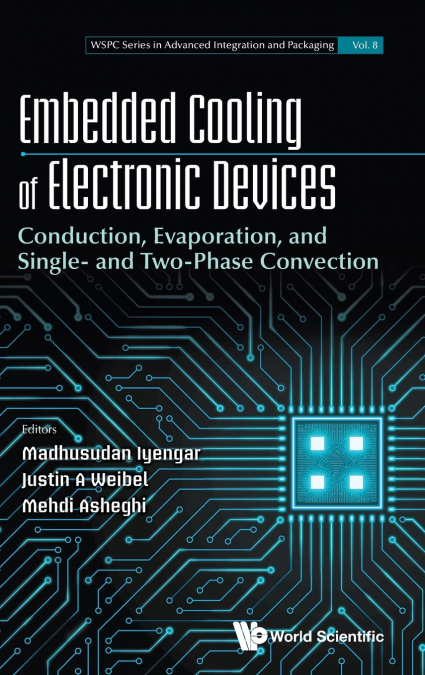
  • EMBEDDED COOLING OF ELECTRONIC DEVICES
    IYENGAR MADHUSUDAN / JUSTIN A WEIBEL MEH MADHUSUDAN IYENGAR
    This book is a comprehensive guide on emerging cooling technologies for processors in microelectronics. It covers various topics such as chip-embedded two-phase cooling, monolithic microfluidic cooling, numerical modeling, and advances in materials engineering for conduction-limited direct contact cooling, with a goal to remedy high heat flux issues.The book also discusses the ...
    Disponible

    176,68 €

  • Motorcycle Design
    James Sadauckas / Roberto Lot
    This book aims to provide the core concepts of motorcycle dynamics and illustrates their application in vehicle design to readers who have a serious interest in the subject and in particular engineers with a career path in the powered two wheelers sector. ...
    Disponible

    83,23 €

  • Advances in MEMS and Microfluidic Systems
    Microelectromechanical systems (MEMS) device applications are common in many areas. Micromirror arrays are used as video projectors; microsensors find their application for measuring acceleration, temperature, and pressure; and they can also be used in the medical field for measuring blood pressure. Microfluidics have also been widely employed in life sciences applications, suc...
    Disponible

    235,81 €