Secrets of the Modern World

Secrets of the Modern World

Alan Professor MacFarlane

25,81 €
IVA incluido
Disponible
Editorial:
W. Frederick Zimmerman
Año de edición:
2009
Materia
Historia general y mundial
ISBN:
9781934840948
25,81 €
IVA incluido
Disponible

Selecciona una librería:

  • Librería Samer Atenea
  • Librería Aciertas (Toledo)
  • Kálamo Books
  • Librería Perelló (Valencia)
  • Librería Elías (Asturias)
  • Donde los libros
  • Librería Kolima (Madrid)
  • Librería Proteo (Málaga)

Alan Macfarlane writes of F. W. Maitland:When we consider that some five thousand pages of detailed findings, writtenabout a hundred years ago, have been modified in only a few minor emphasesand one or two facts, and that the bulk of Maitland’s edifice still stands, we canbegin to understand why he has an almost god-like status among historians whoknow the problems he faced and the elegance of his solutions.The great legal historian Vinogradoff disagreed with Maitland on some specificpoints, but shortly after Maitland’s death wrote of him as ’the greatest legalhistorian of the law of England’ and as a man to whom lawyers, historians andsociologists were equally indebted: ’lawyers because of his subject, historiansbecause of his methods, sociologists because of his results.’J.H.Hexter referred to Maitland as ’the greatest of English historians’ in hisbook on modern historians. R.G.Collingwood referred to the ’best historians,like Mommsen and Maitland’. Denys Hay in his overview of westernhistoriography describes him as a ’giant’ who, with Marc Bloch, is one of the ’twogreatest historians of recent times’. Bloch himself referred to ’the great Englishjurist Maitland.’ The medievalist Helen Cam ends her preface to his SelectedEssays by concluding fifty years after his death. ’Let us say with Powicke,'Maitland is one of the immortals' and leave it at that.’ G.O.Sayles wrote that’In the range of his interests, the fineness of his intellect, and the considerablebulk of what he wrote in barely twenty-five years, Maitland has no match amongEnglish historians.’ Driven on by the sense of an impending early death Maitland tried to solvewithin a period of some twenty years the same riddle as earlier thinkers. Howhad the strange modern world, with its glimpses of liberty, equality and wealth,been made? Why had it found its expression in a certain part of the world and inits earliest and definitive form in England? What precisely were the constituents of this peculiar civilization? His solutions, much more deeply based ondocuments, were in substance the same as those put forward by Montesquieu,Adam Smith and Tocqueville. The essence of modernity lay in the separation ofspheres, the tensions between religion, politics, kinship and economy. Out ofthese contradictions emerged certain liberties and a dynamic energy. A whole set of factors, from the general (the nature of islandhood, theaccident of the Norman Conquest, the absence of Cathar heresies and theinquisition), to the individual (the personality of Henry II or Edward I) playedtheir part. What happened on one small island both reflected what happened onits neighbouring continent, but also transformed it. Like some new species offinch on the Galapagos, there developed a new kind of civilization. This wouldthen be magnified and taken to its extreme through other accidents, thedevelopment of America, the expansion of the British Empire and the firstindustrial revolution and so to the modern world. With Maitland we have adeveloped theory which puts forward a believable answer to one part of thequestion of how the modern world has been made.
Artículos relacionados

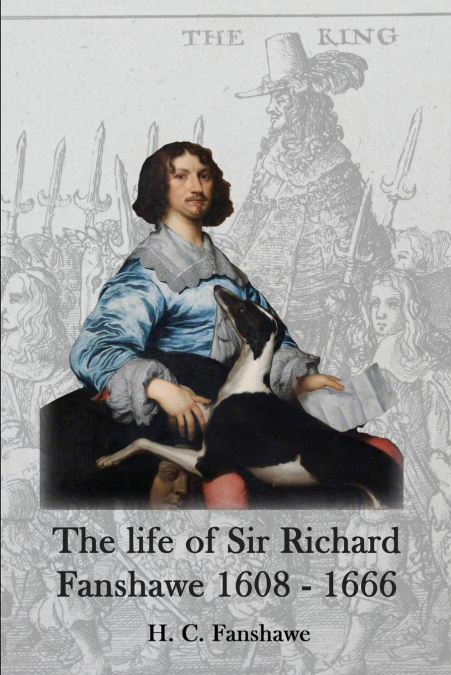
  • The life of Sir Richard Fanshawe, 1608 - 1666
    H C Fanshawe
    Sir Richard Fanshawe (1608-1666), was a diplomat, poet and linguist. As Ambassador to Spain and Portugal he negotiated the marriage of Charles II and Catherine of Braganza. He was also acclaimed for his poetry and his translations of Latin and European works such as the Lusiads by Luis de Camoes and Il Pastor Fido (the Faithful Shepherd) by Giovanni Battista Guarini. Sir Richar...
    Disponible

    17,51 €

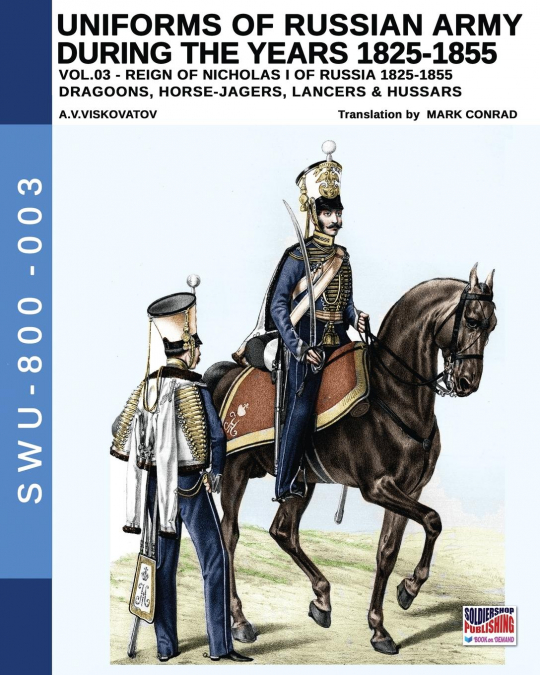
  • Uniforms of Russian Army during the years 1825-1855. Vol. 3
    Aleksandr Vasilevich Viskovatov / Mark Conrad
    This volume is related to the Russian Army during the zar Nicolas Ist era, and are about the uniforms cavalry in use from 1825 to 1855. Compiled at Saint Petersburg during the year from 1837 and 1851, the Historical Description of the Clothing and Arms of the Russian Army has had an enormous impact and great importance for the study on the history of Russian costume and uniform...
    Disponible

    52,04 €

  • Archaeology and Entomology in the Eastern Mediterranean
    Eva Panagiotakopulu
    ...
    Disponible

    74,97 €

  • Luoghi e Architetture della Transizione
    Maria Antonietta Breda
    I sistemi difensivi di confine e la protezione antiaerea nelle città. Storia conservazione riuso / Border defense system and air raid protection in the cities. History conservation reuseThis book collects the papers presented at the Second International Congress on Conoscenza e valorizzazione delle opere militari moderne - Knowledge and development of modern military structures...
    Disponible

    139,91 €

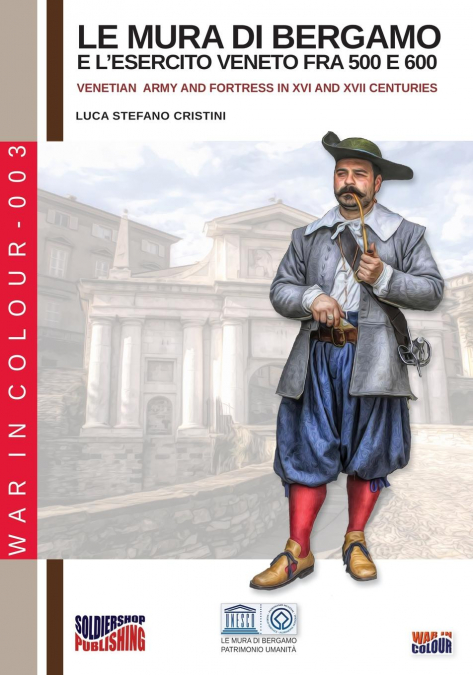
  • Le mura di Bergamo e l’esercito veneto fra 500 e 600
    Luca Stefano Cristini
    Correva l'Anno del Signore 1590. Così scriveva un soddisfatto e pago Alvise Grimani, l'allora comandante veneto della piazza di Bergamo, al termine dei lavori di realizzazione degli oltre cinque chilometri di mura porte e bastioni : 'La città è tutta serrata con baluardi e i suoi membri quasi tutti terrapienati, compite le piazze, i parapetti e le traverse per coprirsi ...
    Disponible

    36,31 €

  • Psychology of Revolution
    Gustave Lebon
    The present age is not merely an epoch of discovery; it is also a period of revision of the various elements of knowledge. Having recognised that there are no phenomena of which the first cause is still accessible, science has resumed the examination of her ancient certitudes, and has proved their fragility. To-day she sees her ancient principles vanishing one by one. ...

Otros libros del autor

  • Resources and Population
    Alan Professor MacFarlane
    ...
    Disponible

    59,97 €

  • Secrets of the Modern World
    Alan Professor MacFarlane
    The Reverend Thomas Robert Malthus was born in 1766 and died in 1834. He was the son of a clergyman and one of eight children. He was educated at Jesus College, Cambridge and later became Professor of History and Political Economy at the East India Company’s College at Haileybury in Hertfordshire. His most famous work, the Essay on the Principles of Population, was published in...
    Disponible

    36,41 €

  • Secrets of the Modern World
    Alan Professor MacFarlane
    Alan Macfarlane writes:Yukichi Fukuzawa (1835-1901) is arguably the greatest Japanese social thinker of the last three centuries, yet he is little known outside his native country, except to experts on Japan. Contemporaries, on the other hand, recognized his eminence and influence.The dialogue with Fukuzawa has a somewhat different purpose from that with earlier thinkers of the...
    Disponible

    32,86 €