Secrets of the Modern World

Secrets of the Modern World

Alan Professor MacFarlane

36,41 €
IVA incluido
Disponible
Editorial:
W. Frederick Zimmerman
Año de edición:
2011
Materia
Historia general y mundial
ISBN:
9781608881109
36,41 €
IVA incluido
Disponible

Selecciona una librería:

  • Librería Samer Atenea
  • Librería Aciertas (Toledo)
  • Kálamo Books
  • Librería Perelló (Valencia)
  • Librería Elías (Asturias)
  • Donde los libros
  • Librería Kolima (Madrid)
  • Librería Proteo (Málaga)

The Reverend Thomas Robert Malthus was born in 1766 and died in 1834. He was the son of a clergyman and one of eight children. He was educated at Jesus College, Cambridge and later became Professor of History and Political Economy at the East India Company’s College at Haileybury in Hertfordshire. His most famous work, the Essay on the Principles of Population, was published in 1798 when he was 32. It has been seen partly as a reaction to the Utopian thought of William Godwin and others, as well as that of Malthus’ own father. It is as an extension and formalization of the ideas of the classical economist Adam Smith and others who had laid down some of the basic ideas concerning the tendency of population to outstrip resources.Malthus’ theory in brief was that humankind is permanently trapped by the intersection of two ’laws’. The first concerned the rate at which populations can grow. He took the ’passion between the sexes’ to be constant and investigations showed that under conditions of ’natural’ fertility (with early marriage and no contraception, abortion or infanticide), this would lead to an average of about fifteen livebirths per woman. This figure is confirmed by modern demography. Given normal mortality at the time, and taking a less than maximum fertility, this will lead to what Malthus called geometrical growth, namely 1,2,4,8,16. It only needs 32 doublings like this to lead from an original couple to the present world population of over six billion persons. The second premise was that food and other resource production will grow much more slowly. It might double for a generation or two, but could not keep on doubling within an agrarian economy. Thus there could, in the long run, only be an arithmetic or linear growth of the order of 1,2,3,4. Incorporated in this later theory was the law of diminishing marginal returns on the further input of resources, especially labour. Underpinning the scheme was the assumption that there was a finite amount of energy available for humans through the conversion of the sun’s energy by living plants and animals. The conclusion was that humankind was trapped, a particular application in the field of demography of the more general pessimism of Adam Smith. Populations would grow rapidly for a few generations, and then be savagely cut back. A crisis would occur, manifesting itself in one (or a combination) of what he called the three ’positive’ checks acting on the death rate, war, famine and disease.

Artículos relacionados

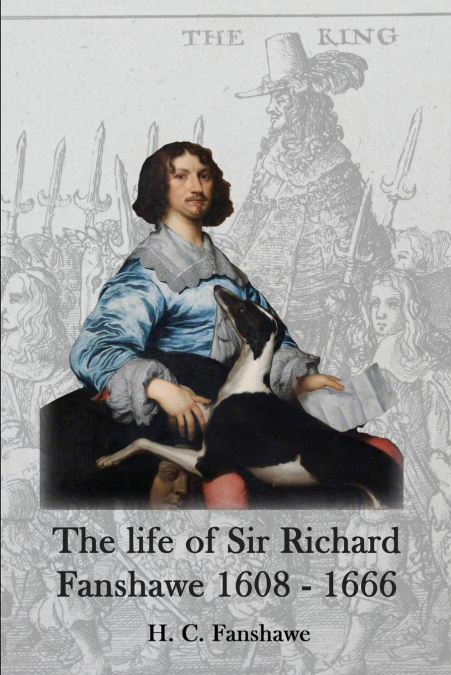
  • The life of Sir Richard Fanshawe, 1608 - 1666
    H C Fanshawe
    Sir Richard Fanshawe (1608-1666), was a diplomat, poet and linguist. As Ambassador to Spain and Portugal he negotiated the marriage of Charles II and Catherine of Braganza. He was also acclaimed for his poetry and his translations of Latin and European works such as the Lusiads by Luis de Camoes and Il Pastor Fido (the Faithful Shepherd) by Giovanni Battista Guarini. Sir Richar...
    Disponible

    17,51 €

  • Uniforms of Russian Army during the years 1825-1855. Vol. 3
    Aleksandr Vasilevich Viskovatov / Mark Conrad
    This volume is related to the Russian Army during the zar Nicolas Ist era, and are about the uniforms cavalry in use from 1825 to 1855. Compiled at Saint Petersburg during the year from 1837 and 1851, the Historical Description of the Clothing and Arms of the Russian Army has had an enormous impact and great importance for the study on the history of Russian costume and uniform...
    Disponible

    52,04 €

  • Archaeology and Entomology in the Eastern Mediterranean
    Eva Panagiotakopulu
    ...
    Disponible

    74,97 €

  • Luoghi e Architetture della Transizione
    Maria Antonietta Breda
    I sistemi difensivi di confine e la protezione antiaerea nelle città. Storia conservazione riuso / Border defense system and air raid protection in the cities. History conservation reuseThis book collects the papers presented at the Second International Congress on Conoscenza e valorizzazione delle opere militari moderne - Knowledge and development of modern military structures...
    Disponible

    139,91 €

  • Le mura di Bergamo e l’esercito veneto fra 500 e 600
    Luca Stefano Cristini
    Correva l'Anno del Signore 1590. Così scriveva un soddisfatto e pago Alvise Grimani, l'allora comandante veneto della piazza di Bergamo, al termine dei lavori di realizzazione degli oltre cinque chilometri di mura porte e bastioni : 'La città è tutta serrata con baluardi e i suoi membri quasi tutti terrapienati, compite le piazze, i parapetti e le traverse per coprirsi ...
    Disponible

    36,31 €

  • Psychology of Revolution
    Gustave Lebon
    The present age is not merely an epoch of discovery; it is also a period of revision of the various elements of knowledge. Having recognised that there are no phenomena of which the first cause is still accessible, science has resumed the examination of her ancient certitudes, and has proved their fragility. To-day she sees her ancient principles vanishing one by one. ...

Otros libros del autor

  • Resources and Population
    Alan Professor MacFarlane
    ...
    Disponible

    59,97 €

  • Secrets of the Modern World
    Alan Professor MacFarlane
    Alan Macfarlane writes:Yukichi Fukuzawa (1835-1901) is arguably the greatest Japanese social thinker of the last three centuries, yet he is little known outside his native country, except to experts on Japan. Contemporaries, on the other hand, recognized his eminence and influence.The dialogue with Fukuzawa has a somewhat different purpose from that with earlier thinkers of the...
    Disponible

    32,86 €

  • Secrets of the Modern World
    Alan Professor MacFarlane
    Alan Macfarlane writes of F. W. Maitland:When we consider that some five thousand pages of detailed findings, writtenabout a hundred years ago, have been modified in only a few minor emphasesand one or two facts, and that the bulk of Maitland’s edifice still stands, we canbegin to understand why he has an almost god-like status among historians whoknow the problems he faced and...
    Disponible

    25,81 €