Inicio > Artes > Artes: aspectos generales > Scepticism and Belief in Hume’s Dialogues Concerning Natural Religion
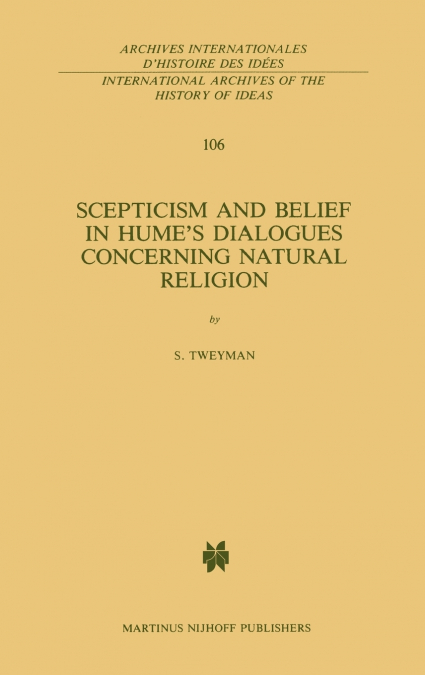
Scepticism and Belief in Hume’s Dialogues Concerning Natural Religion

Scepticism and Belief in Hume’s Dialogues Concerning Natural Religion

S. Tweyman

134,43 €
IVA incluido
Disponible
Editorial:
Springer Nature B.V.
Año de edición:
2011
Materia
Artes: aspectos generales
ISBN:
9789401084291
134,43 €
IVA incluido
Disponible

Selecciona una librería:

  • Librería Samer Atenea
  • Librería Aciertas (Toledo)
  • Kálamo Books
  • Librería Perelló (Valencia)
  • Librería Elías (Asturias)
  • Donde los libros
  • Librería Kolima (Madrid)
  • Librería Proteo (Málaga)

In the pages that follow, an attempt is made to examine those sections of the Dialogues Concerning Natural Religion which deal with the Argument from Design - the argument which purports to prove that certain observed similarities between the design of the world and machines of human contrivance countenance reasoning by analogy to the conclusion that the cause of the design of the world resembles human intelligence. The sections which deal with the Argument from Design, and with which I am therefore concerned, are Parts I through VIII and Part XII. I argue that a clue to Hume’s discussion of the Argument from Design is to be found in Section XII of the first Enquiry, in which Hume presents his most thorough analysis of philosophic dogmatism and scepticism. The Dialogues, as will be shown, follows precisely Hume’s recommendations in this Section for bringing the dogmatist to the position which Hume himself endorses - ’mitigated scepticism. ’ It is, then, the position of the mitigated sceptic which is elaborated in Part XII of the Dialogues. The belief in an intelligent designer of the world is shown to be akin to certain other beliefs discussed by Hume - causality, physical objects, a continuing self - which are usually referred to in the literature as ’natural beliefs. ’ The mitigated sceptic’s defense of the unknowability of the divine nature is seen to be in accordance with Hume’s view that whatever is believed naturally cannot be known or understood.
Artículos relacionados

  • The Art of Math and Science
    Jayanti Tambe
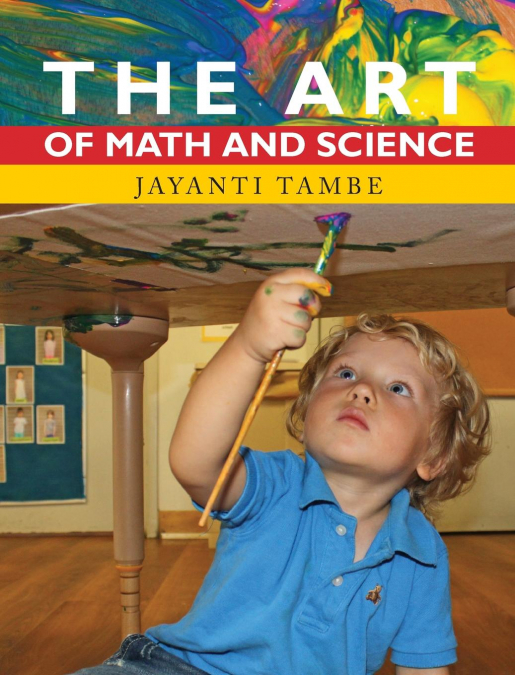
    The Art of Math and Science guides teachers to introduce masterpiece art to young children, so they can tell you about “paints with hidden floats” and ask questions like, “When painting the Sistine Chapel, do you think Michelangelo had many headaches?”This book helps parents and educators look at the subject through the prism of mathematical and scientific experiences. This boo...
  • Art and the Monad
    Keith Lincoln Cook
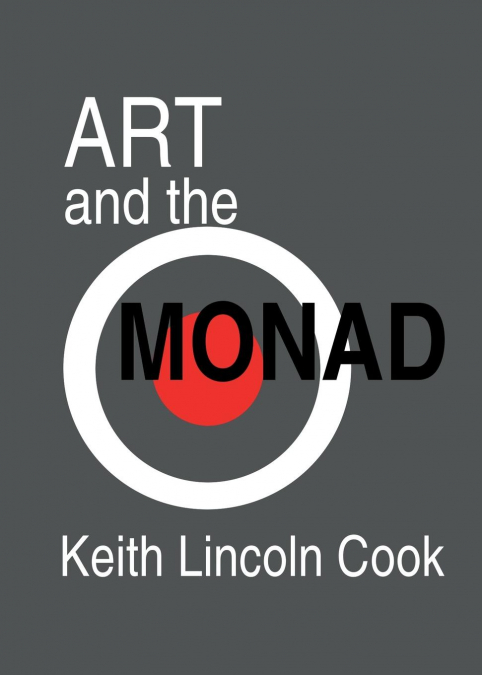
    Keith Lincoln Cook's essay centres on his diagram of the monad: a circular diagram, showing the relationship between external stimuli, the intellect and the emotions. Although everyone should be able to freely respond to the vast amount of external stimuli collected by the senses, many people will block off their responses, collecting the stimuli in the band of intellect an...
    Disponible

    6,17 €

  • Slow Down
    Todd Webb
    Color everything and color nothing on your path to mindfulness with this playful coloring book!Packed with just enough to keep you entertained in the present moment, SLOW DOWN is sure to become your go-to meditation guide as you color your way to a calmer, less stressful life. With simple illustrations and inspirational text it makes a great gift! "Art's purpose is to sober...
    Disponible

    12,17 €

  • Raising the Eyebrow
    Lauren Golden
    A lavish festschrift to John Onians with contributions by 28 distinguished academics. Any summary as to the direction of these contributions is, perhaps, best left to Martin Kemp and his affectionate preface, “Above all, he (John Onians) reminds us of the researchers’, writers’ and teachers’ true mission, that is the need to be radical in both asking and answering questions, an...
    Disponible

    182,20 €

  • Projective Processes and Neuroscience in Art and Design
    Rachel Zuanon
    Recent advances in neuroscience suggest that the human brain is particularly well-suited to design things: concepts, tools, languages and places. Current research even indicates that the human brain may indeed have evolved to be creative, to imagine new ideas, to put them into practice, and to critically analyze their results. Projective Processes and Neuroscience in Art and De...
  • Book of Jupiter
    Leo Valenzuela
    Book of Jupiter: Gone to Uranus is a work of imagination and fantasy by Leo Valenzuela. Explore a variety of unique creatures with interesting dialogue which included a few step tutorials on how to draw his style of work. 3 ...
    Disponible

    24,25 €

Otros libros del autor

  • Scepticism and Belief in Hume’s Dialogues Concerning Natural Religion
    S. Tweyman
    In the pages that follow, an attempt is made to examine those sections of the Dialogues Concerning Natural Religion which deal with the Argument from Design - the argument which purports to prove that certain observed similarities between the design of the world and machines of human contrivance countenance reasoning by analogy to the conclusion that ...
  • Reason and Conduct in Hume and his Predecessors
    S. Tweyman
    Can reason play a significant role in making moral distinctions and in generating moral precepts? In this book I attempt to provide Hume’s answers to these questions in the light of his employment of the ’Experimen­ tal Method’, his doctrine of perceptions, and his analysis of reason. In addition to this, attention is paid to some of Hume’s rationalis...
    Disponible

    66,75 €