
Sapropèle lacustre pour la fertilisation des sols

Sapropèle lacustre pour la fertilisation des sols

Eugenija Baksiene

67,11 €
IVA incluido
Disponible
Editorial:
KS OmniScriptum Publishing
Año de edición:
2026
Materia
Botánica y ciencias de las plantas
ISBN:
9786209530708
67,11 €
IVA incluido
Disponible

Selecciona una librería:

  • Librería Samer Atenea
  • Librería Aciertas (Toledo)
  • Kálamo Books
  • Librería Perelló (Valencia)
  • Librería Elías (Asturias)
  • Donde los libros
  • Librería Kolima (Madrid)
  • Librería Proteo (Málaga)

Les lacs limoneux de Lituanie contiennent environ 1,5 milliard de m3 de sapropèle. La sapropèle est une matière organique calcaire précieuse qui peut être utilisée pour fertiliser et améliorer les sols. La sapropèle lacustre de composition chimique variée, un engrais potentiel, a été étudiée à la branche de Voke de l’Institut lituanien d’agriculture entre 1984 et 2008. Les résultats synthétisés d’une expérience à long terme ont montré que le sapropèle calcaire réduisait l’acidité du sol et augmentait la quantité de bases échangeables. Sous l’influence du sapropèle, la teneur en carbone organique et en azote total a également augmenté. Les résultats expérimentaux suggèrent que le sapropèle organique et siliceux des lacs n’a eu aucun effet sur l’acidité du sol. Un taux plus élevé de sapropèle a augmenté la teneur en azote total du sol et de l’humus. La qualité de l’humus s’est également améliorée. Différents taux de sapropèle ont augmenté la teneur en humidité et la porosité du sol, et ont réduit la densité apparente du sol. Après 24 ans d’application, des taux plus élevés de sapropèle sec ont augmenté la productivité des cultures.
Artículos relacionados

  • The Green Architecture
    Ali Mirshafieyan / Ghazal Yeganeh / Maryam Zamani Motlagh
    Protecting green energy as well as non-renewable energy, as well as their sustainable use, many advances in the technology of extracting oil products and other reserves under the ground have caused many improvements. In this regard, proposing the design of buildings in which the consumption of fossil fuels reaches its lowest level is considered one of the important solutions in...
    Disponible

    82,54 €

  • Responsible Use and Management of Agrochemicals
    Juan Carlos Nava
    Uso y manejo responsable de agroquímicos is a work product of the author’s experiences (undergraduate and graduate professor, with research and extension projects), aimed at producers, companies, professionals, students, advisors, researchers, among others.Due to its structure and content, it is expected to be a valuable aid to all people directly or indirectly involved in the ...
    Disponible

    49,45 €

  • Hope in the Soil
    Ellen G White
    Before edible classrooms began 'sprouting' in elementary schools, before buzzwords like 'sustainable agriculture', 'organic,' or 'veganic' came into existence, an exceptional woman named Ellen G. White penned numerous letters and articles on the importance of farming, an outdoor life, and manual labor. Though often remembered for other things, Mrs. White was actively engaged in...
    Disponible

    18,38 €

  • The Green Revolution
    Binitha Sophine Emmanuel
    The Green Revolution, a transformative era in the annals of agriculture, emerged as a game-changing force during the mid-20th century, fundamentally reshaping the methodology of food production and steering the trajectory of global food security. Characterized by a sequence of technological breakthroughs, the Green Revolution aimed to substantially augment agricultural producti...
    Disponible

    53,23 €

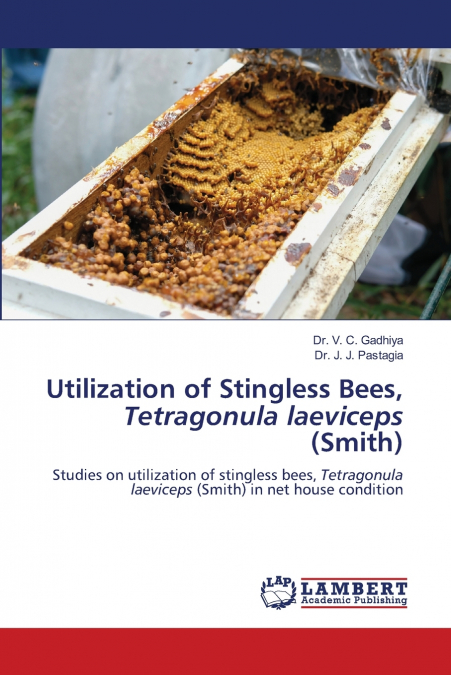
  • Utilization of Stingless Bees, Tetragonula laeviceps (Smith)
    Dr. J. J. Pastagia / Dr. V. C. Gadhiya
    The present investigations on utilization of stingless bees, T. laeviceps Smith in net house condition carried out with the broad aspects like flowers visited by stingless bees, T. laeviceps Smith, toxicity of insecticides to T. laeviceps Smith workers, floral biology of musk melon, foraging behavior of stingless bees, T. laeviceps Smith in net house condition, effect of pollin...
    Disponible

    84,80 €

  • La révolution verte
    Binitha Sophine Emmanuel
    La révolution verte, une ère transformatrice dans les annales de l’agriculture, est apparue comme une force qui a changé la donne au milieu du 20e siècle, remodelant fondamentalement la méthodologie de la production alimentaire et orientant la trajectoire de la sécurité alimentaire mondiale. Caractérisée par une série de percées technologiques, la révolution verte visait à augm...
    Disponible

    53,29 €

Otros libros del autor

  • Sapropel jeziorny do nawożenia gleby
    Eugenija Baksiene
    W mulistych jeziorach Litwy zgromadzono około 1,5 mld m3 sapropelu. Sapropel jest cennym materiałem organicznym, wapiennym, który może być wykorzystywany do nawożenia i ulepszania gleby. Sapropel jeziorny o różnym składzie chemicznym, potencjalny nawóz, był badany w oddziale Voke Litewskiego Instytutu Rolnictwa w latach 1984-2008. Podsumowanie wyników długoterminowego eksperyme...
    Disponible

    67,11 €

  • Sapropel lacustre per la fertilizzazione del suolo
    Eugenija Baksiene
    Nei laghi limosi della Lituania si sono accumulati circa 1,5 miliardi di m3 di sapropel. Il sapropel è una preziosa materia organica calcarea che può essere utilizzata per la fertilizzazione e il miglioramento del suolo. Il sapropel lacustre di varia composizione chimica, potenziale fertilizzante, è stato studiato presso la filiale di Voke dell’Istituto lituano di agricoltura n...
    Disponible

    67,11 €

  • Sapropel lacustre para fertilização do solo
    Eugenija Baksiene
    Nos lagos lamacentos da Lituânia estão acumulados cerca de 1,5 mil milhões de m3 de sapropel. O sapropel é uma matéria orgânica calcária valiosa, que pode ser utilizada para fertilização e melhoria do solo. O sapropel lacustre de várias composições químicas, um fertilizante potencial, foi estudado na filial de Voke do Instituto de Agricultura da Lituânia entre 1984 e 2008. Os r...
    Disponible

    67,11 €

  • Seesapropel zur Bodendüngung
    Eugenija Baksiene
    In den schlammigen litauischen Seen sind etwa 1,5 Milliarden Kubikmeter Sapropel angesammelt. Sapropel ist ein wertvoller organischer, kalkhaltiger Stoff, der zur Düngung und Verbesserung des Bodens verwendet werden kann. Seesapropel unterschiedlicher chemischer Zusammensetzung als potenzielle Düngemittel wurde von 1984 bis 2008 in der Voke-Abteilung des Litauischen Instituts f...
    Disponible

    67,11 €