Sanskrit Verb conjugation using Ashtadhyayi Sutras

Sanskrit Verb conjugation using Ashtadhyayi Sutras

Ashwini Kumar Aggarwal

21,36 €
IVA incluido
Consulta disponibilidad
Editorial:
Devotees of Sri Sri Ravi Shankar Ashram
Año de edición:
2022
Materia
Destrezas y técnicas de enseñanza
ISBN:
9789392201967

Selecciona una librería:

  • Librería Samer Atenea
  • Librería Aciertas (Toledo)
  • Kálamo Books
  • Librería Perelló (Valencia)
  • Librería Elías (Asturias)
  • Donde los libros
  • Librería Kolima (Madrid)
  • Librería Proteo (Málaga)

Sanskrit is coming of Age. More and more Colleges and Universities are offering a degree course in this lingua franca of yore. Many schools across Europe and America are introducing Sanskrit to young learners. In India too there is a revival across the length and breadth, with committed organizations working to reach out to adults and children all over.To understand Sanskrit Grammar, the basic stuff is all about knowing the correct spelling of NOUNS and VERBS. This edition gives the process whereby Primary Ting Affixes get Modified to the Secondary Ting Affixes for the eleven Tenses and Moods.3x3 person and number Parasmaipada and Atmanepada Ting Affix Tables are listed for:Sarvadhatuka Tenses and Moods1 लट् Present Tense2 लङ् Imperfect Past Tense - before from yesterday onwards3 लोट् Imperative Mood - request4 विधि-लिङ् Potential Mood - order विधिलिङ् (also known as Optative Mood)11a लेट् Vedic usage Potential Mood - orderArdhadhatuka Tenses and Moods5 लृट् Simple Future Tense - now onwards6 लृङ् Conditional Mood - if/then in past or future7 लुट् Periphrastic Future Tense - tomorrow onwards8 आशीर्-लिङ् Benedictive Mood - blessing आशीर्लिङ् (also used in the sense of a curse)9 लिट् Perfect Past Tense - distant unseen past10 लुङ् Aorist Past Tense, before from now onwards11b लेट् Vedic usage Potential Mood - order------------------------------Primary तिङ् AffixesParasmaipadaतिप् तस् झिसिप् थस् थमिप् वस् मस्Atmanepadaत आताम् झथास् आथाम् ध्वम्इट् वहि महिङ्Present Tense लट् LAṭRegular Gana लट् तिङ् Affixes for Dhatus 1c, 4c, 6c, 10cParasmaipadaति तः अन्तिसि थः थमि वः मःAtmanepadaते इते अन्तेसे इथे ध्वेए वहे महेIrregular Gana लट् Affixes (Dhatus 2c, 5c, 7c, 8c, 9c)Parasmaipadaति तः अन्तिसि थः थमि वः मःAtmanepadaते आते अतेसे आथे ध्वेए वहे महेReduplicated Gana लट् Affixes (Dhatus 3c) and 7 Roots of 2cParasmaipadaति तः अतिसि थः थमि वः मःAtmanepadaते आते अतेसे आथे ध्वेए वहे महेIt also lists the Ashtadhyayi of Panini Sutras to see what changes are involved to make the final affix.Well chosen Examples of selected Roots are given in all the 10+1 Lakaras, in Active Voice.--------An invaluable book to see and derive correct spellings of Sanskrit Verbs in all 11 Tenses and Moods.

Artículos relacionados

  • Virginal Mothers, Groovy Chicks & Blokey Blokes
    Donna Pendergast
    There is an expectation that teachers are, and will be, transformers of society as they prepare young people to deal with an ever-changing world. While the importance of this role has never been greater, the status and respect once enjoyed by teachers has declined over recent years. Diminishing status and negative stereotypes have in turn contributed to a growing teacher shorta...
    Disponible

    35,72 €

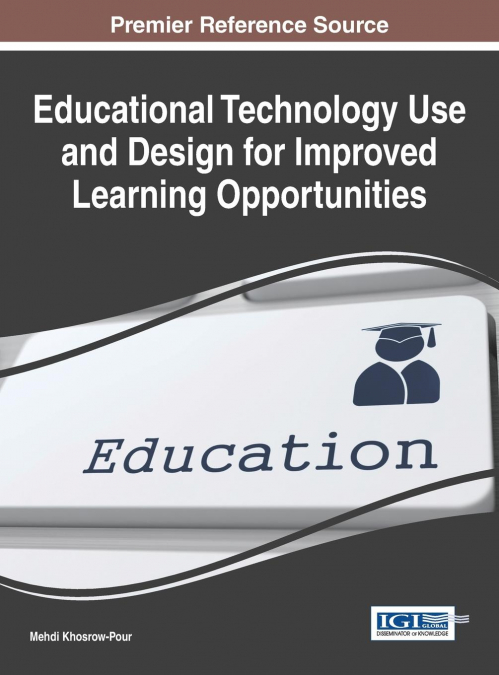
  • Educational Technology Use and Design for Improved Learning Opportunities
    Khosrow-Pour / Mehdi Khosrow-Pour
    The rise of technology within educational settings has allowed for a substantial shift in the way in which educators teach learners of all ages. In order to implement these new learning tools, school administrators and teachers alike must seek new research outlining the latest innovations in the field. Educational Technology Use and Design for Improved Learning Opportunities pr...
  • Handbook of Research on Active Learning and the Flipped Classroom Model in the Digital Age
    The notion of a flipped classroom draws on such concepts as active learning, student engagement, hybrid course design, and course podcasting. The value of a flipped class is in the repurposing of class time into a workshop where students can inquire about lecture content, test their skills in applying knowledge, and interact with one another in hands-on activities. The Handbook...
  • Engaging Adolescent Students in Contemporary Classrooms
    Prathiba Nagabhushan
    Preparation for university study and integration into the workforce is the academic goal in the final years of secondary education. This preparedness can only be achieved through the motivation and involvement of students in secondary education programs which will lead to successful outcomes. Engaging Adolescent Students in Contemporary Classrooms: Emerging Research and Opportu...
  • Curriculum Integration in Contemporary Teaching Practice
    Rina Bousalis / Susannah Brown
    Teaching and learning practices that are interconnected and value all subject areas benefit K-12 students by supporting creativity, critical thinking, communication, and collaboration. Curriculum Integration in Contemporary Teaching Practice: Emerging Research and Opportunities is an essential scholarly resource that presents detailed information on the benefits and implementat...
  • Differentiated Instructional Design for Multicultural Environments
    Diane Stottlemyer
    Modern technology is creating new challenges for teachers to keep up with today’s education and advancing teaching styles. The development of a differentiated curriculum is necessary and needed particularly for a diversified group of students. Differentiated Instructional Design for Multicultural Environments: Emerging Research and Opportunities provides emerging research on mo...

Otros libros del autor

  • Mandukya Upanishad
    Ashwini Kumar Aggarwal
    Upanishads are verses from the Vedas that have been compiled as independent and complete sets. Traditionally the verses in each Veda have been classified as Chanting portion and Analysis portion. Within the Analysis portion, a further sub-classification of verses has been done, namely Discussion, Research, Essential thought or guiding principle.This book gives a mathematical pi...
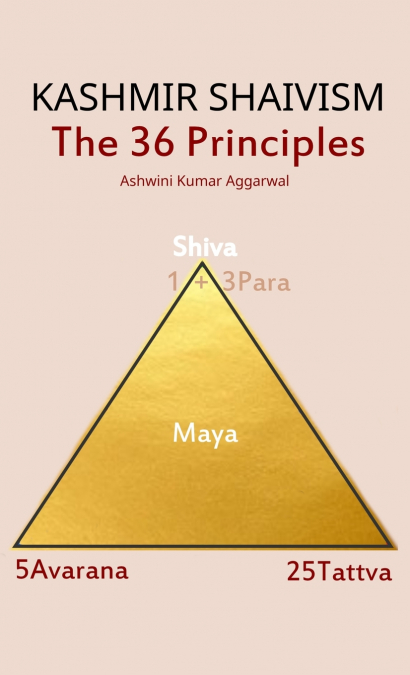
  • Kashmir Shaivism The 36 Principles
    Ashwini Kumar Aggarwal
    Kashmir Shaivism = Trika Philosophy = ThreefoldKashmir Shaivism proposes 36 discrete Principles in creation. These are categorized as Trika = the Three states of Consciousness.a) 25 gross aspects of divinity. These make up the visible spectrum of sound and light, name and form.b) 5+1 = 6 distinct aspects of divinity that have taken a subtle energy body. This form the beginning ...
  • Ayush Homa Mantras
    Ashwini Kumar Aggarwal
    Many times parents wish they could get an inkling of what happens in the temple pujas, or what the local pandit chants during a family ceremony. Parents also wish they could get a more intimate feel of the thought processes and the sacred heritage of our ancestors. Also, many hope that their children can tune in a bit as well. This book has been accordingly designed for crisp a...
    Disponible

    11,98 €

  • Ayush Homa Mantras
    Ashwini Kumar Aggarwal
    Many times parents wish they could get an inkling of what happens in the temple pujas, or what the local pandit chants during a family ceremony. Parents also wish they could get a more intimate feel of the thought processes and the sacred heritage of our ancestors. Also, many hope that their children can tune in a bit as well. This book has been accordingly designed for crisp a...
  • Nakshatra Van Celestial Garden Plantation
    Ashwini Kumar Aggarwal
    During Gurudev’s Ludhiana visit on 19th Feb, at 11:40am in Sunview office, he told us to plant a Nakshatra Van. At that time Sadhvi Hemswaroopa was present as the technical expert on such plantation, and we finally got inspired to make it.NAKSHATRA VAN = VEDIC SACRED GROVENAKSHATRA = BIRTH STAR = A Lunar Mansion, where the Moon appears each night in the sky as it waxes and wane...
  • Sanskrit Roots to Verbs VI Lring Conditional Mood
    Ashwini Kumar Aggarwal
    Roots will be conjugated similarly based on Sarvadhatuka or Ardhadhatuka Affixes. For Ardhadhatuka Tenses and Moods, लृट् लृङ् लुट् आशीर्लिङ् लिट् लुङ् the entire Dhatupatha is two groups सेट् and अनिट् । Henceसेट् Roots are conjugated similarly through the entire length of Dhatupatha.अनिट् Roots are conjugated similarly through the entire length of Dhatupatha.This book outline...